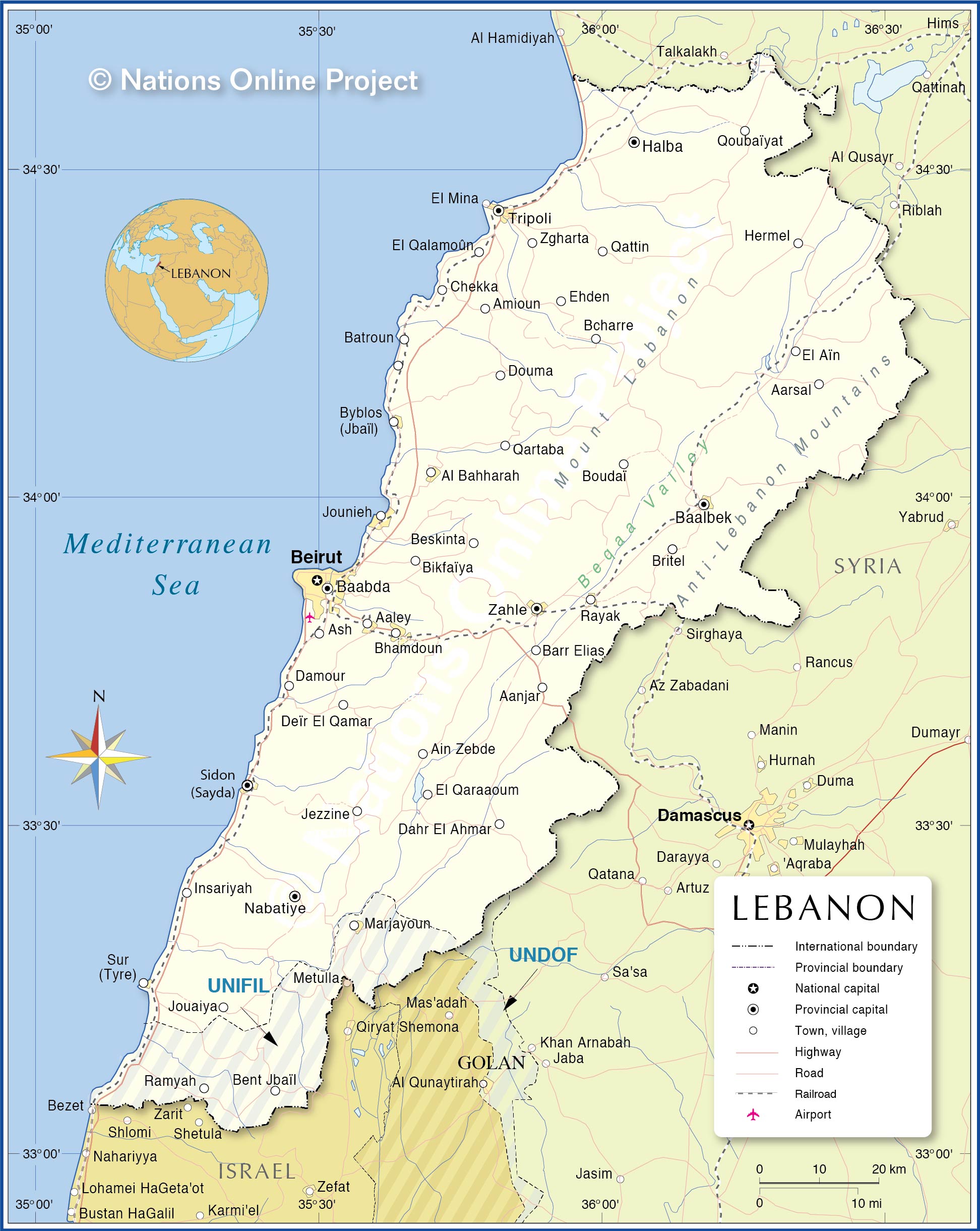
Standard war reporting has a math problem. When an airstrike hits an eastern Lebanon village and the headlines immediately flash a tragic double-digit casualty count, the media operates on a predictable script. They tally the dead, interview a local official, describe the rubble, and imply that the strike was either a localized intelligence failure or an act of sheer escalation.
This framework is completely wrong. It treats modern conflict like a series of isolated, tragic events rather than what it actually is: a highly calculated, regional logistics war. For a different look, see: this related article.
By focusing entirely on the immediate, bloody aftermath in a single valley or village, mainstream analysis completely misses the structural reality of the conflict. The real story isn't the tragedy of the coordinates hit today. The real story is the systematic dismantling of a massive, trans-continental supply chain that stretches from Tehran through Iraq and Syria, right into the hills of Lebanon.
The Fallacy of the Isolated Strike
When mainstream outlets report on strikes in the Bekaa Valley or eastern Lebanon, they almost always frame them through the lens of localized aggression. They ask the wrong questions: Why this village? Why now? What was the immediate trigger? Further insight on the subject has been provided by Reuters.
This line of questioning assumes that military planners are reacting to real-time provocations in a vacuum. They aren't. To understand why an obscure village miles away from the southern front line becomes a target, you have to look at a map of regional infrastructure, not a list of recent political statements.
Eastern Lebanon, particularly the Bekaa Valley, serves as the primary artery for heavy weaponry moving into the country. It is the off-ramp of the highway that feeds the front lines. When a strike occurs here, it is rarely an isolated tactical decision. It is an operational necessity designed to choke off supply lines before munitions can be distributed into subterranean networks closer to the border.
Focusing solely on the immediate casualty count is the equivalent of analyzing a corporate supply chain disruption by only looking at the delivery truck that broke down on the highway, while ignoring the systemic failure of the entire shipping network.
The Brutal Logic of Interdiction Warfare
In military doctrine, this is known as deep interdiction. The objective is not necessarily the destruction of individual enemy combatants on the front line, but the disruption of their ability to sustain operations over time.
Consider the mechanics of a modern missile network. A long-range precision rocket does not simply appear on a launcher near the border. It requires a massive footprint:
- Transport vehicles capable of moving multi-ton payloads.
- Specialized storage facilities protected from aerial surveillance.
- Engineers and technicians trained in assembly and fueling.
- Secure communication nodes to coordinate distribution.
When an airstrike targets a warehouse or a convoy in eastern Lebanon, the primary objective is the destruction of these high-value logistical nodes. Because these nodes are frequently embedded within civilian infrastructure—a deliberate strategy designed to complicate targeting calculus—the human cost is often severe.
Mainstream coverage highlights the human cost while treating the military objective as an afterthought or a dubious claim made by a press office. A sophisticated analysis requires looking at both simultaneously: acknowledging the devastating civilian toll while recognizing that from a strict military standpoint, the operation is judged by how many weeks it delays the next major rocket volley.
Dismantling the PAA Premise: Is the Conflict Escalating?
If you look at the standard "People Also Ask" queries surrounding these border strikes, you see a clear pattern of flawed assumptions. People want to know: "Is the strike in eastern Lebanon a sign of an all-out war?" or "Why is the conflict spreading further north?"
The premise of these questions is flawed because it assumes the conflict was ever confined to the south.
The idea of a contained, localized border skirmish is a diplomatic fiction. The infrastructure supporting the front lines has always been national and regional in scale. A strike in the north or east isn't an expansion of the geographic boundaries of the war; it is an acknowledgement of the actual boundaries that have existed for decades.
I have watched analysts analyze regional conflicts for years, and the most common mistake is assuming that geography dictates intent. It doesn't. Logistics dictates intent. If the supplies are moving through the north, the war is in the north, regardless of where the infantry is dug in.
The Trade-Offs of the Hardline Approach
There is a distinct downside to this strategy that military planners often underestimate: the political cost of deep interdiction frequently outweighs the tactical gains.
While destroying a convoy or a storage depot in eastern Lebanon yields an immediate degradation of enemy capabilities, it simultaneously erodes international diplomatic capital. Every strike that results in significant civilian casualties alters the geopolitical calculus, making it harder for allies to sustain diplomatic cover.
Furthermore, this approach relies on a dangerous assumption: that the enemy's supply chain is finite. In reality, unless the source of the supply chain is neutralized, deep interdiction is an endless game of whack-a-mole. You can destroy ten convoys, but if an eleventh gets through with upgraded technology, the strategic balance remains largely unchanged.
The Reality of Modern Asymmetric Warfare
Stop looking at war through the lens of nineteen-century territorial battles. This is not about capturing a hill or holding a specific village in Lebanon. This is an industrial war of attrition fought through logistics, electronics, and intelligence.
When you read the next headline about a strike in a remote village, change your analytical framework:
- Ignore the immediate political rhetoric from both sides.
- Look at the geographic relationship between the strike location and known smuggling routes.
- Assess the nature of the target—was it a transit point, a storage facility, or a command node?
- Understand that the civilian casualties, while tragic, are viewed by military actors as a variable in a cold, mathematical equation of risk versus degradation.
The media will continue to provide emotional narratives that sell clicks but obscure the strategic reality. If you want to understand what is actually happening on the ground, follow the logistics, not the headlines.