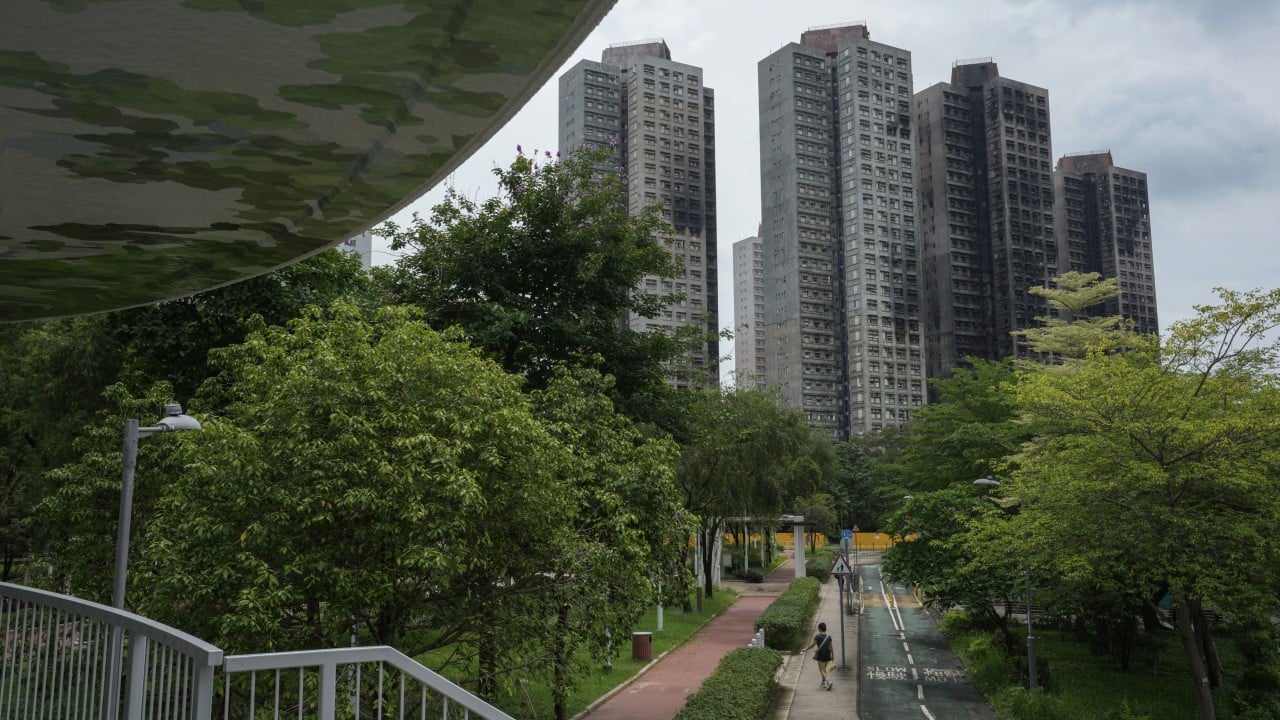
The smell of charred timber and melted plastic lingers long after the fire trucks turn off their sirens. In the older corners of Tai Po, where narrow alleyways cut between buildings that have stood for decades, smoke doesn't just dissipate into the Hong Kong sky. It settles. It seeps into the concrete, clings to the clothes of neighbors gathering on the street corners, and burrows into the minds of those who watched the flames climb.
When a major fire tears through a community, it shatters the quiet illusion of safety. The immediate aftermath is always a blur of flashing red lights, shouted orders, and the desperate accounting of human lives. But once the embers are thoroughly drenched and the yellow police tape goes up, a different kind of quiet sets in. It is the heavy, agonizing silence of a neighborhood waiting for answers.
Recently, the official investigation into the Tai Po blaze reached a critical juncture. Authorities announced a decision that raised eyebrows across the territory: the probe would not invoke statutory powers. No special legal mandates would be summoned. No extraordinary judicial hammers would be swung. To the officials holding the clipboards, the explanation was simple and pragmatic. The evidence already gathered was deemed entirely sufficient to piece together what happened.
To the bureaucrats, a spreadsheet of forensic data might look complete. But on the ground, where the air still tastes of soot, sufficiency is a complicated word.
The Anatomy of an Investigation
To understand why a community reacts with skepticism when authorities decline to use their full legal arsenal, one must look at how trust is built—or broken—in the wake of a disaster. Imagine a shopkeeper named Mr. Lam. For thirty years, he ran a small grocery store on the ground floor of a building just down the block from the fire site. He knows the rhythm of the neighborhood, the creak of the old stairwells, and the precise gaps where the city’s modernization efforts haven't quite caught up with reality.
When news broke that the investigation would proceed without statutory powers, Mr. Lam’s reaction was not one of legal analysis. It was one of visceral anxiety.
A statutory inquiry is a heavy instrument. It grants investigators the legal teeth to compel witnesses to speak, force the handover of internal documents, and protect those who come forward with uncomfortable truths. It is a public declaration that the state will tear down walls to find the root cause. Choosing to bypass this route can feel, to the untrained eye, like a step backward. It can look like a compromise.
But the investigators tracking the Tai Po fire argue otherwise. Their position is anchored in a different kind of confidence. According to the probe's findings, the physical trail left by the fire speaks loudly enough on its own. Forensic teams, electrical experts, and structural engineers spent weeks sifting through the debris. They mapped the burn patterns, analyzed the melted wiring, and interviewed eyewitnesses who were there when the first sparks flew.
The argument is straightforward: when the physical evidence provides a clear, undeniable map of causation, invoking heavy-handed legal powers is not just redundant; it slows the process down.
The View from the Street
But logic rarely comforts a grieving community. Consider what happens next when a neighborhood feels sidelined by the technical language of a bureaucratic report.
For the residents of Tai Po, the fire was not an isolated technical failure. It was the manifestation of a fear they live with every day. Many of the buildings in these older districts feature subdivided flats, aging electrical grids, and stairwells choked with decades of accumulated household items. It is an environment where a single spark can transform a home into a trap within minutes.
When authorities state that the evidence is sufficient, they are looking backward at a specific event. The residents, however, are looking forward. They want to know if the structural vulnerabilities that allowed the fire to spread will be addressed across the entire district. They worry that without the sweeping mandate of a statutory inquiry, the deeper, systemic issues—the landlords who cut corners, the outdated fire safety systems, the delayed inspections—will slip through the cracks.
The tension lies between two different definitions of truth. There is the forensic truth, which explains how the fire started. Then there is the systemic truth, which explains why the environment was vulnerable enough to let it happen in the first place.
The Friction of Trust
Trust is a fragile commodity in any modern metropolis. It is built on visibility. When an investigation happens behind closed doors, based on the assertion that the authorities already know enough, it creates a vacuum. In that vacuum, rumor and doubt flourish.
The decision to rule out statutory powers places a massive burden of proof on the final report. Because the government chose not to use its most powerful investigative tools, the narrative they present must be bulletproof. It cannot contain gaps. It cannot rely on assumptions. If the public senses even a hint of hesitation or omission, the decision to forego a formal statutory inquiry will be viewed as a protective shield for vested interests rather than an administrative efficiency.
The real problem lies elsewhere, far beneath the legal arguments. It rests in the emotional distance between the policymakers in their air-conditioned offices and the people who still smell smoke when they close their eyes at night.
A successful investigation must do more than satisfy a checklist of legal requirements. It must offer a sense of resolution. It must convince the people living in the shadow of the tragedy that their safety is worth more than administrative convenience.
A Quiet Resignation
Walk through Tai Po today, and you will see a community trying to mend itself. The blue tarps cover the worst of the damage. The street vendors are back, their voices competing with the rumble of traffic. But the conversation hasn't stopped.
The authorities may well be correct. The evidence may be overwhelming, the conclusions undeniable, and the path to fixing the immediate issue clear. From a purely technical standpoint, saving time and resources by avoiding a protracted legal battle could allow safety upgrades to happen faster. If a formal inquiry takes two years to tell us what we already know today, then skipping it is, logically, the right move.
Yet, logic is a cold comfort.
The true test of the Tai Po fire probe will not be found in the text of the announcement or the confidence of the press briefings. It will be measured months from now, when the final recommendations are published. If those recommendations result in safer buildings, better enforcement, and real protection for the vulnerable, the strategy will be vindicated.
Until then, the people of the district will watch, wait, and remember. They know that while an investigation can be closed with the stroke of a pen, the scars left on a neighborhood take a lifetime to fade.