The wind off the Minch does not merely blow; it strips the paint from wood and scours the salt straight into the mortar of stone walls. On the remote Scottish island of Berneray, the weather is a physical weight. It pushes against you, demands your respect, and reminds you daily that you are at the edge of something vast and indifferent.
For years, standing against that gray expanse was a single note of defiance. If you found value in this post, you should check out: this related article.
A red box.
Cast iron. Standard K6 design, engineered by Sir Giles Gilbert Scott back in 1935 to celebrate the Silver Jubilee of King George V. For decades, millions walked past its urban siblings in London or Manchester without a sideways glance. But here, on the edge of the Outer Hebrides, it was different. It was a lifeline. A shelter from a sudden squall. A place where a coin dropped into a slot could bridge an invisible chasm between an isolated shore and the rest of the breathing world. For another look on this story, check out the recent coverage from AFAR.
Then, technology happened.
Mobile masts marched across the mainland, creeping closer to the coast. Satellites began to weave an invisible net overhead. The phone box on Berneray fell silent. Not just quiet, but obsolete. A relic of a hurried century, left behind to rust in the Atlantic spray. Telecom giants looked at ledger sheets, calculated maintenance costs against zero call volumes, and marked it for execution.
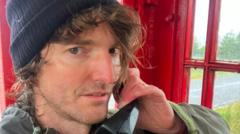
Enter a man named Tony.
He didn't live on Berneray. He lived seventeen hundred miles away on a round-trip journey that would test the patience of a saint and the suspension of any ordinary van.
Consider what happens when a community loses its anchor. A town doesn't die all at once. It loses its post office, then its pub, then the corner shop where the owner knows how you take your tea. Each loss is small, almost imperceptible. Until one morning, you wake up in a place that no longer remembers who you are.
Tony understood this. You see, heritage isn't preserved in glass cases inside air-conditioned museums in capital cities. It lives in the weather-beaten places. It breathes in the salt air.
He loaded a trailer. He drove. Past the endless ribbon of tarmac, across the narrow straits on ferries that heave with the swell, all the way to the windswept machair of the islands. He didn't go for glory. He went because some things are worth the friction of saving.
When he arrived, the paint was blistered. The glass was clouded with decades of grime and salt crust. To anyone else, it was junk. A pile of heavy metal waiting for the scrap yard.
He didn't see junk. He saw memory.
Restoring a K6 telephone kiosk is an act of stubborn romance. Every bolt is rusted solid, welded together by electrochemical wizardry born of salt water and time. You need heat, brute force, and an unreasonable amount of patience. Hour after hour, against the relentless Hebridean gale, the work went on. Scraping, priming, painting. Coat after coat of pillar-box red. A bright, burning ember against the endless slate of the sea.
Why do we care about a metal box that no longer dials a number?
Because we are lonely creatures living in an era of hyper-connectivity. We carry supercomputers in our pockets, glass-and-steel panes that give us access to the sum of human knowledge in a fraction of a second. Yet, paradoxically, we have never felt more untethered. Everything is virtual. Everything can be swiped away with a flick of a thumb. Nothing stays still long enough to touch.
The red phone box stays.
It is heavy. It is permanent. You can press your palm against its cold iron frame and feel the weight of history pushing back. It tells you that people stood here before you. They huddled out of the rain. They whispered secrets into the receiver. They waited for news of birth, of death, of love, of war.
By the time the final coat of paint dried, the transformation was complete. The kiosk stood once more as it had nearly a century ago: a beacon.
Tony drove back down those seventeen hundred miles, leaving behind a quiet corner of Scotland a little less empty than he found it. The wind still howls off the Atlantic. The salt still stings the eyes. But the red box remains, holding its ground against the tide.