The thumb presses down on the center hub. A sharp, satisfying snap echoes through the bedroom. For thirty years, that specific acoustic signature meant one thing: you were about to go on an adventure.
It is the sound of ownership. It is the weight of a physical object sitting on a shelf, a tactile monument to hours spent exploring digital worlds.
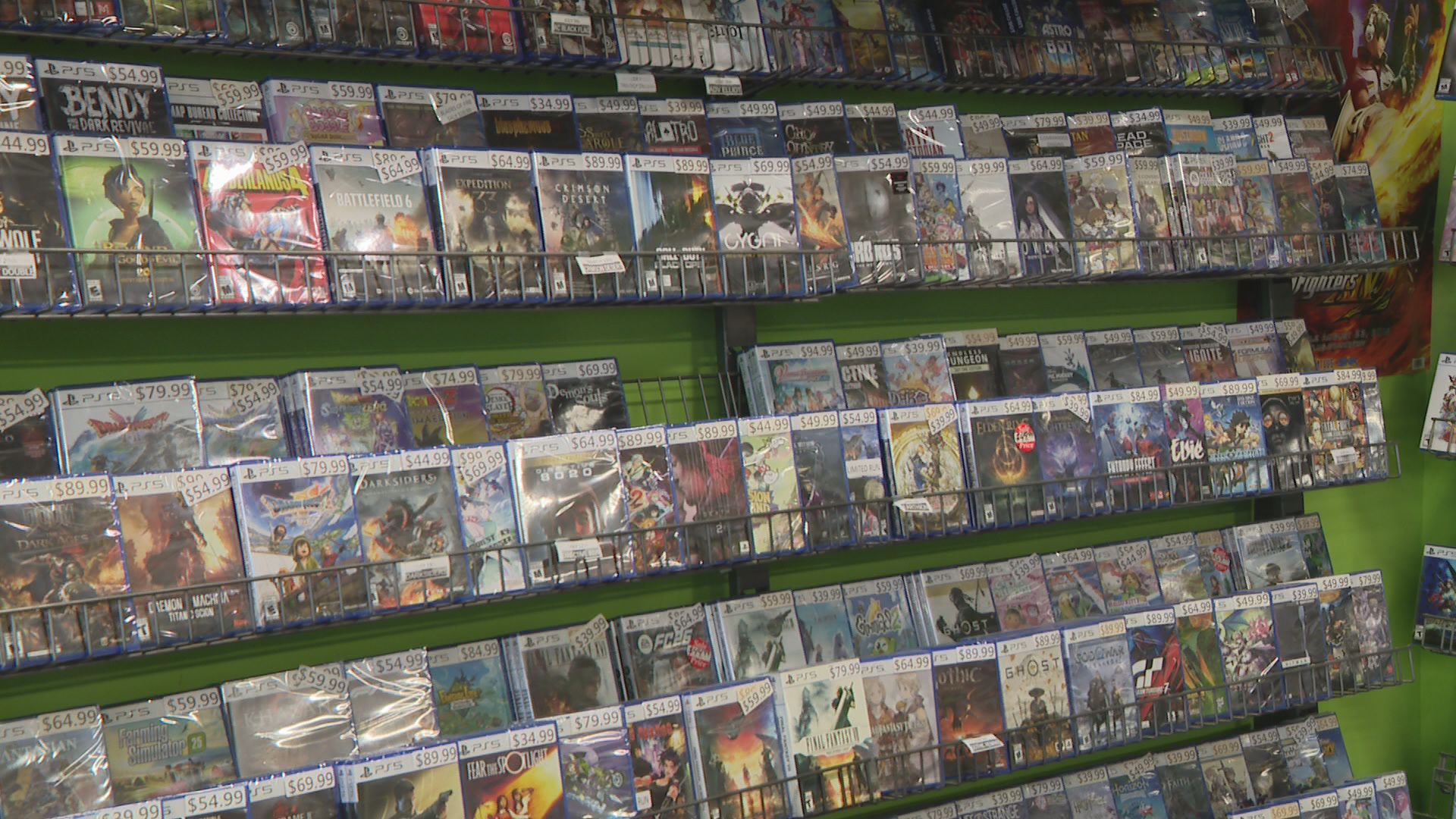
But according to recent industry shifts, that sound has an expiration date. Sony is reportedly planning to wind down the production of physical PlayStation discs entirely by 2028. The plastic cases, the printed cover art, the satisfying weight of a new release in your hands—all of it is scheduled for the scrap heap of history.
We are standing on the precipice of a silent transition. The industry calls it efficiency. Shareholders call it optimization.
For the rest of us, it feels like a heist.
The Ghost in the Shelf
To understand why this matters, we have to look past the spreadsheets and look at a hypothetical gamer named Leo.
Leo is fourteen. His bedroom shelf is a timeline of his life. There is the scratched copy of an old racing game he played until his thumbs blistered, the RPG his older sister handed down to him, and the latest blockbuster he saved three months of allowance to buy. When friends come over, they scan the spines. They talk about the art. They borrow discs.
Now, imagine Leo’s younger brother, born into a world after 2028. His shelf is empty. His "library" is a grid of glowing icons on a television screen. He does not own his games. He rents the permission to access them, a permission that can be revoked at the whim of a corporate board meeting, a licensing dispute, or a server shutdown.
This is not a metaphor. It is the reality of the digital-only ecosystem.
When you buy a digital game, you are not buying a product. You are buying a license. If a publisher loses the rights to a soundtrack, a car brand, or a likeness, that game can vanish from the digital storefront. Sometimes, it vanishes from your hard drive entirely. We saw it happen with older digital-only titles, and we are seeing the groundwork laid for it to happen on a massive scale.
Physical media was the last line of defense for preservation. A disc doesn't care about expired licenses. A disc doesn't care if a server in California gets turned off to save on the quarterly budget. It spins. It reads. It plays.
The Economics of Inconvenience
The move toward an all-digital future is often marketed as a triumph of convenience. No driving to the store. No waiting for shipping. Just click and play.
But convenience is a Trojan horse.
Consider what happens next when competition is entirely removed from the marketplace. Right now, if you want to buy a two-year-old game, you have options. You can check the digital store. You can walk into a local brick-and-mortar shop. You can buy it used from a friend or an online marketplace for a fraction of the original price. Competition drives the cost down.
When the physical disc dies, the official digital storefront becomes a monopoly. If the publisher decides a five-year-old game is still worth seventy dollars, it stays seventy dollars. There are no used game bins in a digital cloud. There is no secondhand market. The secondary economy of gaming—the trading, the reselling, the budgeting that allows lower-income families to experience the hobby—will be erased by a line of code.
It is a brilliant business move for Sony. Eliminating physical manufacturing, shipping, warehousing, and retail margins injects massive percentages straight back into the bottom line. But that profit is extracted directly from the consumer's autonomy.
We are trading permanence for convenience, and the exchange rate is terrible.
The Loss of the Artifact
There is a human cost to the death of the object.
Think back to the instruction manuals of the nineties and early two-thousands. They were mini-art books, filled with lore, character sketches, and notes pages that remained stubbornly blank. They smelled like fresh ink. Opening the case on the car ride home from the mall was a ritual, a prologue to the experience itself.
Slowly, the manuals disappeared. Then the interior art faded to blank white plastic. Now, the case itself is on life support.
When we lose the physical artifact, we lose the friction that makes memories stick. A digital download is frictionless. You click buy, a progress bar fills up, and it joins a mountain of other icons in a chaotic library. It becomes content. It ceases to be an event.
Friction creates value. The act of saving up cash, walking into a store, holding the box, and inserting the disc creates a psychological investment. You are committed to the experience. When everything is a click away, everything becomes disposable. We scroll through hundreds of digital titles with the same numb indifference we use to scroll through streaming video apps, unable to choose, ultimately feeling nothing.
The Uncertain Future of Our History
Shifting away from discs leaves the preservation of art in the hands of the entities that profit from it. History shows that corporations are notoriously poor archivists. When a console generation ends, the older storefronts are routinely shuttered. Hundreds of games become legally unplayable overnight, surviving only in the dark corners of internet emulation.
Discs were the decentralized archive of the gaming world. Millions of copies scattered across millions of homes meant that no single fire, server crash, or corporate restructuring could wipe a piece of art off the face of the earth.
By 2028, that safety net will be gone for PlayStation.
We are trusting companies to keep our purchases alive forever, despite every indication that their priorities lie entirely with the next fiscal quarter. It is an act of blind faith required by a industry that has historically failed to earn it.
The finality of the shift is what stings the most. Once the factories close, they will not reopen. The machinery will be melted down, the supply chains dissolved. The transition will be permanent.
The next time you pick up a game case, feel the texture of the plastic. Listen to that hollow click as you snap it shut. It isn't just a container for data. It is a tiny, fragile anchor holding onto the idea that when you pay for something, it belongs to you. Enjoy the weight of it while you still can.