Everyone is looking at the wrong culprit.
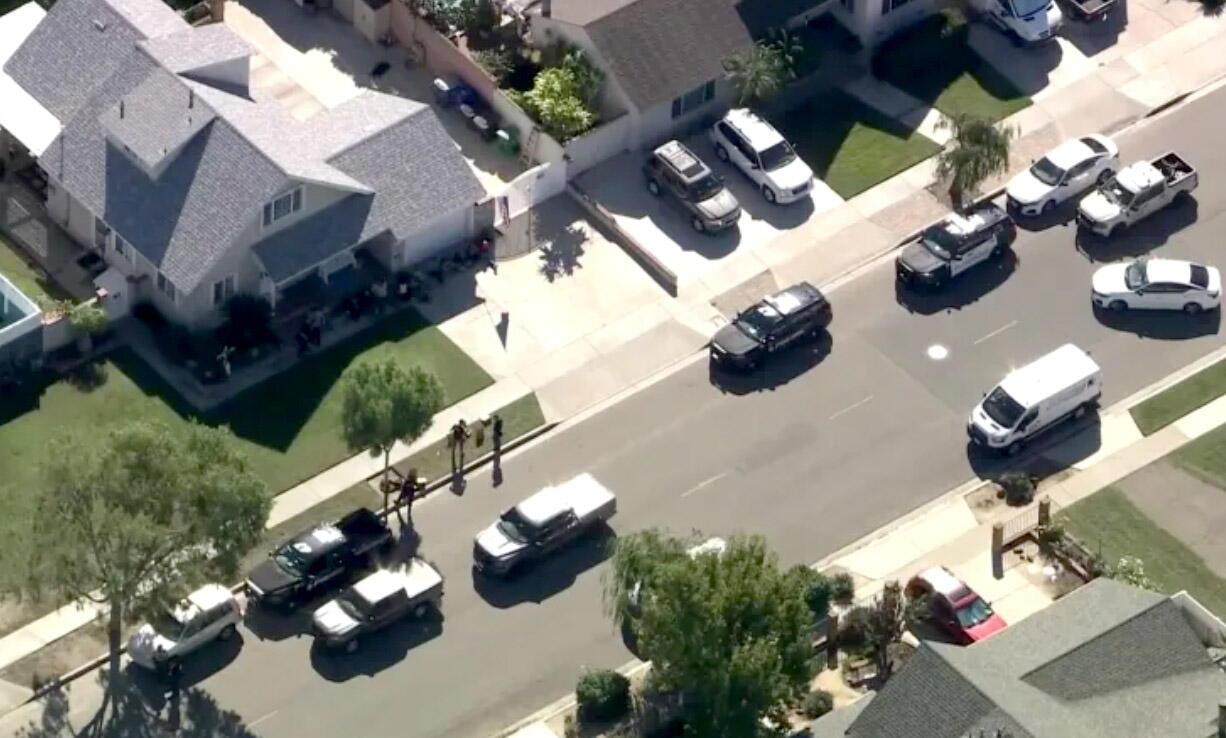
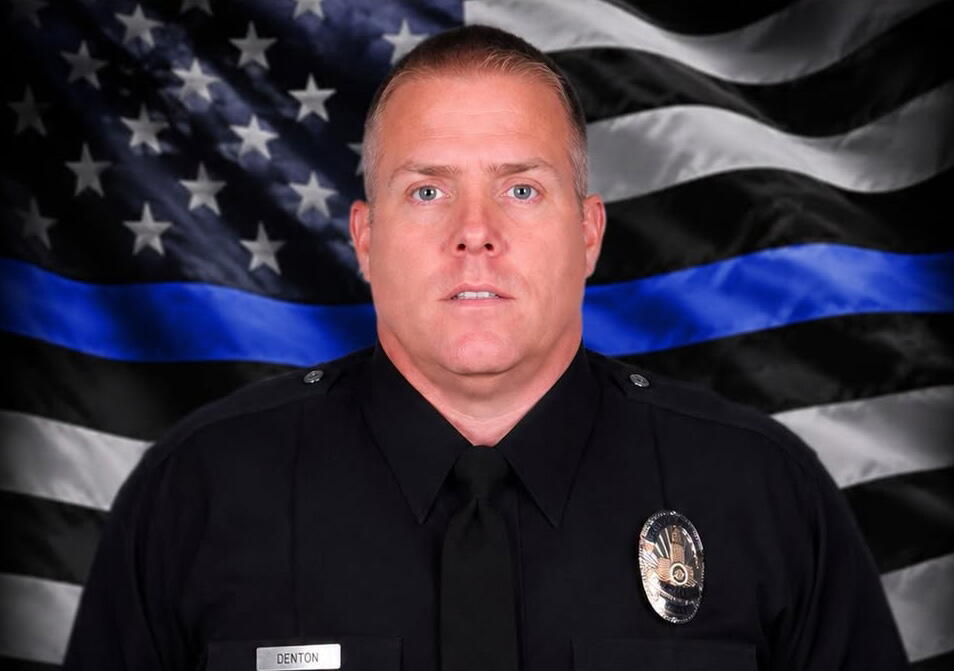
When news broke that the Los Angeles Police Department opened an investigation into the death of an officer during a dive training exercise at a backyard pool, the public reaction followed a predictable script. Outrage over the location. Shock that taxpayer-funded tactical training happened in a residential swimming pool. Demands for an immediate internal affairs inquiry to find the "rogue" supervisor who signed off on an unauthorized venue.
That narrative is comfortable. It lets the public believe this was a one-off lapse in judgment by a handful of people who broke the rules.
It is also dead wrong.
The location—a private backyard pool—is a symptom, not the disease. Focusing on the residential setting misses the structural rot inside public safety dive teams across the United States. The real failure isn't that an officer died in a backyard. The real failure is a widespread, systemic culture of "tactical bravado" that routinely overrides basic physiological realities and established commercial diving safety standards.
The Myth of the "Improvised Venue"
The mainstream coverage leans heavily on the absurdity of the setting. A backyard pool sounds amateurish. It evokes images of off-the-books corner-cutting.
Here is what outsiders miss about how public safety dive teams actually train.
Municipal dive units—whether in Los Angeles, New York, or mid-sized county sheriff offices—chronically lack dedicated, deep-water training facilities. Municipal pools are booked by swim teams and senior aqua-aerobics classes. Open water—like the Pacific Ocean off San Pedro or murky local reservoirs—introduces zero-visibility conditions, cold shock, and heavy currents that make basic skills assessment impossible for instructors.
Because agencies refuse to budget for commercial hyperbaric and deep-tank facilities, dive supervisors routinely beg, borrow, and improvise confined-water spaces. Using a private pool with a deep end is an open secret in law enforcement and fire rescue diving.
Attacking the backyard pool is a distraction. Even if that exact same drill had taken place in a million-dollar city-owned aquatic center, the underlying mechanics of what kills divers during confined-water training remain identical.
The Silent Killer in Shallow Water
If you want to understand why fit, experienced tactical officers die in five to ten feet of crystal-clear water, stop looking at the real estate and start looking at human physiology.
In recreational diving, certified agencies like PADI and SSI hammer one rule above all others: never hold your breath, and never push past your physical limits in a pool. In tactical and public safety diving, that mindset gets inverted. Training is frequently treated as a selection crucible—a "gut check" designed to see who quits when equipment fails, air gets cut off, or stress spikes.
This is where two physiological traps spring shut.
1. Shallow Water Blackout
When trainees are pushed through high-exertion underwater drills—such as ditch-and-don exercises, regulator-sharing under stress, or breath-hold swimming—they often hyperventilate beforehand to "stock up" on oxygen.
Hyperventilation does not meaningfully increase oxygen stores. Your blood is already near 98% to 99% oxygen saturation at rest. What hyperventilation actually does is blow off carbon dioxide.
Carbon dioxide buildup—hypercapnia—is the primary trigger that tells your brain you need to breathe. By artificially lowering CO2 levels before entering the water, a diver removes their own internal alarm system. Their oxygen levels plummet silently while they exert themselves underwater until the brain simply shuts down to conserve energy. Loss of consciousness happens without warning, without panic, and without a single bubble escaping to the surface.
2. Immersion Pulmonary Edema (IPE)
Even when breathing compressed air, intense physical exertion combined with cold water and psychological stress triggers massive vasoconstriction. Blood gets shunted from the limbs straight into the chest cavity.
The pressure inside the pulmonary capillaries spikes, forcing fluid directly out of the bloodstream and into the alveoli of the lungs. The diver literally drowns from the inside out while wearing functioning scuba gear. Historically, coroners misclassified IPE deaths as "accidental drowning" or "cardiac events," masking how often high-stress training protocols directly induce fatal fluid buildup in healthy athletes.
Why Law Enforcement Ignores Commercial Safety Rules
I have watched municipal rescue teams spend six figures on underwater sonar, remotely operated vehicles, and custom drysuits, only to run their human beings through training drills that would get a commercial diving supervisor arrested.
In the commercial diving world—governed strictly by OSHA regulations (29 CFR Part 1910, Subpart T) and the Association of Diving Contractors International (ADCI)—redundancy is non-negotiable. Every commercial diver in the water has a dedicated standby diver fully dressed and ready to deploy within seconds, an umbilical tether providing surface-supplied air, and hardwire voice communications.
Public safety dive teams operated for decades under a dangerous regulatory loophole. Because police and fire departments are public entities, they frequently fall outside federal OSHA jurisdiction in states without state-level OSHA plans, or they claim exemptions under emergency response provisions.
Instead of adopting commercial diving's strict engineering controls, many police dive units rely on a hybrid model: recreational scuba gear paired with military-style stress conditioning.
Look at the mismatch in that equation:
- The Equipment: Recreational scuba gear (open-circuit, mouth-held regulator) offers zero airway protection if a diver loses consciousness. The moment the jaw relaxes, the regulator falls out, and water enters the trachea.
- The Environment: High-stress "harassment" drills where instructors rip masks off, turn off tank valves, or tangle lines to simulate worst-case black-water recovery scenarios.
- The Oversight: Buddy checks or surface observers watching from poolside—where surface glare and water refraction can hide a motionless diver on the bottom for forty-five seconds or more.
When you combine unprotected airways with extreme physiological stress and visual-only surface monitoring, a fatal outcome is not an accident. It is a statistical certainty waiting for a calendar date.
Dismantling the "Toughness" Fallacy
Ask any tactical unit commander why they run high-stress pool drills, and you will hear the same defense: "We train how we fight. Real recovery dives are dark, freezing, and terrifying. If they can't handle stress in a pool, they'll die in the harbor."
That argument sounds logical until you examine how human motor learning actually works under acute stress.
Neuroscience and high-reliability organization research—the kind practiced by nuclear submarine crews and commercial aviation—demonstrate that induced panic during foundational training does not build resilience. It builds conditioned hesitation and degrades fine motor skills.
When heart rates exceed 145 beats per minute, vasoconstriction reduces dexterity in the fingers, auditory exclusion sets in, and cognitive processing narrows to tunnel vision. Forcing a diver to solve complex equipment failures while starved of oxygen in a pool teaches them to survive a hazing ritual, not how to execute a systematic emergency ascent.
Real stress inoculation happens through progressive, modular mastery:
- Mastering equipment manipulation blindfolded on dry land until muscle memory is automatic.
- Practicing the exact same drill in calm, shallow water with zero time pressure and immediate airway backup.
- Introducing single-variable stressors only after the diver demonstrates flawless execution at a resting heart rate.
- Utilizing full-face masks with positive pressure and surface-supplied communications during any scenario involving simulated entanglement or air-supply interruption.
The Navy Experimental Diving Unit (NEDU) and the Divers Alert Network (DAN) have published decades of data on underwater blackout, gas toxicity, and exertion limits. The science is settled. Yet municipal agencies continue to let unit-level tradition dictate training curricula rather than medical and hyperbaric evidence.
What the LAPD Investigation Will Likely Miss
Internal administrative investigations in major police departments are built to answer narrow legal questions:
- Did the supervisor violate a written department manual?
- Was there an approved training plan on file?
- Was the property owner properly vetted or insured?
If the investigation finds that the backyard pool wasn't on an approved venue list, someone will be disciplined, a memo will circulate banning off-site residential pools, and leadership will declare the problem solved.
And nothing will actually change.
Because banning backyard pools does not stop instructors from running breath-hold harassment drills in municipal pools. It does not mandate full-face masks with dedicated safety divers in the water within arm's reach of every trainee. It does not require independent medical officers—not tactical sergeants—to have absolute veto power over physical exertion protocols.
The Uncomfortable Trade-Off
To be brutally honest, adopting true commercial-grade safety standards comes with a heavy price tag that taxpayers and police unions alike resist.
If the LAPD and similar agencies overhaul their dive training to match commercial and military safety standards, three things happen immediately:
- Costs skyrocket. Surface-supplied diving systems, full-face positive-pressure masks, and dedicated hyperbaric medical oversight cost hundreds of thousands of dollars per unit.
- Training slows down. Eliminating high-stress "gut check" drills means qualifying fewer divers per year and extending certification timelines from weeks to months.
- Selection criteria shift. Agencies have to screen out candidates based on subtle cardiovascular and pulmonary markers rather than relying on who can survive the hardest pool session.
Most departments do not want to pay that bill or slow down their staffing pipelines. It is far cheaper to blame an unauthorized backyard pool and promise better paperwork next time.
The Standard That Actually Saves Lives
If you want to know whether a public safety dive unit takes survival seriously, ignore their press releases and ask four blunt questions about their confined-water training:
- Are trainees breathing through standard mouth-held regulators during stress drills? If yes, the agency is accepting an unnecessary risk of fatal aspiration the second a diver blacks out. Full-face masks keep the airway sealed even if consciousness is lost.
- Is there a dedicated safety diver in the water, in full gear, within three feet of every trainee? Watching from the pool deck is not safety coverage. By the time a deck observer spots a motionless body, sheds their shoes, jumps in, and reaches the bottom, critical brain hypoxia is already underway.
- Are breath-hold swimming and hyperventilation-adjacent drills completely banned? Under no circumstances should scuba trainees ever engage in competitive or timed underwater breath-hold exercises. Period.
- Does an independent dive medical officer sign off on the physical exertion load of every training evolution? Tactical supervisors are experts in policing, not respiratory physiology.
Until municipal agencies strip the macho culture out of confined-water training and subject their dive units to the same ruthless engineering controls used by commercial saturation divers, officers will keep dying in six feet of calm, clear water—whether that water sits in a city aquatic center or someone's backyard.