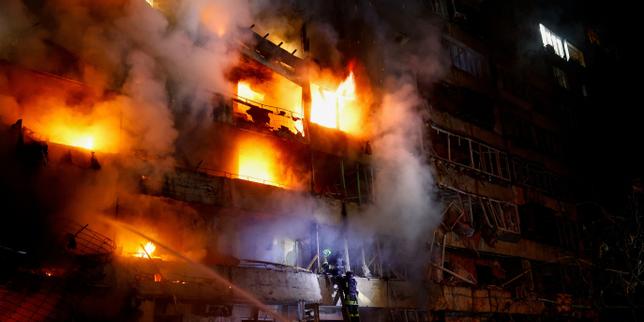
When ballistic missiles slam into a Kyiv power plant without a single early warning from allies, air raid sirens don't even get the chance to wail before glass shatters. That isn't just a terrifying night for people sitting in their kitchens. It's a flashing red light over how modern air defense, allied intelligence sharing, and winter energy survival are colliding in Ukraine.
When President Volodymyr Zelenskyy reported that Russian ballistic missiles struck Kyiv's Darnytsia Combined Heat and Power Plant (CHP-4) without advance notice from partners, the headline landed like a gut punch. Ukraine's air defenses picked up the incoming threat only when the missiles were practically right on top of the capital. A residential building took damage too, killing at least two people and wounding around twenty others, according to Mayor Vitali Klitschko. For a different look, consider: this related article.
For anyone following the war, the big question behind that moment is simple. Why did a Kyiv power plant get hit with no early warning, and what breaks down when warnings arrive late or not at all?
Why Early Warning Matters More Than Sirens
Most outsiders picture an air raid warning as a loud horn that tells civilians to head to a metro station. Helpful, sure. Yet early warning does way more heavy lifting behind the scenes than people realize. Similar coverage on this trend has been shared by The Guardian.
Ballistic missiles fly fast and steep. Radar horizons are limited by the curvature of the Earth, especially if launch sites or flight paths mask low or angle sharply toward a dense city. When early tracking data from external partners shows launches or trajectories early enough, air defense batteries get precious extra seconds to cue radar, track targets, and fire interceptors. Even a minute or two can decide whether a battery gets a clean shot or gets caught flat-footed.
Without that head start, two bad things happen at once. Defenders lose reaction time against high-speed incoming rounds. Civilians lose the buffer needed to get away from windows, upper floors, or exposed streets before impact.
That gap showed up again in broader reporting around strikes on Kyiv's energy grid, where officials noted no warning ahead of an initial wave and warnings for a follow-up wave coming too late to trigger sirens in time. Frankly, watching a major capital absorb ballistic hits with radar detecting them almost on arrival shows how razor-thin Ukraine's margin for error has become.
The Grid Strategy Behind the Strikes
Targeting a combined heat and power facility like CHP-4 isn't random destruction. It's calculated pressure.
Combined heat and power plants don't just push electricity into the grid. They generate thermal energy—hot water and steam—that heats apartments across neighborhoods during cold months. Knocking out generation capacity, substations, and transmission nodes attacks daily life from three angles at once: lights go out, radiators cool down, and water pumps struggle when power drops.
Let's be honest about what winter means in Kyiv. Freezing temperatures turn a routine power outage into a public health and municipal crisis fast. Reporting from The Guardian highlights how severe outages have put Mayor Vitali Klitschko under intense political strain as residents blame local leadership for winter readiness, while Kyiv Post has covered Zelenskyy pushing officials over multi-day blackouts in surrounding towns like Bila Tserkva and Brovary.
A strike on a power plant doesn't just trip breakers. It tests whether a city's heating, water, and political cohesion can survive the cold.
Why Local Blame and Geopolitics Collide
When the heat goes off, people look for someone to hold responsible. Sometimes frustration lands on city hall over backup generators, repair crews, or shelter readiness. Other times it lands on diplomatic friction—like stalled energy truce talk or questions over how reliably intelligence and technical support are flowing.
Both tracks matter, even when they point in different directions. A municipal crew can't intercept a ballistic missile, and a diplomatic statement can't weld a ruptured boiler pipe. Still, when strikes hit right alongside shaky ceasefire claims or debates over Western support and satellite constraints, the sense of vulnerability feels sharper on the ground.
What Intelligence Gaps Look Like in Practice
When Zelenskyy says Ukraine received no advance warning from partners about a strike on a Kyiv power plant, people naturally wonder what went wrong behind closed doors. In intelligence and air defense, "no warning" rarely has a single neat explanation.
Several factors can contribute to a blind spot or a delayed alert:
- Launch detection limits: Detecting a launch and confirming its actual trajectory toward a specific city takes split-second fusion of sensors, satellites, and radar.
- Shifting tactics: Attackers constantly adjust launch points, flight profiles, and decoy or mixed salvos to slip past detection thresholds.
- Communication friction: Even when data exists somewhere in a partner network, getting actionable alerts into Ukrainian command-and-control chains fast enough to matter is a technical hurdle of its own.
There's also a debate among analysts and officials over how much early warning can realistically change outcomes against every ballistic profile, versus how crucial consistent warning is across larger missile and drone waves. What's hard to dispute is Zelenskyy's core point: advance alerts from partners have repeatedly mattered for protecting people and limiting casualties, and losing or missing them hurts.
Reporting from Ukrainska Pravda captured the urgency right after the CHP-4 hit, noting both the damage to the energy facility and a nearby residential building, along with warnings of potential follow-on ballistic launches. When missiles are already inbound, you're playing defense with seconds left on the clock.
Common Misconceptions About Power Grid Strikes
A lot of commentary around energy strikes oversimplifies how power grids actually work. Clearing up a few myths helps make sense of why recovery takes so long.
First, a power plant isn't a single switch you flip back on. High-voltage transformers, switchgear, steam lines, and substations are heavy, specialized equipment. Even if generation isn't totaled, damaged transformers or distribution links can leave thousands in the dark or cold for days.
Second, air defense coverage isn't a magic dome. Intercepting ballistic missiles requires capable systems positioned in the right places, with enough interceptors on hand and enough warning time to engage. Trying to protect every power plant, substation, water station, and apartment block at once stretches any defense network thin.
Third, a truce headline doesn't equal warm pipes. Diplomatic talk around energy pauses has repeatedly collided with continued strikes on power facilities and substations. Until an agreement is verified, enforced, and respected on the ground, treating energy infrastructure as safe is a gamble nobody in Kyiv can afford.
Practical Ways to Track Reliable Updates and Stay Prepared
If you're following this crisis from abroad—or helping family, colleagues, or aid efforts connected to Kyiv—noise spreads fast during major strikes. Social media fills up within minutes with unverified blast videos, exaggerated casualty numbers, and recycled clips from earlier attacks.
Stick to a disciplined routine when news breaks:
- Verify official and established sources first. Cross-check statements from Ukrainian officials and local leaders like Mayor Klitschko against established wire services and major outlets such as The Guardian and Ukrainska Pravda before sharing anything.
- Separate immediate strike reports from grid restoration updates. Initial reports after a Kyiv power plant is struck focus on emergency response, fires, and casualties. Actual power and heating restoration timelines usually take hours or days to assess accurately as engineers inspect damaged gear.
- Focus support on real bottlenecks. If you're donating or coordinating aid, look at practical winter and grid resilience needs—like backup power, thermal protection, emergency medical supplies, and vetted relief organizations—rather than viral fundraisers with unclear accountability.
- Watch the pattern, not just one night. Single strikes grab attention, yet the bigger picture comes from sustained multi-week pressure on substations, generation, and regional grids heading into winter.
Every unwarned strike on critical infrastructure is a reminder that war isn't fought only on front lines. It's fought in control rooms, transformer yards, and dark apartment blocks when the lights go out.