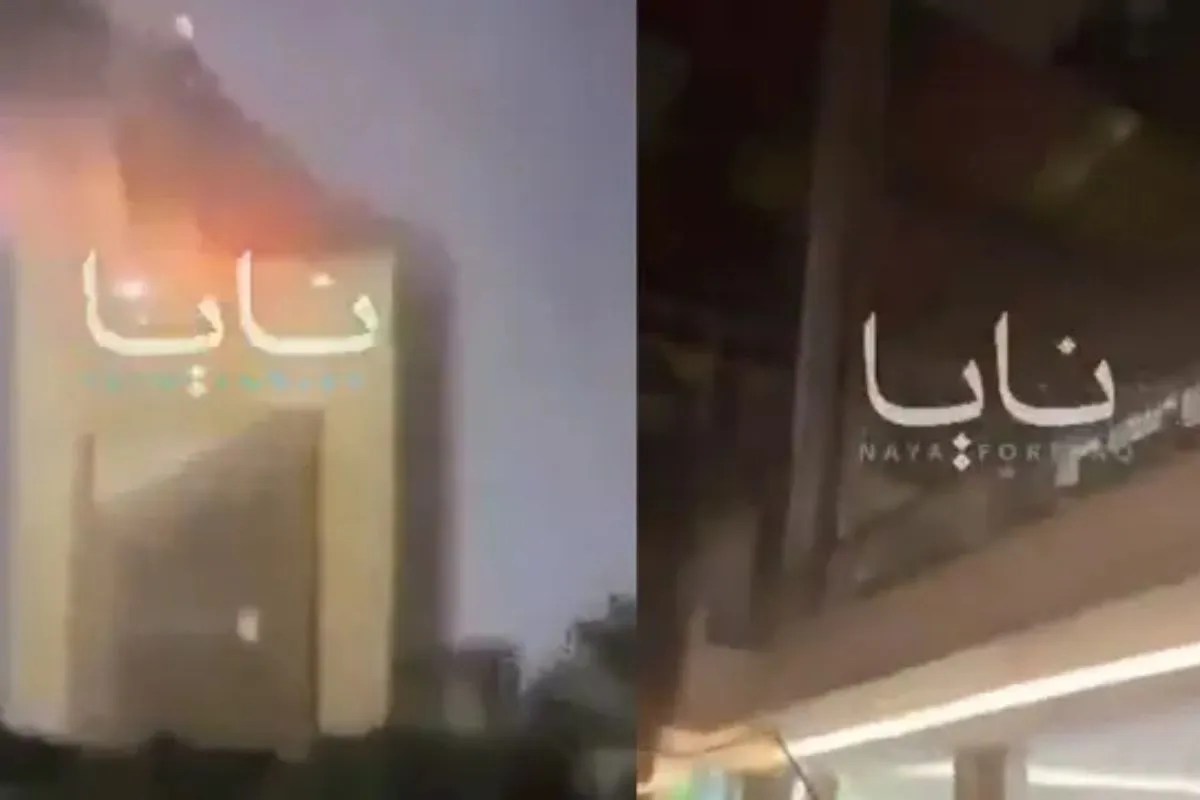
The headlines are screaming. Social media is flooded with grainy footage of smoke rising over a Kuwaiti oil complex. The pundits are dusting off their "World War III" templates, frantically typing about Iranian aggression and the inevitable spike in global crude prices. They want you to believe we are one drone strike away from a total regional collapse.
They are wrong.
If you’re staring at your portfolio wondering if you should hedge against a $150 barrel of oil, take a breath. What we’re seeing isn't the start of a Great Power conflict. It’s a carefully choreographed piece of kinetic theater designed to scare the markets and squeeze diplomatic concessions. The "lazy consensus" says this is an unprovoked escalation. The reality? It’s a desperate signaling mechanism from a regime that knows it cannot afford a real war.
The Myth of the Unstoppable Escalation
Every time a regional actor breathes near a refinery, the media treats it as a "pivotal" moment. It’s a tired script. The assumption is that Iran—or its proxies—wants to shut down the global economy. This is a fundamental misunderstanding of how energy blackmail works.
If Iran truly wanted to destroy Kuwait’s oil infrastructure, the footage wouldn't be grainy, and the damage wouldn't be localized. We are talking about a nation with a sophisticated ballistic missile program. A single localized strike on a "complex" is a warning shot, not an invasion.
The goal here isn't destruction. It’s volatility management.
When the market panics, Tehran gains leverage. When the West fears for its supply chains, the appetite for heavy-handed sanctions suddenly wavers. We’ve seen this play out in 2019 with the Abqaiq–Khurais attack in Saudi Arabia. The world screamed "escalation," and then... nothing. No regional war. No global depression. Just a temporary price hike that rewarded those who stayed calm and punished the "doomer" retail investors.
Stop Asking if the War Will Expand
The most common question on search engines right now is: "Will the Iran-Kuwait conflict lead to a regional war?"
This is the wrong question. It assumes that the actors involved are irrational. They aren't.
Kuwait is a strategic partner to nearly everyone—the US, China, and even the European powers who are desperate for non-Russian energy. Iran knows that a full-scale assault on Kuwaiti sovereignty is a "suicide pill." It would trigger a unified response that even their most hardened generals aren't ready to face.
Instead of asking about expansion, ask about asymmetric theater.
Iran uses these strikes to prove they can touch the untouchable. They are showing the Gulf Cooperation Council (GCC) that their security umbrella has holes. It’s a psychological operation, not a military campaign. By framing it as a "looming war," the media is doing the IRGC’s marketing for them.
The Oil Market is Smarter Than Your News Feed
Let’s look at the data. In the 1970s, an event like this would have sent oil prices into a multi-year orbit. Today? The United States is a net exporter. Production in the Permian Basin doesn't care about a drone in Kuwait.
When you see these headlines, look at the Brent crude futures. If they aren't sustaining a 10% gain within 48 hours, the "insiders" aren't buying the hype. The "smart money" knows that Kuwait has significant redundant capacity. Modern oil complexes are modular; you don't "blow up" an industry with a few localized explosions.
I’ve seen traders lose fortunes betting on "geopolitical risk" that never materializes. They forget that the global energy market is now a Hydra. You cut off one head, and three more grow in North America, Guyana, and Brazil. The era where a single Middle Eastern flare-up could break the world is over. We just haven't updated our fears yet.
Why the Video Footage is the Real Weapon
Why is there always "video that has surfaced"?
In modern warfare, the camera is as important as the drone. The release of footage—often through semi-official "leak" channels—is designed to bypass official government narratives. It’s meant to create a sense of chaos.
If this were a prelude to a massive strike, you wouldn't see it on Twitter five minutes later. You’d see a total communications blackout. The fact that we are all watching it in 4K suggests that the perpetrators want us to watch. They want the optics of vulnerability.
The Failed Logic of "Red Lines"
Politicians love talking about "red lines." It sounds tough. In reality, red lines in the Middle East are made of sand.
The competitor article asks if the "scope of the war will increase." This implies there is a neat, tidy line between "limited conflict" and "total war." There isn't. We are in a state of permanent gray-zone friction. This has been the status quo for decades.
- The Proxy Game: Iran uses proxies to maintain plausible deniability.
- The Economic Squeeze: The West uses sanctions to avoid boots on the ground.
- The Kinetic Pulse: Occasional strikes on infrastructure to remind the other side that the stakes are real.
This isn't an "escalation." It’s a pulse check.
How to Actually Read the Situation
If you want to know what’s actually happening, stop reading the "Breaking News" banners. Watch these three things instead:
- Insurance Premiums: Look at the maritime insurance rates for tankers in the Persian Gulf. If they aren't skyrocketing, the pros aren't worried about ship seizures or total blockades.
- Diplomatic Backchannels: Watch for quiet "technical delegations" between Oman and the warring parties. That’s where the real deals are made while the missiles are flying.
- China’s Silence: China is the largest buyer of Iranian oil and a major partner for Kuwait. If Beijing isn't panicking, there is no real threat to the flow of energy. They have the most to lose, and their intelligence on the ground is often superior to Western speculation.
The Hard Truth About Regional Stability
The status quo is profitable for almost everyone involved—except the civilians caught in the middle. High tension keeps oil prices at a "sweet spot" for producers. It justifies massive defense contracts for Western firms. It allows regimes to distract their domestic populations with "external threats."
The idea that these actors want to tip the table over and start a direct, high-intensity conflict is a fantasy. It would destroy the very wealth they are trying to protect.
Kuwait’s oil complex might be smoking today, but the global economy isn't burning. The only thing being "dismantled" is the credibility of any analyst who tells you this is the beginning of the end. It’s just another Tuesday in a region where shadow boxing is the national sport.
The real danger isn't the explosion you see on your screen. It's the fact that you're still falling for the same fear-mongering narrative that has been proven wrong every single year since 1979.
Stop waiting for the big one. This is the big one. It’s messy, it’s noisy, and it’s going exactly according to plan.