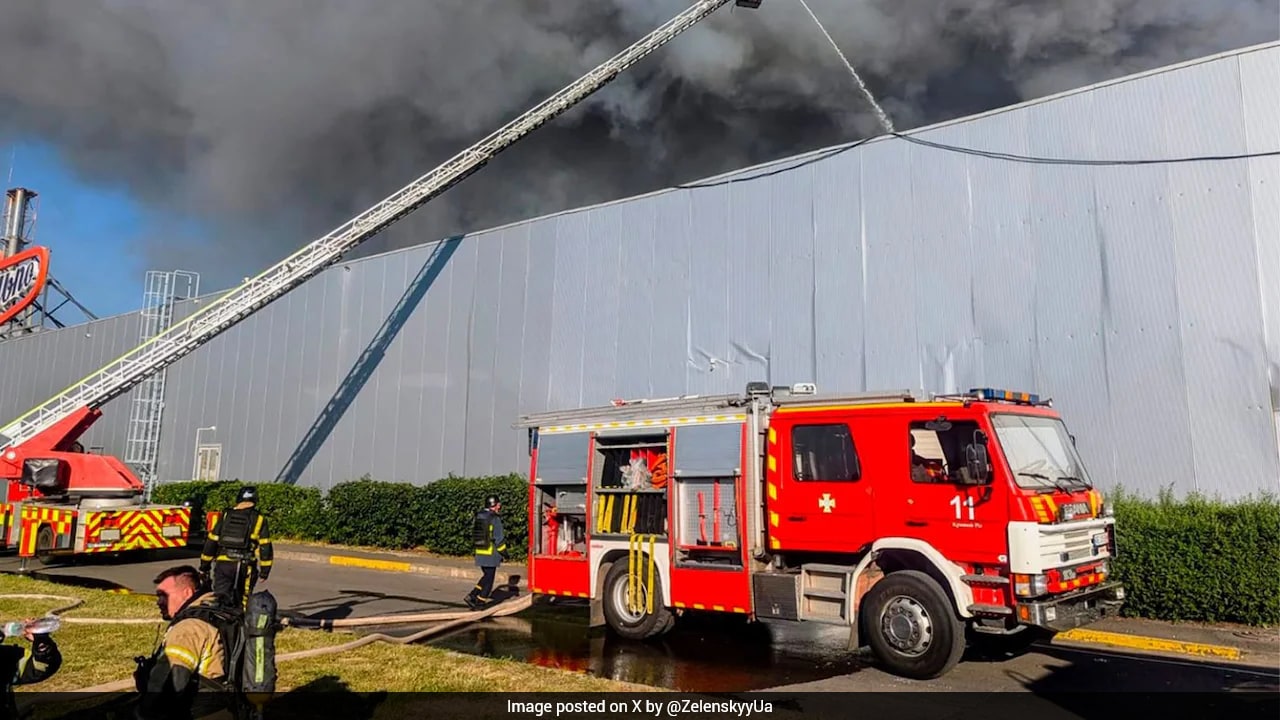
War doesn't care about hometowns or childhood memories. It only finds coordinates. When Russian drone strikes slammed into a bustling shopping centre in Kryvyi Rih, the central Ukrainian city woke up to a devastating reality that claimed 14 lives and injured over 120 people, including dozens of children.
This wasn't just another distant headline. Kryvyi Rih is the hometown of President Volodymyr Zelenskyy, making every blast carry a grim, personal symbolism. Yet, behind the political resonance lies a much harsher humanitarian crisis. Local authorities confirmed that the assault unfolded as a calculated "double-tap" maneuver. A second wave of drones targeted the area precisely as emergency responders and civilians rushed to help the wounded from the initial impact.
The Anatomy of a Double-Tap Strike
Military analysts have long tracked Russia's shift toward tactics designed to maximize human casualties among first responders. By waiting for paramedics, firefighters, and bystanders to gather, a secondary strike multiplies the devastation. Officials reported that the explosions tore through the city's largest retail facility, igniting massive fires and blanketing surrounding residential blocks in thick black smoke.
The human toll climbed rapidly as hospitals struggled to cope with the influx of trauma cases. Among the injured were 22 children, catching the absolute worst of a war that routinely breaches civilian spaces. Regional administrators noted that rescue workers spent hours combing through smoldering rubble, searching for anyone trapped beneath collapsed concrete and twisted metal frames.
Beyond the Immediate Blast Wave
Air raid sirens have become an agonizing background hum for millions across Ukraine, but the intensity of recent aerial campaigns points to a worsening winter and summer attritional phase. Just a day prior to the Kryvyi Rih tragedy, a massive nighttime barrage of ballistic missiles and drones pounded Kyiv and surrounding regions, killing at least 17 people.
The pattern reveals a stark vulnerability. Ukraine's air defense network, heavily reliant on specialized interceptors like U.S.-made Patriot systems, faces chronic shortages. When these systems lack adequate replenishment, high-speed ballistic missiles and low-flying jet-powered drones slip through the gaps, turning shopping malls, residential apartments, and children's hospitals into front-line targets.
What the International Response Misses
Global leaders routinely issue statements condemning these actions as terrorist acts, but local populations live with the immediate aftermath of delayed defense supplies and constrained interception rates. The United Nations and international monitors continue to log rising civilian casualties, yet the gap between diplomatic outrage and practical shielding grows wider with every intercepted or missed projectile.
If you want to understand where the conflict is heading, look past the front lines in the east and south. Look at the suburban shopping centers, apartment courtyards, and municipal squares where daily life attempts to persist under a perpetual sky threat. Kryvyi Rih is rebuilding its shattered blocks once again, but the scars left by a low-altitude drone strike linger long after the smoke clears. Track verified updates and humanitarian response efforts directly through The New Humanitarian or official dispatches via Reuters to stay informed on regional developments.