The grease trap hums. The fluorescent lights buzz with that familiar, institutional drone that seems to flatten time itself, making every shift feel like an eternity spent inside a plastic-coated capsule. To anyone standing on the other side of the counter, the workers in their crisp paper hats and neat aprons are little more than vending machines with a pulse. You order. You wait four minutes. You take your double-double, animal style, and you vanish into the Southern California heat. You never wonder what happens when the invisible contract between customer and clerk shatters into a million jagged pieces.
Consider what happened on a scorching afternoon at the Lake Elsinore In-N-Out Burger.
A customer, enraged by the simple tyranny of a delayed order, crossed an invisible line that separates ordinary frustration from unbridled chaos. Armed with a sharpened piece of wood, she turned the restaurant floor into a theater of terror. The staff—teenagers and young adults earning an honest wage amidst the smell of grilling onions and frying potatoes—did what human instinct demands when faced with a sudden, irrational threat. They fled. They scrambled into the back room, slamming the door against a volatile intruder who was systematically tearing apart the sanctuary of the kitchen.
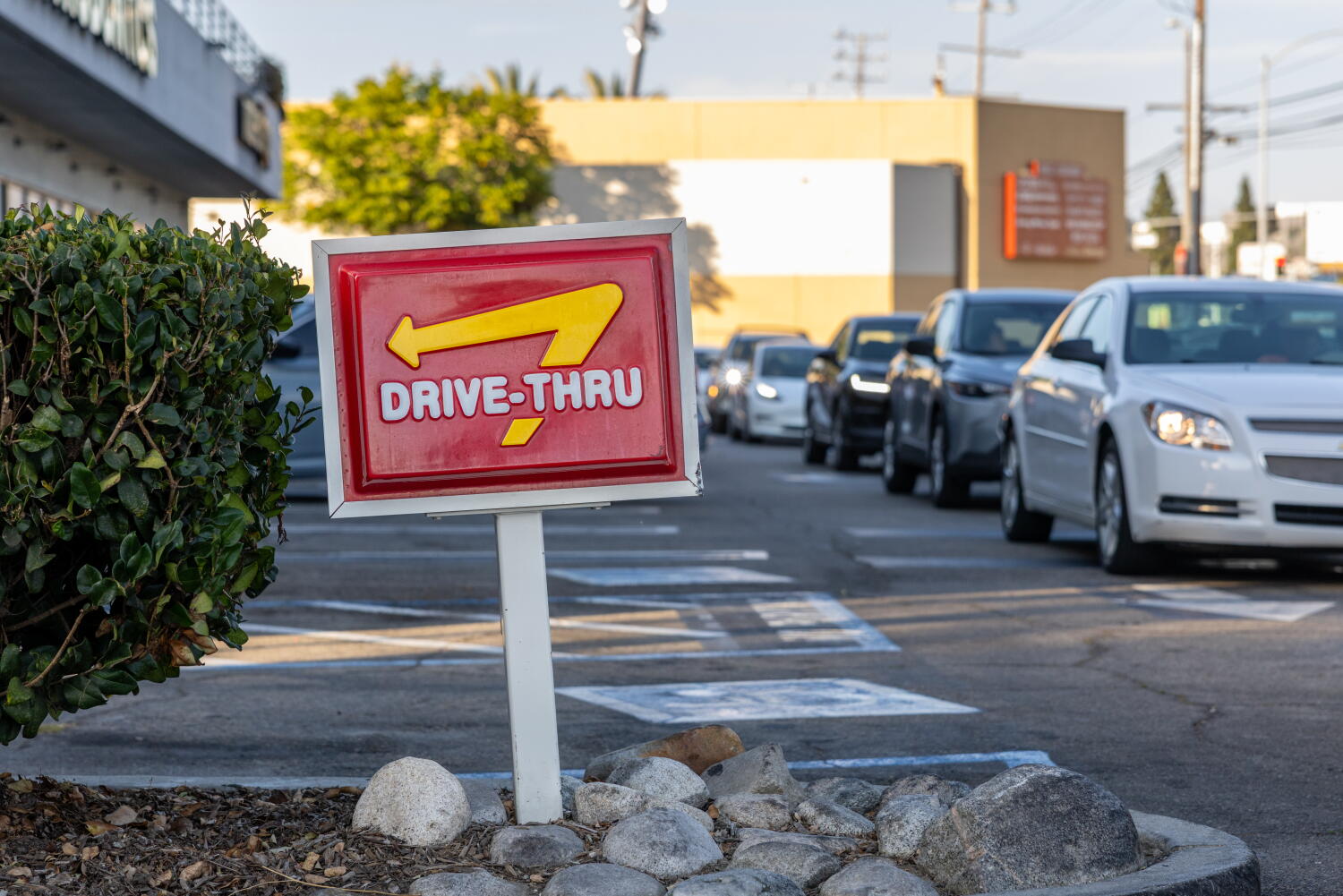
Outside in the drive-thru lane, twenty-year-old Luca Opperman sat in his car.
He wasn’t wearing body armor. He wasn't trained in tactical extraction. He was just another guy waiting for lunch, listening to the muffled commotion spill out into the open air. Most people look away when public safety degrades into public spectacle. We pull out our phones, angle our screens to capture the carnage, and become passive historians of other people's nightmares. We protect our own comfort above all else.
Luca did something entirely irrational. He chose empathy over self-preservation.
Witnesses in the queue later recalled hearing a sharp shout, followed by a blur of motion that defied gravity. Luca didn't use the front door. He launched himself feet-first through the narrow drive-thru window, vaulting into the stainless-steel workspace with the kinetic desperation of someone who realized that real lives were hanging in the balance just past the soda fountain.
In his left hand, he held a stainless-steel spatula.
It is an absurd image when stripped of its context. A spatula. Not a shield, not a baton, but a flat piece of metal designed for turning patties on a griddle. Yet, in that precise fraction of a second, that kitchen tool became the only barrier protecting cowering workers from a stick-wielding assailant. When the intruder swung her makeshift weapon, Luca stepped forward, positioning his body between the danger and a terrified crew trapped in the back.
He held the line.
We live in an era that deeply devalues the service worker. We treat retail and fast-food environments as disposable spaces populated by disposable people. We complain about wait times, price hikes, and minor inconveniences as if the human beings preparing our food are extensions of an automated app. We forget the vulnerability inherent in wearing a name tag. Behind every counter lies a person with a family, a rent payment, and a fragile, quiet life that they expect to return to safely when their shift ends at ten o'clock at night.
When the video of the Lake Elsinore confrontation hit the internet, the internet did what it always does: it cheered for the spectacle. Comments flooded social media calling for burgers for life, labeling him a superhero, comparing his frantic entry to an action movie stunt. But the viral nature of the event risks obscuring its heavier, more sobering truth.
It should never have come to a spatula.
The underlying rot of our current social climate is the erosion of basic civic patience. We have built a world where a late hamburger can trigger a violent rampage, where frontline workers are forced to retreat into back rooms while strangers film from their sedans. The system only functions because we collectively agree to respect the boundaries of one another's humanity. When that agreement collapses, civilization shrinks down to the size of a fast-food kitchen, defended by a twenty-year-old kid holding a kitchen utensil.
Luca climbed back out of that window after the dust settled, leaving behind a bewildered restaurant and a stunned group of coworkers whose afternoon had transformed into a trauma.
He didn't wear a cape. He drove away. But the image of that stainless-steel spatula flashing against the fluorescent lights remains etched into the collective conscience of a community that suddenly had to look closely at the invisible people who feed them.
The grill cools down at night. The floors are mopped, the waste bins are emptied, and the doors lock against the dark. But the next time you pull up to a drive-thru window and hand your card to a teenager in a paper hat, remember the window through which a young man once leaped. Look past the transaction. See the human being standing on the other side. And hope, quietly, that if the darkness ever reaches inside, someone nearby is brave enough to pick up whatever is closest to hand and stand in the gap.