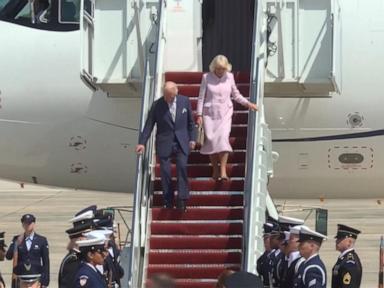
The King and Queen just touched down on American soil and the spectacle is exactly what you’d expect. Red carpets. Sharp suits. Heavy security details. But beyond the flashing cameras and the rigid protocol of a state arrival, there's a lot more happening than just a fancy photo op. While some people dismiss these visits as nothing more than expensive tourism for the elite, the timing of this specific trip says everything about the current state of "the special relationship" between the UK and the US.
You’ve seen the headlines. You’ve seen the footage of the plane door opening. But if you think this is just about tradition, you’re missing the point. This visit is a calculated move to stabilize a partnership that’s been through the wringer lately. It’s about soft power in its purest form.
The mechanics of a royal arrival in the States
When the King and Queen arrive in the US, the choreography is precise. It has to be. Every handshake and every nod is scripted months in advance by the State Department and the Foreign, Commonwealth & Development Office. This isn't just about showing up. It’s about setting a tone for diplomacy that politicians simply can’t match because they’re tied to specific policies. The royals represent something more permanent.
The arrival usually happens at a military base or a private terminal to manage the massive security footprint. You’ll notice the immediate transition from the aircraft to a motorcade. There’s no waiting at baggage claim here. The goal is to get the principals to their first engagement—often a meeting with the President or a high-ranking official—as quickly as possible to establish the "business" side of the visit.
Honestly, the logistics are a nightmare for the host city. Roads close. Airspace gets restricted. But for the US government, the payoff is worth the headache. Having the British monarch on the ground provides a sense of continuity that survives whoever happens to be in the White House or Downing Street at the time.
Why this trip isn't just another vacation
Critics love to talk about the cost. They point to the security bills and the private jets. They aren't wrong about the price tag, but they often ignore the ROI. A royal visit acts as a massive billboard for British interests.
Think about the sectors they’re highlighting. It’s not just tea and scones. They’re visiting tech hubs, climate research centers, and cultural landmarks. They're basically the world's most recognizable brand ambassadors. When the King talks about sustainability in a US city, he isn't just sharing a hobby. He's signaling to American investors that the UK is open for business in the green energy sector.
- Diplomatic signaling: Showing the world that the US-UK bond is unshakable despite political shifts.
- Economic ties: Boosting trade discussions through high-profile events with CEOs.
- Cultural soft power: Keeping the UK relevant in the American public consciousness.
The contrast between the US and the UK style
Watching the King and Queen navigate American culture is always a bit of a trip. The US is a republic founded on the very idea of rejecting a monarchy, yet Americans are arguably more obsessed with the royals than anyone else. This creates a weird tension during the arrival. You have the formal, almost stiff British protocol meeting the more casual, high-energy American welcome.
I've noticed that the royals who succeed in the US are the ones who can lean into that "approachable" vibe without losing their dignity. The current King has spent decades perfecting this. He knows when to be the statesman and when to crack a joke about the local weather.
Queen Camilla’s role is equally vital here. She often handles the "human" side of the visit—visiting literacy programs or domestic violence charities—which helps ground the trip. It moves the narrative away from "people in crowns" to "people doing work." That's how you win over a skeptical American public that doesn't quite get the whole hereditary title thing.
Security and the invisible wall
You won't see the most interesting parts of the arrival. Those happen behind the scenes. The Secret Service and the Metropolitan Police's Royalty and Specialist Protection branch work in a way that’s almost invisible but incredibly intense.
Before the King even steps off the plane, the "bubble" is established. Every person in the vicinity has been vetted. Every route has been swept. The level of coordination required for a British monarch to travel through an American city is staggering. It involves local police, federal agents, and military personnel.
It’s a massive show of force that actually serves a diplomatic purpose. It says, "We value this guest enough to move mountains for their safety." That kind of respect isn't given to everyone.
What happens after the cameras stop clicking
The arrival is the peak of the media frenzy, but the real work starts about an hour later. The King and Queen will split up for different engagements. He might go to a roundtable on global security, while she visits a school.
This "divide and conquer" strategy allows them to cover more ground in a short trip. By the time they leave, they’ll have touched on five or six major policy areas without ever actually saying "policy."
If you’re following this visit, don't just look at what they're wearing. Look at who they're meeting. If they're sitting down with tech leaders in California, it's about AI regulation. If they're in DC, it's about the special relationship. If they're in New York, it's about finance and global trade.
How to track the rest of the tour
The arrival is just the opening act. To really see if this trip is a success, you need to watch the reactions from the local communities. Are people showing up? Is the press coverage positive?
The real test comes in the days following the landing. Watch for the informal moments. The unscripted interactions often tell you more about the success of the trip than the official speeches. If the King is seen engaging naturally with Americans, the mission is accomplished.
Follow the official Royal social media accounts for the sanitized version, but keep an eye on local news outlets in the cities they visit for the "on the ground" reality. That's where you'll find the truth about how the visit is actually landing with the public. Pay attention to the specific charities they highlight, as these are chosen to mirror current US-UK joint priorities. Keep a tab on the business leaders invited to the state dinners; those guest lists are the real maps of power.



