You don't usually see a British monarch reaching for a potato salad at a neighborhood potluck. But that's exactly how King Charles III and Queen Camilla decided to wrap up their four-day sweep of the United States this week. After the high-stakes diplomacy of Washington and the somber silence of Arlington, the royals ditched the formal banquet vibe for something far more American: a block party in Front Royal, Virginia.
This wasn't just a random stop for a photo op. It was the final chapter of a trip designed to celebrate the US 250th anniversary. While the headlines usually focus on the friction between world leaders, this visit was about the optics of "the special relationship" at a ground-floor level. Moving from the hallowed ground of the Tomb of the Unknown Soldier to a town square filled with bluegrass music and marching bands is a hell of a way to say goodbye. Learn more on a related topic: this related article.
Remembering the fallen at Arlington National Cemetery
Before the party started, the mood was significantly heavier. On Thursday morning, the King and Queen stood under the Virginia sun at Arlington National Cemetery. If you've never been, it’s a place that demands a specific kind of quiet. The royals were met with a 21-gun salute, the kind of thunderous greeting that reminds you exactly who is in town.
Standing at the Tomb of the Unknown Soldier, King Charles laid a wreath of red poppies. It’s a move his mother, Queen Elizabeth II, made back in 1957. That historical echo isn't accidental. It’s a deliberate signal of continuity. He left a handwritten note on the wreath that simply said, "In everlasting remembrance." Queen Camilla followed up by placing a posy of red, white, and purple flowers. Further reporting by BBC delves into comparable perspectives on the subject.
The visit to the Canadian Cross of Sacrifice was perhaps even more telling of the day's intent. It honors Americans who volunteered to fight with Canadian forces before the US officially entered World War I. By stopping there, the King highlighted a time when the two nations weren't just allies by treaty, but by choice and shared blood. It’s a subtle bit of soft power that works better than any speech in the White House.
From solemn wreaths to bluegrass and block parties
Once the uniforms and bugles were gone, the King and Queen headed further into Virginia to the town of Front Royal. This is where things got interesting. Imagine the King of England walking past vintage cars and cheerleaders on a classic American Main Street. It sounds like a movie plot, but the town went all out for the "America 250" celebration.
The royals didn't just wave from a distance. They joined locals at a long potluck table. In a move that probably stressed out the security detail, they contributed a British dish to the spread, sitting right alongside local families and neighbors. It’s a far cry from the stiff, scripted royal tours of the past.
Why the local stop matters for the 250th anniversary
- The common touch: Meeting first responders and local volunteers in a small town does more for the Royal "brand" than a dozen gala dinners.
- Cultural exchange: They spent time watching Appalachian dancing and listening to bluegrass. It acknowledges that American culture isn't just Hollywood—it’s these deep-rooted regional traditions.
- The 1776 elephant in the room: This whole trip was about the 250th anniversary of the Declaration of Independence. There's a certain irony in the British King celebrating the moment his ancestor lost the colonies, but the block party turned that tension into a celebration of how far the relationship has come.
Queen Camilla and the Virginia horse country
While the King was busy with local dignitaries, Camilla took a side trip that was much more her speed. She visited Smitten Farm to talk about equine welfare and the racing industry. Virginia’s "horse country" is world-renowned, and the Queen is a known enthusiast.
She wasn't just there to pet foals. She met with veterinarians and breeders to discuss safety standards in the sport. It’s one of those "working" parts of a royal visit that often gets buried under the glitz, but it builds real connections with local industry leaders. She later joked that the trip had been a "whistlestop" and that they had "moved quite fast," but she seemed genuinely at home among the stables.
Dealing with the political backdrop
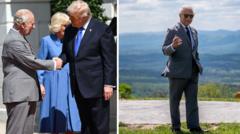
You can't ignore that this visit happened during a complicated political moment. President Trump and King Charles have vastly different styles, and there’s been plenty of talk about tension between the US administration and the current UK government. Trump didn't hold back his praise during the farewell, calling Charles "the greatest King."
The royals have to walk a razor-thin line here. They aren't political actors, yet every move they make is interpreted through a political lens. By focusing the final day on veterans at Arlington and ordinary citizens at a block party, they effectively bypassed the partisan noise. They reminded everyone that the "special relationship" exists between the people and the history, not just whoever happens to be in the Oval Office or 10 Downing Street at the time.
What happens after the farewell
As the King and Queen boarded their flight to Bermuda on Thursday evening, they left behind a trail of very specific images: the wreath at the Tomb, the rare kiss they shared before parting ways for different engagements, and the King laughing with a bluegrass band.
If you're following the impact of this tour, don't just look at the official communiqués. Look at the fact that a town in Virginia felt seen by the British monarchy during a quintessentially American birthday party. That’s the real takeaway. The royals are betting that personal connection and shared history still carry enough weight to steady the ship when politics get rocky.
Keep an eye on the upcoming "America 250" events throughout the rest of the year. This visit set the tone for how the UK intends to participate—not as a former ruler, but as a partner that’s willing to show up to the neighborhood potluck.