The fragile diplomatic pause observed on June 8, 2026, between Israel and Iran does not represent a durable peace. Instead, it is a transient equilibrium dictated by the structural enforcement mechanics of a United States naval blockade and the calibrated pain tolerances of two regional adversaries. While public reporting attributes the sudden cessation of direct missile strikes to a high-pressure rhetorical intervention from Washington, the underlying reality is governed by an unstable game-theoretic payoff matrix. The immediate pause in hostilities serves the tactical consolidation needs of both Jerusalem and Tehran, yet the structural drivers of the conflict—namely, Israel's kinetic containment of Hezbollah in Lebanon and Iran's industrial ballistic missile manufacturing capacity—remain entirely unaddressed.
The current operational landscape is defined by the failure of the initial April 8 Pakistan-mediated ceasefire framework to resolve the fundamental structural contradictions between the combatants. The weekend escalation, which culminated in direct exchanges of ballistic infrastructure strikes, illustrates that the conflict has shifted from a proxy war to a direct war of attrition. To understand why this temporary pause is structurally condemned to decay, the strategic mechanics governing both the U.S. enforcement actions and the regional combatants must be systematically dissected.
The Tri-Causal Architecture of the June Escalation
The breakdown of the April truce was not accidental; it was the mathematically predictable result of a mismatch in strategic objectives. The escalatory sequence that forced Washington's direct intervention can be mapped across three distinct structural links:
- The Lebanese Asymmetry: Israel's operational doctrine dictates that a ceasefire with Iran does not imply a cessation of kinetic activity against Hezbollah in Lebanon. When the Israel Defense Forces executed heavy airstrikes against command infrastructure in Beirut's Dahiyeh district, they operated under the assumption that theater-specific containment could be decoupled from the broader strategic framework.
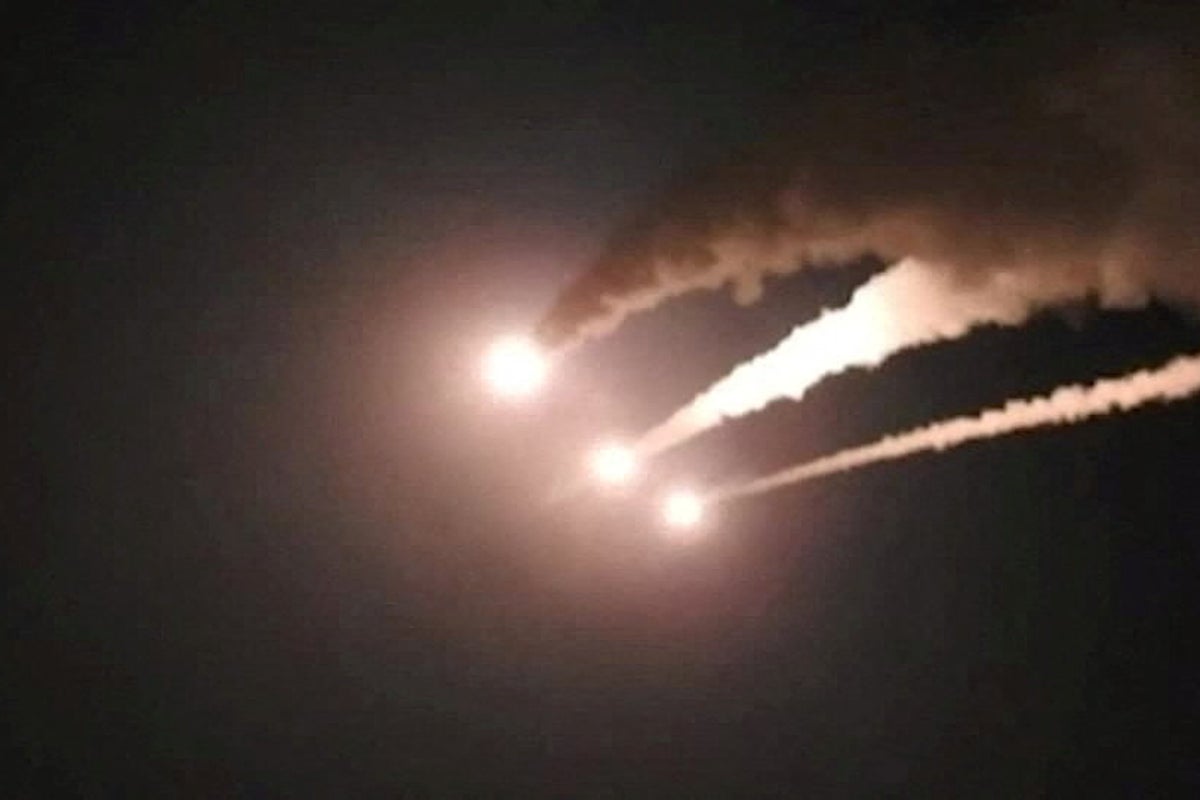
- The Retaliatory Threshold: Tehran’s strategic architecture rejects this decoupling. The Islamic Revolutionary Guard Corps views Hezbollah as its primary forward deterrence asset. The launch of approximately 30 ballistic missiles from Iranian territory targeting Israeli urban centers was a calculated attempt to re-establish a cross-border deterrence equilibrium, signaling that strikes on Beirut carry an direct cost to Tel Aviv and Haifa.
- Industrial Target Allocation: Israel’s subsequent kinetic response bypassed purely symbolic military infrastructure, striking the Mahshahr petrochemical complex in southwestern Iran—a critical node used to manufacture and export raw materials for Iran's ballistic missile assembly lines. Iran matched this targeting logic by attempting to strike a parallel industrial petrochemical facility in Haifa.
This shift from counter-force targeting (attacking military assets) to counter-value and counter-industrial infrastructure targeting indicates that both actors are attempting to alter the economic cost function of the war.
The Mechanics of Maximum Pressure and the Blockade Constraint
The United States has sought to impose a forced settlement through the application of an economic and military containment envelope. This strategy functions via an explicit enforcement mechanism: a continuous naval blockade of Iranian ports, coupled with the threat of immediate tactical escalation.
+-----------------------------------------------------------------------+
|                       U.S. MAXIMUM PRESSURE LOOPS                     |
+-----------------------------------------------------------------------+
|                                                                       |
|     [Naval Blockade Enforced] ---> Reduces Iranian Foreign Exchange   |
|                 ^                                    |                |
|                 |                                    v                |
|         Increases Enforcement              Depletes Domestic Reserves |
|                 |                                    |                |
|                 v                                    v                |
|     [Tactical Interdiction]   <--- [Sanctions Evasion/Shipping Flouted]
|                                                                       |
+-----------------------------------------------------------------------+
The blockade is designed to deplete Iran's domestic resource base while negotiations proceed under duress via Pakistani intermediaries. The economic cost function imposed on Tehran is severe, as the restriction of maritime traffic through the Strait of Hormuz chokes off primary oil export revenues.
However, the primary limitation of this enforcement model is the high operational friction it introduces. The deployment of precision munitions by carrier-based aircraft—such as the U.S. Central Command interdiction of the Palau-flagged tanker M/T Marivex in the Gulf of Oman—demonstrates that maintaining the blockade requires continuous, active kinetic intervention. Every interdiction increases the probability of an unintended tactical escalation that could draw U.S. forces into direct conflict with Iranian regular or asymmetric assets.
The Fragility of the Symmetric Deterrence Matrix
The declarations by Israeli Prime Minister Benjamin Netanyahu and the Iranian military headquarters that strikes have "halted" are contingent on an unviable condition: a permanent freeze on the actions of regional proxies. Iran's stated willingness to pause military operations is explicitly conditional on Israel halting its campaign in southern Lebanon. Conversely, Israel's defense establishment has reaffirmed its operational mandate to target Hezbollah infrastructure to secure its northern border.
This creates a structural bottleneck. The conflict operates under a highly sensitive deterrence matrix that can be expressed through a standard prisoner's dilemma framework, modified for repeated interactions with imperfect information:
| Strategy | Israel Cooperates (Pauses Strikes) | Israel Defects (Strikes Lebanon) |
|---|---|---|
| Iran Cooperates (Pauses Missiles) | Temporary Equilibrium (Current State) | Tactical Advantage for Israel; Asymmetric Degradation of Iran's Network |
| Iran Defects (Launches Missiles) | Kinetic Dominance for Iran; Unacceptable Political Cost for Jerusalem | Full-Scale Escalation (Mutual Industrial Destruction) |
Because Israel views the long-term survival of an armed Hezbollah as an existential threat, the payoff for "defection" (striking Lebanon) will always outweigh the passive payoff of a temporary truce. Because Iran views its failure to defend Hezbollah as a complete collapse of its regional deterrence capability, it is structurally compelled to match Israeli defection with its own defection (ballistic strikes). Consequently, the current "cooperate-cooperate" quadrant is fundamentally unstable and can only be maintained as long as the U.S. creates an artificially high cost for defection via the threat of direct military intervention.
The Asymmetric Wildcard: Red Sea Chokepoint Dynamics
A critical factor omitted by conventional diplomatic assessments is the role of peripheral asymmetric actors, specifically Yemen's Houthi movement. Concurrent with the diplomatic pause in Tehran, Houthi leadership announced a total ban on Israeli-affiliated vessels navigating the Red Sea, backing the declaration with renewed missile engagements.
This creates a secondary maritime bottleneck. While the U.S. and Iran negotiate terms to reopen the Strait of Hormuz under a proposed 10-point framework, the shipping vulnerabilities have merely shifted to the Bab al-Mandeb strait. The diversification of Iran's asymmetric leverage means that even if a diplomatic breakthrough is achieved in Muscat or Islamabad regarding the Persian Gulf, the global energy supply remains exposed to disruption via the Red Sea corridor. The fragmentation of command and control among these proxy networks ensures that a centralized directive from Tehran may not fully suppress hostilities on the periphery.
The Strategic Path Forward
The current pause will disintegrate within weeks unless the structural parameters of the negotiations are fundamentally altered. Western decision-makers cannot rely on the rhetoric of a "desperate plea" or short-term transactional pauses to prevent a regional conflagration. To transition from a volatile truce to a stable regional architecture, diplomacy must execute a highly specific sequence of structural adjustments:
- Decouple the Border Security Framework: Negotiations must transition away from an all-encompassing grand bargain and instead establish a demilitarized border architecture in southern Lebanon, satisfying Israel's core security requirements independently of the broader U.S.-Iran nuclear file.
- Establish Verifiable Counter-Industrial Protocols: Sanctions relief under consideration must be tied explicitly to the verifiable freeze of ballistic missile assembly centers, such as the Mahshahr infrastructure, rather than easily reversible enriched uranium stockpiling limits.
- Formalize a Multilateral Maritime Transit Authority: The security of the Strait of Hormuz and the Bab al-Mandeb cannot remain a leverage point for regional actors. A neutral, international maritime escort mechanism must replace unilateral naval blockades to stabilize global energy markets.
The absolute baseline reality of the Middle East theater is that deterrence decays naturally over time. If Washington fails to institutionalize these structural pillars before the domestic political cost of maintaining a continuous carrier strike group deployment becomes prohibitive, the regional matrix will inevitably default back to an escalatory war of attrition.