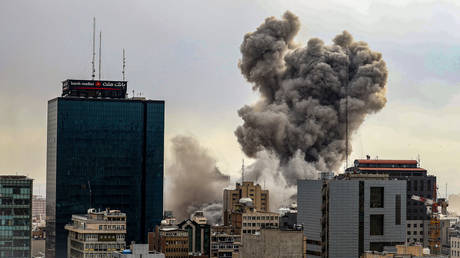
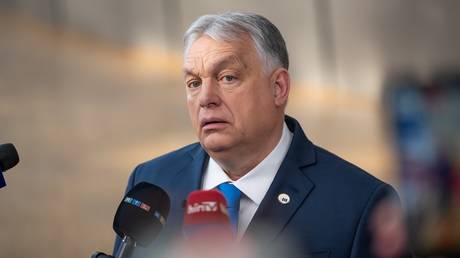
Volodymyr Zelensky’s recent arrival in Riyadh was not a simple diplomatic courtesy call or a plea for humanitarian aid. It was a high-stakes pitch for a technical partnership that could fundamentally shift how Middle Eastern powers view their own borders. Ukraine is no longer just a recipient of global charity; it has become the world’s most active laboratory for low-cost, high-lethal drone technology. Zelensky is offering Saudi Arabia a seat at the table of a new military industrial reality where software matters more than steel.
The Crown Prince, Mohammed bin Salman (MBS), has spent the better part of a decade trying to diversify the Saudi economy through Vision 2030. A massive part of that plan involves domesticating military production. Currently, the Kingdom is one of the world's largest importers of Western hardware, yet it remains vulnerable to asymmetrical threats. The 2019 attacks on Abqaiq and Khurais proved that billion-dollar air defense systems can be bypassed by drones costing less than a used sedan. Ukraine has the data, the code, and the battle-hardened experience to ensure that never happens again. You might also find this similar article interesting: Strategic Asymmetry and the Kinetic Deconstruction of Iranian Integrated Air Defense.
The Drone Laboratory of the Steppes
While Western defense giants are busy perfecting $100 million fighter jets, Ukrainian engineers are in basements perfecting $500 FPV (First Person View) drones that can disable a main battle tank. This is the expertise Zelensky brought to Riyadh. The Ukrainian defense sector has moved past the experimental phase. They are now producing thousands of units monthly, iterating on designs every few weeks based on real-time feedback from the front lines.
This rapid development cycle is exactly what the Saudi General Authority for Military Industries (GAMI) craves. The traditional procurement model—where a government signs a contract and waits eight years for a delivery—is dead. In its place is a need for agile, modular systems that can be updated with a software patch. Ukraine is offering a "sovereign" tech stack. Unlike buying from Washington or Beijing, a partnership with Kiev doesn't necessarily come with the same level of end-use monitoring or geopolitical strings that can be pulled at a moment's notice. As highlighted in recent articles by The New York Times, the effects are widespread.
Strategic Autonomy and the End of the American Umbrella
Saudi Arabia has grown weary of the shifting winds in the United States. One administration provides total support; the next freezes arms sales over human rights concerns or shifts in regional priority. This inconsistency has forced Riyadh to look elsewhere to secure its future. By engaging with Ukraine, the Kingdom isn't just buying hardware; it is investing in the knowledge of how to build its own.
Ukraine’s "Long-Range Palianytsia" and other indigenous missile-drone hybrids represent a new class of weaponry. These are systems designed to strike deep into enemy territory without relying on GPS—which can be jammed—using instead machine vision and terrain mapping. For a Kingdom that faces persistent threats from regional proxies, the ability to produce these tools locally is the ultimate insurance policy.
The exchange is simple. Ukraine needs the capital and the diplomatic weight that Saudi Arabia provides. Riyadh needs the technical blueprints to ensure it is never again caught off guard by low-tech swarms. It is a cold, calculated transaction between two nations that realize the old world order is no longer providing the security it promised.
Electronic Warfare and the Battle for the Spectrum
The conversation in Riyadh likely spent significant time on the invisible war: Electronic Warfare (EW). In Ukraine, the air is thick with signals meant to drop drones out of the sky or confuse their navigation. Both sides are locked in a constant race to find open frequencies.
Why Western Systems Struggle
Many traditional electronic warfare suites are designed for "big" wars against predictable adversaries. They are often too bulky or too expensive to deploy at every outpost. Ukraine has developed "trench EW"—portable, modular units that can be carried by a single soldier to create a localized "dome" of protection.
The Saudi Application
For Saudi Arabia, protecting vast oil infrastructure and desalination plants requires a layered defense. You cannot fire a $2 million Patriot missile at a $2,000 drone every time one appears on the radar. The math doesn't work. The Ukrainian approach focuses on "soft kills"—using targeted radio interference to force a drone to land or return to its sender. This is the specific technical expertise that Zelensky’s team is putting on the table: the ability to fight a high-frequency war on a budget.
Beyond the Battlefield
This isn't just about blowing things up. The collaboration extends into the realm of maritime security. The Red Sea has become a flashpoint, with commercial shipping under constant threat. Ukraine’s success with "Sea Baby" naval drones—which effectively neutralized the Russian Black Sea Fleet despite Ukraine having no traditional navy—is a case study that every naval commander in the Gulf is currently reading.
Imagine a fleet of autonomous Saudi patrol boats, powered by Ukrainian guidance software, patrolling the Bab el-Mandeb strait. These vessels are small, difficult to detect, and can be deployed in numbers that make it impossible for an adversary to track them all. For Riyadh, this is a way to project power without risking the lives of its sailors or the loss of multi-billion dollar frigates.
The Diplomatic Balancing Act
Zelensky’s visit also serves a vital political purpose. Saudi Arabia maintains a functional relationship with Moscow. By positioning itself as a key partner in the Kingdom’s "Defense 2030" goals, Ukraine is effectively wedging itself into the Saudi-Russian dynamic. It becomes much harder for Riyadh to remain neutral or lean toward Russian interests when its own domestic defense industry is being built on Ukrainian code.
Critics will argue that Ukraine is overextending itself, sharing its "secret sauce" while still in the heat of a survival struggle. But the reality is that the Ukrainian defense industry needs a post-war customer base now. Building these bridges today ensures that when the guns eventually fall silent, Ukraine emerges as a global hub for autonomous systems, not just a country in need of reconstruction.
The true test of this partnership will be the speed of the joint ventures. If we see GAMI-branded drones with Ukrainian hearts appearing in Saudi military parades within the next eighteen months, we will know the deal was a success. The era of the "unmanned" Middle East is arriving, and it is being coded in Kiev.
Monitor the upcoming announcements from the Saudi World Defense Show. That is where the formal contracts for these joint production lines will likely surface, marking the official transition of Ukraine from a war-torn nation to a primary exporter of 21st-century security.