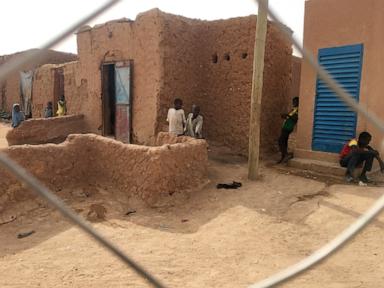
Two women from Austria and Switzerland were freed in Niger after more than a year and a half in captivity, yet the real story isn't just their return home. It's what their ordeal reveals about how broken Sahelian security has become.
Eva Gretzmacher and Claudia Abbt were both living in Agadez, in northern Niger, when they were taken in separate abductions in early 2025. Gretzmacher had spent over two decades in Niger as an aid worker, far from Niamey. She was abducted on January 11, 2025. Abbt was kidnapped on April 13, 2025. On October 22, 2026, officials in Vienna and Bern confirmed their release after they turned up in Benghazi, Libya, before making their way back to Europe.
Relief is obvious. Still, celebrations shouldn't paper over a hard truth. Long-term residents who built real lives in northern communities aren't immune anymore, and quiet backchannels across borders now carry heavy diplomatic weight.
What Really Happened Behind Their Release
Official statements kept plenty of details under wraps, which is standard in hostage cases when lives are still on the line. Foreign ministers Beate Meinl-Reisinger in Austria and Ignazio Cassis in Switzerland thanked regional and international partners for discreet coordination over many months.
Reports point to a cross-border patchwork rather than a single clean rescue. A source close to the case told AFP that the kidnappings were tied to Islamic State-Sahel Province, and that the two women had spent time held in the Menaka area of northeastern Mali. Meanwhile, eastern Libyan broadcaster Al Masar reported that their emergence in Benghazi followed intervention involving the family of Khalifa Haftar, whose forces hold sway across eastern and southern Libya.
A hostage ordeal that starts in northern Niger can easily end across two borders—in Mali's deserts or eastern Libya—long before a single official statement hits the wire.
That geography matters. Armed groups and local power brokers treat Sahel and Sahara borders like porous corridors, not hard walls. Even when governments stay quiet on exact terms, the route from Agadez to Menaka to Benghazi shows how regional leverage often drives outcomes when state control is thin.
Before October 22, false rumors of their release had already circulated more than once. Families living through those false alarms know how cruel hope can be when rumors outpace verified facts.
Why Kidnappings in Niger Keep Happening Despite Junta Promises
If you follow West African politics, you've heard plenty of tough talk from Niger's military authorities since the July 2023 coup. The junta pledged to restore order in volatile areas. Honestly, the security picture has kept sliding anyway.
Analysts widely note that Niger's security crisis has worsened since the 2023 military takeover, with frequent attacks testing the junta's ability to protect civilians and outsiders alike. When counterterrorism partnerships shift, border patrols stretch thin, and armed factions exploit every gap between Niamey, Agadez, and neighboring Mali.
Longtime Residents Face Real Risk Too
A common mistake is assuming only short-term tourists or careless travelers get targeted. That's dead wrong.
Living somewhere for twenty years doesn't create a forcefield. Familiarity with local streets, friendships with neighbors, and humanitarian work can make someone feel safe—until conditions shift faster than personal routines. In high-risk zones, time spent on the ground can breed complacency, even among seasoned aid workers who know the region well.
Travel Advisories Exist for a Reason
Switzerland's Federal Department of Foreign Affairs has advised against all travel and stays in Niger since December 1, 2009, explicitly warning of kidnapping risks and noting that consular help in an emergency is limited if citizens stay against official warnings.
Critics sometimes argue blanket warnings don't capture day-to-day calm in certain neighborhoods. Fair point on nuance—calm days do happen. Still, when kidnapping risk is chronic and cross-border movement is active, "it's been quiet lately" isn't a risk model.
What Experts and Families Misread About Hostage Crises
Watching two women return home after more than twenty-one months makes it tempting to see a neat resolution. In reality, hostage recoveries rarely follow a tidy script.
- Public silence isn't inaction: Governments often avoid naming perpetrators or payment/negotiation details publicly so ongoing cases or future channels aren't blown up.
- Rumors spread faster than truth: Unverified social media posts or premature reports of freedom happen regularly in long captivities, leaving relatives on an emotional rollercoaster.
- Arrival isn't the finish line: Stepping off a plane in Vienna or Bern ends captivity, not recovery. Medical care, privacy protection, and psychological adjustment take months—sometimes years—away from cameras.
There's also legitimate debate among analysts over how much weight outside power brokers like eastern Libyan factions should carry in regional diplomacy. Some observers see pragmatic results when traditional or regional actors step in; others worry empowering armed networks creates moral hazard down the road. Both views deserve a sober look rather than knee-jerk praise or outrage.
Practical Steps If You Travel or Work in High-Risk Regions
Whether you're advising a team, planning field research, or supporting someone abroad, good preparation starts long before trouble hits.
- Check official advisories before every trip—and before renewing stays: Read current guidance from agencies like the Swiss Federal Department of Foreign Affairs or your own home foreign ministry, and pay attention to limitations on emergency assistance.
- Audit routines, not just routes: If you or your organization operate long-term in a volatile area, review predictability. Predictable schedules and familiar hangouts are easy for bad actors to watch.
- Set clear family and crisis communication rules: Agree in advance on verified official contacts, how to handle unconfirmed rumors, and how to protect relatives' privacy if an incident occurs.
- Build real evacuation and medical contingencies: Make sure insurance, extraction plans, and trauma care options are lined up ahead of time—never improvised mid-crisis.
The return of Gretzmacher and Abbt brings genuine relief to two families who waited far too long. Keeping that relief grounded means staring straight at the unstable borderlands that took them in the first place.


