Two deaths. One family. A wave of predictable, lazy panic.
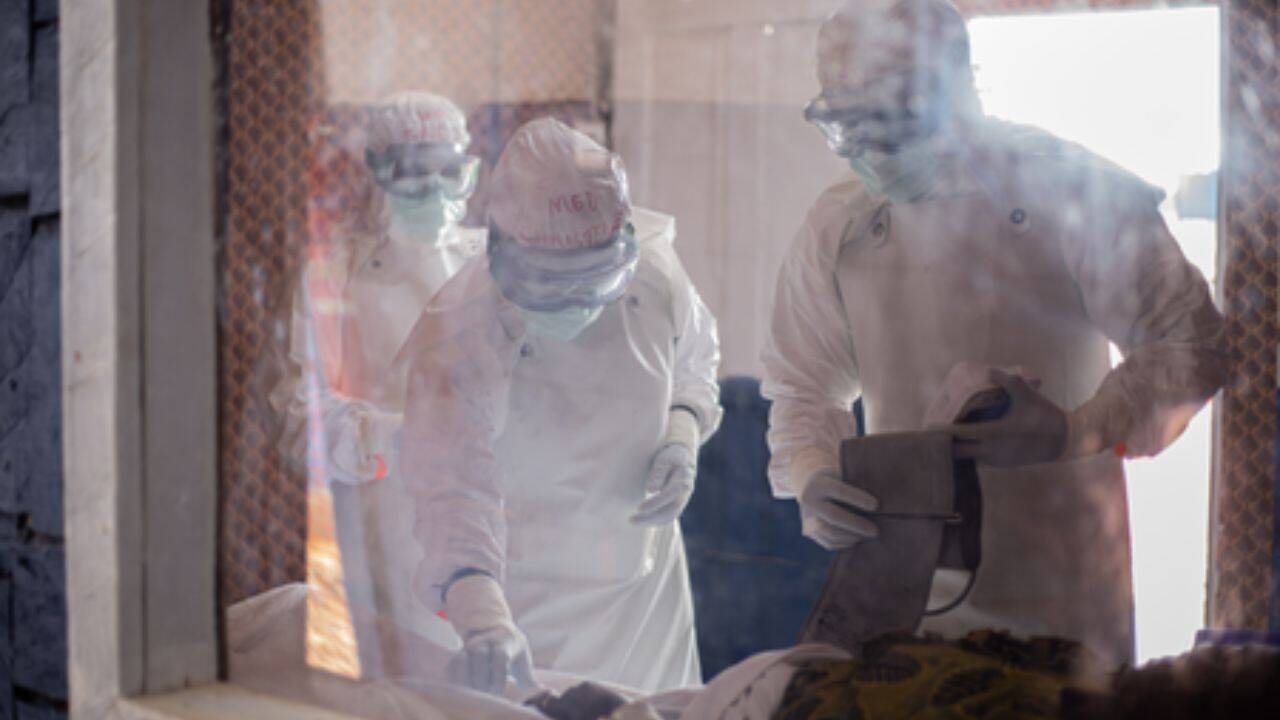
When health officials in Kenya confirm a second Ebola fatality—and reveal the victim was a close relative of the index case—the mainstream media machine defaults to its favorite setting. Apocalyptic headlines. Stock photos of hazmat suits. Hand-wringing op-eds asking if East Africa is staring down the barrel of a 2014 West Africa repeat. You might also find this connected story interesting: Ebola Importation Dynamics in Kenya Why Quarantine Containment Beats Border Screening.
They are reading the data completely backward.
A second death inside an immediate family unit is not a sign that the virus is out of control. It is proof that the epidemiological perimeter is holding. If you want to know when an outbreak is actually spiralling into a catastrophe, you don't look at family members dying in isolation wards. You look for unlinked cases popping up in crowded transit hubs three towns over. As extensively documented in latest reports by National Institutes of Health, the effects are significant.
Right now, the consensus narrative is selling fear because fear gets clicks. Here is the cold, hard epidemiological reality they are ignoring.
The Anatomy of a Family Cluster vs. Community Spread
To understand why the current panic is misplaced, you have to understand how filoviruses—specifically Orthoebolavirus zairense and Orthoebolavirus sudanense—actually move through human populations.
Ebola is not measles. It is not SARS-CoV-2. It does not hang in the air of a Nairobi matatu waiting to infect forty strangers who happened to breathe near an asymptomatic carrier. Ebola is a disease of intimacy, caregiving, and bodily fluids. It requires direct physical contact with blood, secretions, organs, or other bodily fluids of infected people, or with surfaces and materials contaminated with these fluids.
When an index patient falls ill, the people at highest risk are not random commuters. They are the mothers, spouses, siblings, and healthcare workers who wipe away sweat, clean up vomit, and prepare bodies for burial.
The High-Risk Circle
In outbreak epidemiology, we track transmission chains by generational rings.
- Generation Zero: The index case, who typically contracts the virus via spillover from a zoonotic reservoir (like fruit bats) or crosses a porous border from an active outbreak zone.
- Generation One: Household contacts and unprotected clinical staff.
- Generation Two: Extended community contacts, traditional healers, and funeral attendees.
When Kenya reports that the second fatality is a close relative of the first patient, that is a classic Generation One event. It means the viral transmission followed the most predictable, localized path possible. More importantly, the fact that health authorities know the exact relationship between the two victims means the chain of transmission is visible.
I have spent years watching public health responses collapse in real time, and I can tell you the exact moment an outbreak becomes a nightmare. It isn't when a brother catches the virus from a sister. It is when a patient shows up at a regional hospital bleeding from the gums, and nobody in the contact-tracing database has ever heard their name.
Blind spots kill. Known links get contained.
Why the Media Always Gets Outbreak Math Wrong
Journalists love raw body counts. Epidemiologists care about epidemiological linkage.
If a country reports ten Ebola cases and all ten are traced back to a single household exposure before the index patient was isolated, that outbreak is functionally under control. If a country reports two Ebola cases and neither patient has any connection to the other, that country has an active, unseen wildfire burning through its population.
By framing a relative's death as an "escalation," coverage obscures the single most important metric in infectious disease control: the percentage of new cases arising from known contact lists.
| Metric | What the Headlines Imply | What Epidemiologists Actually See |
|---|---|---|
| Relative Infected | The virus is spreading rapidly. | Transmission remained confined to the primary household. |
| Death in Isolation | Treatments are failing. | The patient was removed from the community before shedding peak viral loads. |
| High Case Fatality | The strain is mutating into a super-bug. | Filoviruses naturally carry a 50% to 90% mortality rate without early aggressive care. |
The Illusion of Containment Speed
Public health outsiders often assume that once a Ministry of Health sounds the alarm, transmission should drop to zero the next morning. That is biologically impossible.
Ebola has an incubation period ranging from 2 to 21 days. During this window, an exposed person feels completely fine. They are not contagious. They cannot spread the virus, nor will a standard PCR test reliably detect it until symptoms begin.
When a close relative dies days after the first patient, they were almost certainly infected before the index case was ever diagnosed or placed in an isolation unit. The second death is an echo of the initial exposure, not a failure of the current quarantine. Treating an incubation lag as a containment breach is like blaming the fire department for smoke coming out of a building they just arrived at.
The Real Threat Nobody Is Talking About
If the mainstream press wants to panic about something in East Africa, they should stop obsessing over the biological spread of the virus and start looking at nosocomial transmission and community trust.
Those are the actual twin engines of every major Ebola disaster.
1. Nosocomial Amplification
"Nosocomial" is a clean clinical word for a messy reality: hospitals acting as viral blenders. When an early Ebola patient walks into a local clinic complaining of fever, headache, and muscle pain, they look identical to a malaria or typhoid patient.
If that clinic lacks basic personal protective equipment (PPE)—gloves, face shields, impermeable gowns—or if staff reuse needles, the healthcare workers become Generation One victims. Once nurses and doctors start dying, the local healthcare system collapses. People stop going to hospitals for malaria, childbirth, and trauma. Mortality spikes across the entire region from entirely preventable, non-Ebola conditions.
2. The Coercion Trap
The second fatal mistake governments make during early outbreaks is deploying heavy-handed, militarized quarantine tactics.
Imagine a scenario where armed police barricade a neighborhood and forcibly haul sick relatives away in unmarked ambulances, refusing to let families see their loved ones or perform traditional burial rites. What happens next? Families hide their sick. Symptomatic patients flee across county lines or porous borders to avoid detention. Contact tracers get met with locked doors and fake names.
The World Health Organization (WHO) and Médecins Sans Frontières (MSF) learned this lesson the hard way during the 2014–2016 West African epidemic and the 2018–2020 Kivu outbreak in the Democratic Republic of the Congo. You cannot beat a filovirus with a baton. You beat it with radical transparency, safe and dignified burials that respect local customs, and community-led surveillance.
Dismantling the Worst Questions About Ebola
Whenever a headline like this drops, search engines flood with the exact same misinformed questions. Let's tear them apart.
"Is Ebola becoming airborne?"
No. Stop asking this. Every single time a filovirus makes the news, armchair virologists speculate that it will mutate to spread through the air like influenza. In over four decades of documented human outbreaks since 1976, Orthoebolavirus has never shifted its mode of transmission to become airborne. Changing the fundamental cellular tropism and aerosol stability of a complex negative-sense RNA virus requires massive structural evolution, not a few weeks of human-to-human passage.
"Why didn't the vaccine stop this?"
Because ring vaccination is a shield, not a time machine. The rVSV-ZEBOV vaccine (Ervebo) is extraordinarily effective against Zaire ebolavirus, and experimental vaccines exist for the Sudan species. However, vaccines require roughly 10 days post-injection to build protective immunity. If a close relative was already exposed while caring for the index patient, administering a vaccine after symptoms appear—or late in the incubation window—will not reliably stop the disease from progressing.
"Should neighboring countries close their borders?"
Border closures are political theater. They do not stop viruses; they drive travelers off official checkpoints and onto unmonitored dirt roads. When people cross informally to buy food or visit family, health screeners lose all visibility into who is moving where. Screening at official points of entry combined with cross-border contact tracing data works. Closing borders makes things worse.
The Downside of the "Calm Down" Approach
Let's be brutally honest about the flaw in my own argument.
While treating a family cluster as proof of functioning contact tracing is epidemiologically sound, complacency is lethal.
If public health officials use the "it's just a family cluster" narrative to justify underfunding surveillance teams, delaying PPE shipments to rural clinics, or slowing down lab turnaround times, a contained cluster can still explode. In the 2014 Guinea outbreak, the virus smoldered in a rural prefecture for months before anyone realized it wasn't just isolated family tragedies. By the time it hit Conakry, the contact lists were worthless.
The margin for error with Ebola is zero. A single missed contact who attends a crowded funeral—where washing and touching the body is customary—can turn a two-person family tragedy into a fifty-person super-spreader event overnight.
What Kenya Must Do Right Now
Forget the press conferences and the generic travel advisories. Containment lives and dies in the unglamorous logistics of field epidemiology over the next 42 days (two full incubation cycles).
- Publish the epidemiological links daily. Stop releasing raw case counts without context. Tell the public explicitly whether new cases were already under active quarantine and monitoring when they developed symptoms. Transparency kills rumors faster than censorship.
- Flood primary care clinics with basic PPE. Don't just stockpile gear at national referral hospitals in Nairobi or Mombasa. Put gloves, face shields, and chlorine spray in the hands of triage nurses at rural dispensaries where index and secondary cases actually walk in first.
- Pay contacts to stay home. Telling a daily wage earner to isolate for 21 days without providing food, water, and mobile money stipends guarantees they will break quarantine to feed their kids. Isolate the barrier to compliance, and people will comply.
- Deploy ring vaccination immediately (if strain-appropriate). If laboratory sequencing confirms Zaire ebolavirus, vaccinate every primary contact and every contact of a contact within 48 hours. If it is the Sudan strain, deploy monoclonal antibody trials and ring-fenced clinical protocols immediately.
Stop watching the death toll and start watching the contact list. As long as the virus stays inside the circle of people health workers are already watching, Kenya isn't losing this fight—it is winning it.