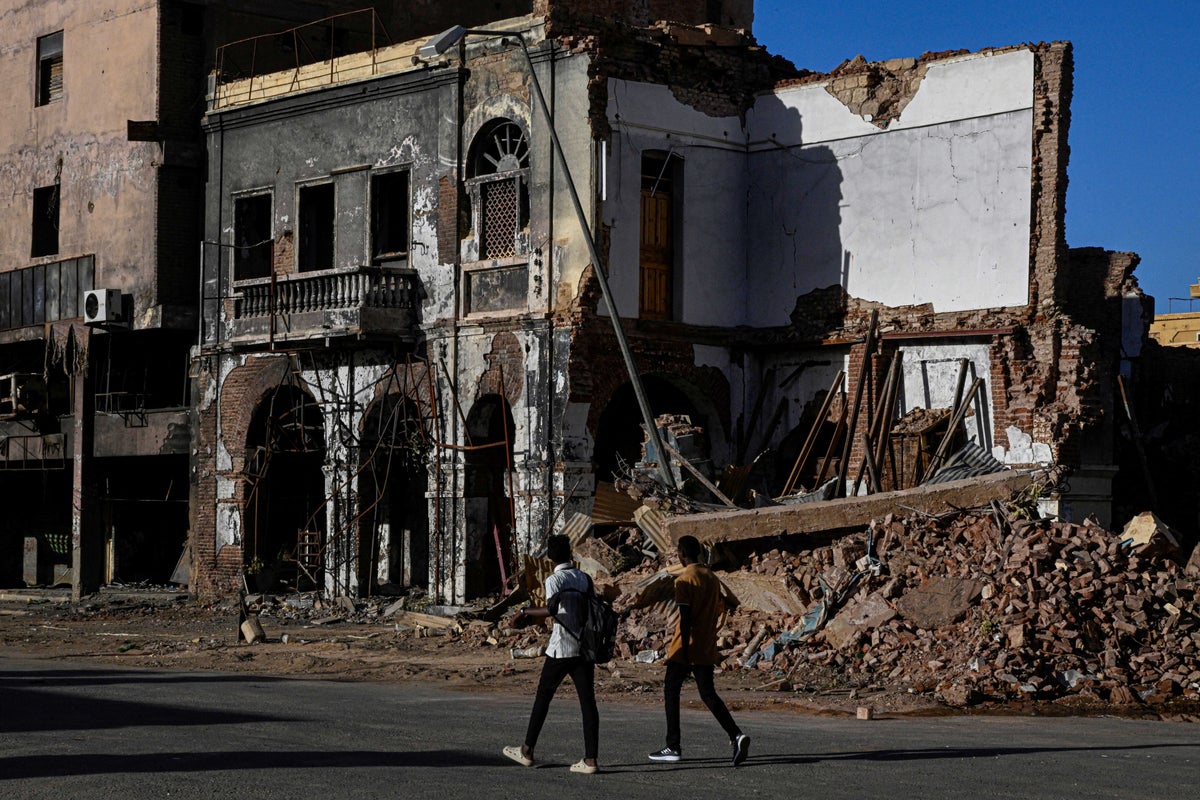
International courts love to talk about justice. They issue statements, fund commissions, and draft dense reports from comfortable offices in Europe. Meanwhile, the actual perpetrators of the catastrophic civil war in Sudan travel, trade, and live comfortably in neighboring African capitals.
That comfort zone just shattered. Don't miss our previous post on this related article.
A historic legal action filed in Nairobi is attempting to do what the global community has failed to manage for over two years. Twelve Sudanese survivors, backed by Legal Action Worldwide (LAW) and the African Centre for Justice and Peace Studies (ACJPS), submitted a formal criminal complaint to Kenya’s Director of Public Prosecutions (DPP). They are demanding a full criminal investigation into 10 high-ranking members of the paramilitary Rapid Support Forces (RSF) for war crimes and crimes against humanity.
This isn't another toothless petition. It's a calculated legal ambush utilizing a powerful framework that most regional elites assumed would never be weaponized against them. If you want more about the history here, NBC News provides an in-depth breakdown.
The Strategy of Universal Jurisdiction Explained
You've probably never heard of universal jurisdiction, or if you have, you thought it was a legal theory reserved for European courts trying ex-dictators. It's actually a straightforward concept. Some crimes are so fundamentally heinous—think torture, genocide, and human trafficking—that they constitute an attack on all of humanity. Under this principle, any country has the authority to prosecute the perpetrators, regardless of where the crime happened or the nationality of the victims and suspects.
Kenya has these laws on its books. The country's International Crimes Act gives domestic authorities the clear mandate to investigate and prosecute global atrocities. The twelve complainants are forcing Kenya to put its money where its mouth is.
The target list isn't random. The complaint specifically names 10 RSF commanders and operatives. Crucially, several of these individuals frequently travel to Kenya, maintain business assets there, or use Nairobi as a logistical hub. By filing the case locally, advocates are attempting to freeze their assets and stop them from using the country as a playground.
Inside the Khartoum Terror Network
The details contained in the filing are stomach-turning. We aren't dealing with collateral damage or the chaotic byproducts of urban warfare. The testimonies outline a highly organized system of terror deployed by the RSF in and around Khartoum between April 2023 and March 2025.
The filings pinpoint specific horror sites:
- Soba Prison
- The Al-Riyadh complex
- Secret, informal detention black sites hidden in residential neighborhoods
One 34-year-old survivor, identified under the pseudonym Ali B., detailed being violently interrogated and held in pitch-black cells for weeks. In a sickening attempt to strip away his humanity, RSF guards held him at gunpoint and tried to force him to rape a male cellmate.
This isn't isolated sadism. It's a military doctrine. The UN Fact-Finding Mission on Sudan and major human rights groups like Amnesty International have repeatedly verified that the RSF systematically uses sexual violence, gang rape, and sexual slavery as weapons to humiliate populations, punish suspected supporters of the Sudanese Armed Forces (SAF), and ethnically cleanse neighborhoods. Men, women, and even young children have been targeted in front of their own families to maximize collective psychological trauma.
Why the International Criminal Court Isn't Enough
You might wonder why these victims are knocking on Kenya’s door instead of heading straight to the International Criminal Court (ICC) in The Hague. The answer is simple: the ICC is legally bottlenecked.
The ICC’s specific mandate in Sudan is strictly limited to the Darfur region due to a 2005 UN Security Council resolution. Because Sudan isn't a state party to the Rome Statute, the ICC cannot automatically investigate crimes committed in Khartoum or other provinces without another explicit UN referral. Given the gridlock and veto patterns among global superpowers on the Security Council, a new referral is virtually impossible.
Domestic courts inside Sudan are equally useless right now. The local judiciary has collapsed under the weight of the war, and the institutional bias makes genuine accountability a fantasy. This leaves regional domestic courts using universal jurisdiction as the only viable path forward.
The Hypocrisy of Safe Havens
Let's be completely honest about the regional politics here. For the past two years, East African nations have played a double game. They offer rhetorical support for Sudanese refugees while simultaneously rolling out the red carpet for the wealthy commanders funding the slaughter.
RSF leadership has routinely used Nairobi, Addis Ababa, and Kampala for diplomatic meetings, medical treatments, and financial transactions. This legal complaint targets that hypocrisy directly. If Kenya’s DPP acts on this filing, it sends a terrifying message to warlords across the continent: your money cannot buy immunity, and your travel privileges are revoked.
The Kenyan DPP has exactly 30 days to review the filing and decide whether to launch an official criminal investigation. This timeline puts immense pressure on Nairobi’s legal infrastructure.
What Happens Next
The immediate focus is pushing the Kenyan government to honor its statutory obligations. The legal team, led by Kenyan counsel Dr. Owiso Owiso, has built a solid framework, but political pressure to bury the case will be intense.
If you want to track the progression of regional accountability and support the push against impunity, keep a close eye on these specific metrics over the next month:
- The 30-Day DPP Decision: Watch for an official statement from Kenya’s Office of the Director of Public Prosecutions regarding the opening of a formal file.
- Asset Tracking: Monitor whether civil society groups successfully leverage this filing to push the Kenyan Asset Recovery Agency to freeze properties linked to the named RSF commanders.
- Cross-Border Legal Mimicry: Look out for similar universal jurisdiction filings in neighboring countries like Uganda or South Africa, which possess similar international crime statutes.
The domestic accountability system and the broader international community have failed the people of Sudan for years. If this Kenyan case succeeds, it will rewrite the playbook for how victims of conflict pursue justice across the global south.
For a deeper look into the systemic nature of these violations, you can watch Sudan's RSF accused of 'sickening' sexual violence on women, girls: Report, which provides essential background context on how these documented atrocities are used as an organized military strategy in the ongoing civil war.



:max_bytes(150000):strip_icc():focal(665x0:667x2)/gettyimages-50733149-2000-8b129a2475974982a915418ce92a73d8.jpg)