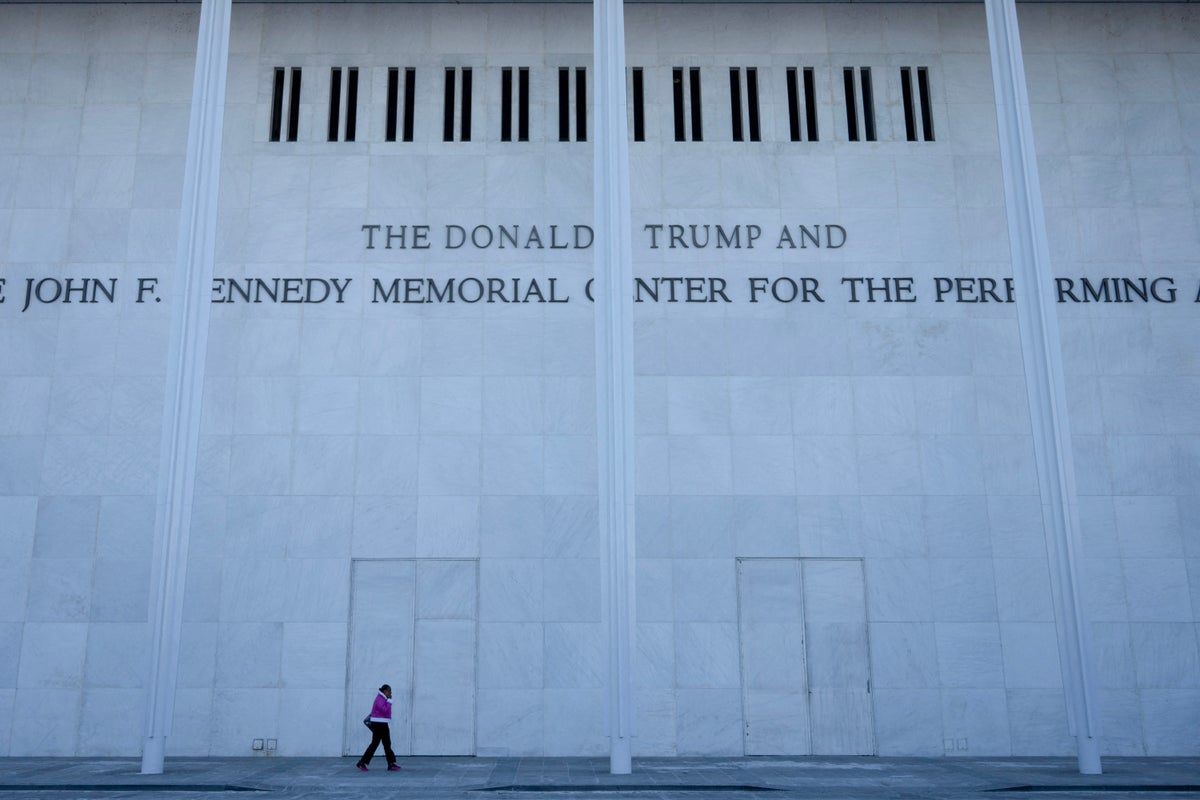
The media is throwing a victory party because U.S. District Judge Christopher Cooper ordered Donald Trump’s name scrubbed from the Kennedy Center and blocked its two-year renovation closure. They see it as a triumph of institutional checks and balances over executive vanity. Representative Joyce Beatty calls it a win for the performing arts.
They are completely wrong. This ruling is an absolute disaster for the long-term survival of the institution.
By hyper-focusing on the hyper-partisan aesthetics of whose name sits on the marble portico, the court and its cheerleaders have structurally destabilized one of the country's premier cultural venues. They traded a massive private fundraising lifeline for a temporary political dunk. The establishment got its pristine legacy branding back, but it inherited a broke, deteriorating building with an empty performance calendar and zero viable economic backup plans.
The Cost of Pure Legacy
Let’s look at the brutal administrative math that the mainstream coverage conveniently glosses over. The Kennedy Center is not an ethereal temple funded by pure artistic merit. It is an expensive, aging beast of a building that requires massive capital infusions to remain functional.
Before the court intervention, the venue’s board used a strategy that luxury institutions, universities, and hospitals have utilized for generations: leveraging a powerful political brand to unlock massive private capital. Love him or hate him, Trump brought the heat. According to court filings from Kennedy Center officials, the administration had already secured $257 million in federal funding and Trump had personally raised tens of millions of dollars in private commitments. He was on the hook to raise another $150000000 over the next two years.
For an institution that has historically struggled with structural deficits and deferred maintenance, that kind of cash injection is oxygen.
What happens now? Judge Cooper rules that the board overstepped its statutory bounds by altering the name to the “Donald J. Trump and John F. Kennedy Memorial Center for the Performing Arts.” Trump immediately posts on Truth Social that he is washing his hands of the project, telling the Department of Commerce to dump the responsibility of operation and maintenance back onto Congress.
Imagine a scenario where a university rejects a $150 million donation because the donor's politics offend half the student body. The administration gets applause on social media, but three years later, the chemistry lab closes because the roof is caving in. That is exactly what just happened in Washington. The private donors tied to that $150 million are gone. Congress, perpetually deadlocked and facing a massive federal deficit, is not going to suddenly pass a standalone bill to fill a nine-figure hole for classical music and ballet.
The Fallacy of the Phased Renovation
The second part of the ruling is even more economically illiterate. The judge blocked the proposed two-year closure of the venue, which was scheduled to start this July. The legal challenge, pushed by preservationists and disgruntled board members, argued that the facility could simply do its repairs incrementally while staying open.
Anyone who has ever managed a large-scale commercial real estate project or a major cultural infrastructure overhaul knows that "phased renovation under operation" is a financial nightmare. I have seen arts organizations bleed millions trying to keep the lights on while construction crews work around them.
- The Double-Cost Trap: When you renovate a massive performing arts center piece by piece while trying to hold performances, your labor costs skyrocket. Crews can only work during weird, off-peak hours. Heavy machinery must be constantly mobilized and demobilized to accommodate matinees.
- The Acoustic Nightmare: You cannot run jackhammers, rewire major HVAC systems, or expose structural steel while an orchestra is trying to tune a violin. The acoustic disruptions alone mean canceled rehearsals, refunds for angry ticket holders, and a degraded patron experience.
- The Operational Void: The Kennedy Center board had already laid off a significant portion of its staff in anticipation of the July shutdown. Thanks to this injunction, the center must now stay open, but its performance calendar is essentially a blank sheet of paper. You are forced to pay for facility upkeep, security, and administrative overhead for an empty house.
The board’s original plan to tear the band-aid off, close for two years, and execute a total overhaul all at once was logistically sound. It minimized the total timeline and consolidated the bleeding. By forcing the venue to remain open under the guise of protecting its programming, the court has guaranteed a protracted, agonizing era of operational disruption that will cost double the original estimate.
The Myth of Private Cultural Independence
The core delusion driving this entire legal battle is the idea that public cultural institutions can survive on historical prestige alone. The assumption embedded in the lawsuit is that the Kennedy Center belongs exclusively to "the American people" and should remain untainted by commercial or political branding deals.
That world no longer exists. The federal government’s allocation for the arts is a rounding error in the national budget. Major performing arts hubs across the globe survive via aggressive, often uncomfortable, billionaire philanthropy. David Geffen gave $100 million to Lincoln Center, and they renamed Avery Fisher Hall after him. No one lost their mind.
The Kennedy Center board recognized that the institution's financial model was broken. They made a transactional trade: name recognition on the facade in exchange for a quarter-billion dollars in modernization capital. It was a cold, pragmatic business decision.
By declaring that only Congress has the power to change the name or authorize a full operational pause, the court has effectively stripped the board of its ability to pivot in times of financial crisis. It traps the institution in amber, forcing it to rely on a dysfunctional legislative branch for every major strategic decision.
The Bleak Operational Reality
Let’s talk about the immediate fallout of this legal victory. The anti-administration crowd gets to see the physical signage dismantled over the next 14 days. The white paint on those 200 exterior columns will remain an ideological battleground. Rep. Beatty gets a great press release.
But behind the scenes, the executive leadership of the venue is looking at an absolute train wreck.
They have a building that desperately needs structural restoration. They have an executive branch that has explicitly ceded interest and told the Commerce Department to initiate a transfer of operations back to a hostile, cash-strapped legislature. They have zero momentum for their private fundraising apparatus, because the primary rainmaker just walked away from the table. And they have an injunction that forbids them from closing down to execute the very repairs that keep the roof from leaking on the patrons.
This isn't a victory for preservation; it’s a masterclass in institutional self-sabotage. In their rush to stop a political adversary from leaving his mark on the capital's architecture, the plaintiffs have ensured that the architecture itself will continue to decay.
The establishment got their moral victory. Now they have to figure out how to pay for it.