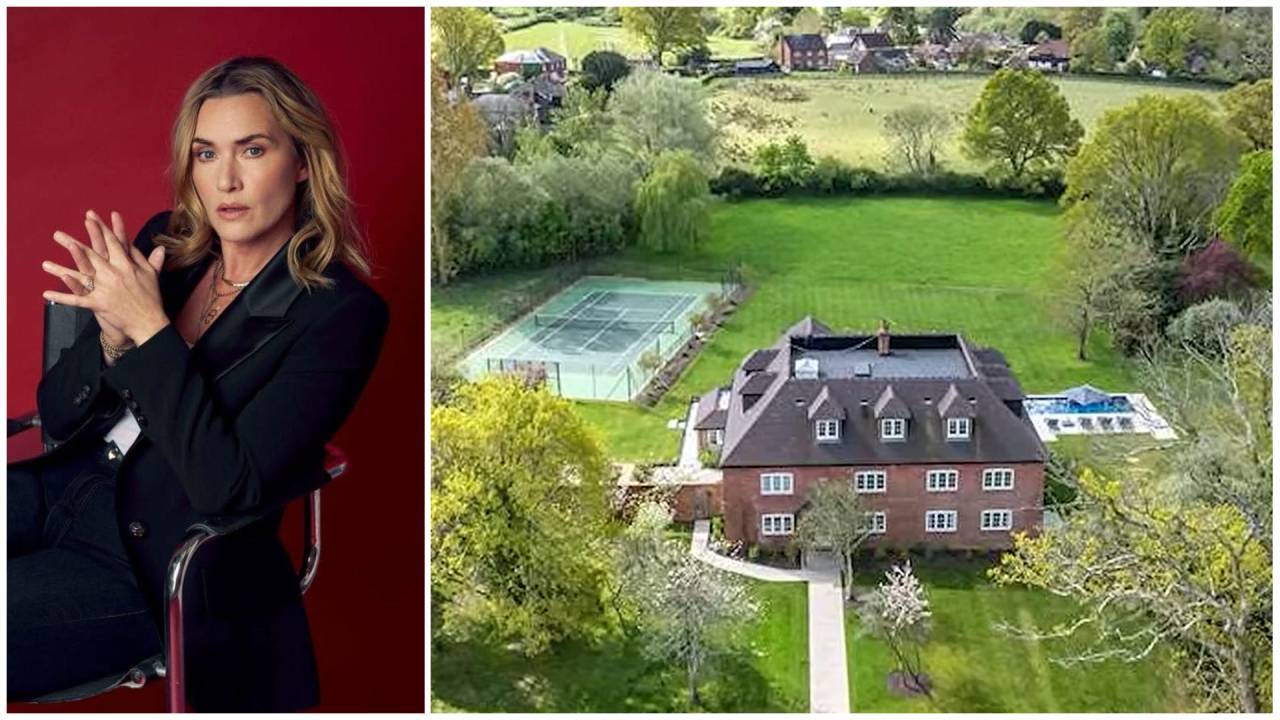
Every time an A-list celebrity files a planning application in the British countryside, the tabloid press salivates. The formula is predictable. Take one Hollywood star, add a multi-million-pound coastal estate, throw in a local council dispute over a fence or a garage, and watch the outrage clicks roll in.
This week, the target is Kate Winslet. The crime? Asking Chichester District Council for permission to replace a set of rotting, dilapidated timber gates at her £5 million Grade II-listed home in West Wittering, West Sussex. Discover more on a connected issue: this related article.
The mainstream coverage frames this as classic celebrity entitlement versus the noble preservation of British history. That framing is lazy, economically illiterate, and completely misses the real story. Winslet isn’t trying to destroy architectural heritage. She is fighting a broken, bureaucratic conservation system that forces property owners to subsidize decay while actively accelerating the destruction of historic buildings.
If you want to understand why Britain’s historic housing stock is crumbling into the sea, stop looking at Hollywood actors and start looking at the absurd mechanics of Listed Building Consent. More analysis by BBC explores similar perspectives on the subject.
The Myth of the Pampered Celebrity Homeowner
Let’s look at the actual facts of the West Wittering property. Winslet bought the 17th-century coastal home—historically associated with the region's maritime and agricultural past—over a decade ago. Since then, she has spent millions maintaining a structure that sits directly in the firing line of brutal English Channel salt spray, gale-force winds, and coastal erosion.
When you own a Grade II-listed building in the United Kingdom, you do not truly own it. You are merely the unpaid custodian who foots the bill while the state dictates the paint color of your window frames.
Under the Planning (Listed Buildings and Conservation Areas) Act 1990, making almost any alteration—even replacing like-for-like materials that have rotted beyond repair—requires formal Listed Building Consent. Carrying out unauthorized work on a listed structure isn't a civil infraction. It is a criminal offense carrying an unlimited fine and up to two years in prison.
So, when the timber entrance gates at Winslet’s estate inevitably succumbed to salt rot—a basic inevitability of physics when wood meets marine air—she couldn't simply hire a local carpenter to hang a functional, secure replacement. She had to commission heritage consultants, architectural drawings, design and access statements, and ecological impact assessments just to stop her driveway from falling into the road.
The tabloids want you to sneer at a rich actress complaining about red tape. Here is the reality nobody in the property press admits: if someone with Kate Winslet’s net worth and legal team has to jump through flaming bureaucratic hoops to fix a rotting gate, the average middle-class owner of a listed cottage doesn't stand a chance.
Why Heritage Conservation Often Accelerates Decay
I have watched property developers and private homeowners burn hundreds of thousands of pounds trying to satisfy conservation officers who prioritize museum-grade stasis over structural survival. The consensus among planning authorities is that "original fabric" must be preserved at all costs, even when that fabric is functionally dead.
This dogma rests on a fundamental misunderstanding of how historic buildings actually survived for three hundred years.
Old buildings didn't last because 17th-century builders froze them in amber. They lasted because every generation adapted, repaired, and upgraded them using the best available materials of their era. When a Victorian homeowner needed better weatherproofing, they added slate or render. When an Edwardian farmer needed stronger gates, they used iron or seasoned oak treated with whatever modern sealants existed at the time.
Modern conservation policy, heavily influenced by the Society for the Protection of Ancient Buildings (SPAB) manifesto written by William Morris in 1877, treats historic homes like fragile archaeological artifacts rather than living machines. Morris argued against restoration, advocating instead for "conservative repair"—patching up dying materials until they literally disintegrate.
Imagine a scenario where you apply that logic to a classic Aston Martin. Instead of replacing corroded brake lines with modern, safe copper-nickel tubing, a regulator forces you to keep the original, leaking rubber hoses because they are "historically significant." Then, when the brakes fail, they blame you for crashing the car.
That is precisely what happens on the British coast. Conservation officers routinely reject modern, rot-resistant hardwoods, marine-grade stainless steel fixings, or subtle automated security upgrades because they aren't "traditional." Instead, they mandate softwoods and traditional joinery techniques that are guaranteed to rot again within seven to ten years in a high-salinity environment.
The result? Owners stop asking for permission. They either let the building rot quietly behind overgrown hedges—a phenomenon known in the property sector as "demolition by neglect"—or they hire unscrupulous builders to do midnight renovations off the books. Neither outcome preserves British heritage.
The Security Blind Spot Nobody Talks About
There is another layer to the Winslet story that commentators conveniently ignore: physical security.
When a local farmer puts up a five-bar gate in West Sussex, its job is to keep sheep in and tractors out. When a globally recognized Oscar winner puts up gates at a coastal property, those gates are the primary physical barrier between her family and paparazzi, stalkers, and trespassers.
Planning law is notoriously indifferent to modern personal security requirements. Under UK planning guidelines, "fear of crime" or personal privacy rarely outweighs "visual amenity" or the preservation of a rural streetscape. If a conservation officer decides that a solid, six-foot security gate looks too "suburban" or "fortress-like" for a conservation area, they will force the owner to install low, open-slat timber gates that anyone can climb over in four seconds.
Let’s be brutally honest about the contradiction here. Local councils love the prestige and tourism revenue that wealthy residents bring to coastal enclaves like the Witterings. They happily collect top-band council tax and benefit from the millions poured into local tradespeople, architects, and landscapers. Yet those same councils refuse to acknowledge that high-profile residents face very real, modern security threats that 18th-century agricultural gates were never designed to handle.
Forcing a high-net-worth resident to choose between complying with aesthetic heritage guidelines and protecting their family's physical safety is a perverse use of public power.
What People Always Get Wrong About Listed Buildings
If you are considering buying a Grade II-listed property—or if you are simply trying to make sense of why celebrity renovation stories always end in planning battles—you need to strip away the romanticism.
Does Grade II listing mean a building is architecturally famous?
No. Roughly 92% of all listed buildings in England fall into the Grade II category. That equals roughly 370,000 structures. While Grade I and Grade II* are reserved for buildings of exceptional national importance (think Buckingham Palace or St Paul’s Cathedral), Grade II simply means "special interest." Thousands of Grade II buildings are entirely unremarkable vernacular cottages, old pubs, or agricultural outbuildings that happened to survive past 1850.
Does the government help pay for listed building repairs?
Almost never. Unless your property is a major public monument eligible for Historic England grants—which are fiercely competitive and vanishingly rare for private residences—you receive zero financial assistance. Worse, the UK government abolished the VAT exemption on approved alterations to listed buildings back in 2012. If you want to fix a listed roof or replace rotting gates, you pay the full 20% VAT penalty on top of specialist heritage labor costs that already run three to four times higher than standard construction rates.
Can a council force you to repair a listed building?
Yes. Through Urgent Works Notices and Repairs Notices under the 1990 Act, local authorities can legally compel an owner to carry out repairs, execute the work themselves and bill the owner, or ultimately seize the property via a Compulsory Purchase Order. It is a one-way street of financial liability.
The Uncomfortable Downside of Deregulation
Now, before you assume I am advocating for developers to bulldoze historic villages and replace everything with grey UPVC windows and concrete driveways, let’s acknowledge the counter-argument.
The heritage lobby exists for a reason. In the 1950s and 1960s, unchecked post-war development obliterated huge swathes of Britain’s historic town centers. Victorian railway stations, Georgian terraces, and medieval market halls were flattened to build brutalist shopping centers and ring roads. Without strict statutory protections, profit-driven developers will inevitably strip-mine historic neighborhoods for maximum square footage, replacing irreplaceable craftsmanship with cheap, disposable materials.
There is genuine value in preserving the visual coherence of places like West Wittering. The charm that drew Kate Winslet to the Sussex coast in the first place exists precisely because planning laws prevented the coastline from turning into a wall of high-rise holiday apartments.
The flaw isn't the existence of heritage protection. The flaw is the complete absence of proportionality. Treating a rotting driveway gate with the same forensic bureaucratic scrutiny as the demolition of a medieval church wing is administrative madness.
How to Actually Save Historic Homes (And Survive the Planning System)
If we want historic buildings to survive the next century—especially coastal properties facing rising sea levels and fiercer storms—conservation policy needs a radical overhaul. And if you own a listed property right now, you need a smarter playbook than simply submitting polite applications and hoping for common sense.
- Separate structural survival from museum curation. Planning law must create a fast-track "climate resilience and security" exemption for Grade II properties. Replacing rotting exterior joinery, upgrading coastal flood defenses, and installing discreet security measures should fall under Permitted Development, provided the external visual profile remains sympathetic.
- Bring back the zero-VAT incentive. Penalizing homeowners with a 20% tax surcharge for hiring master stonemasons, traditional joiners, and lime-plaster specialists is economic self-sabotage. If the state demands museum-grade restoration, the state should stop taxing the labor required to achieve it.
- Never submit an application without pre-application engagement. If you own a listed home, never let your architect fire a cold application into a local council portal. Pay for formal pre-application advice, get the conservation officer on-site, and make them co-authors of the solution. Once an officer goes on the public record opposing a design, their bureaucratic pride will never let them back down.
- Document decay relentlessly. Councils reject replacements when they believe repair is still viable. To win approval for new gates, windows, or structural timbers, you need high-resolution macro photography, moisture-meter readings, and a timber decay specialist’s report proving that the existing wood has lost structural integrity. Prove that repair is physically impossible, not merely inconvenient.
Kate Winslet’s application to replace her rotting gates isn't a scandal of celebrity excess. It is a symptom of a preservation system that cares more about paperwork than preservation itself. Until British planning law stops treating homeowners like criminals for trying to keep the weather and intruders out, the country’s historic homes won't be saved by conservation officers—they will be regulated into dust.