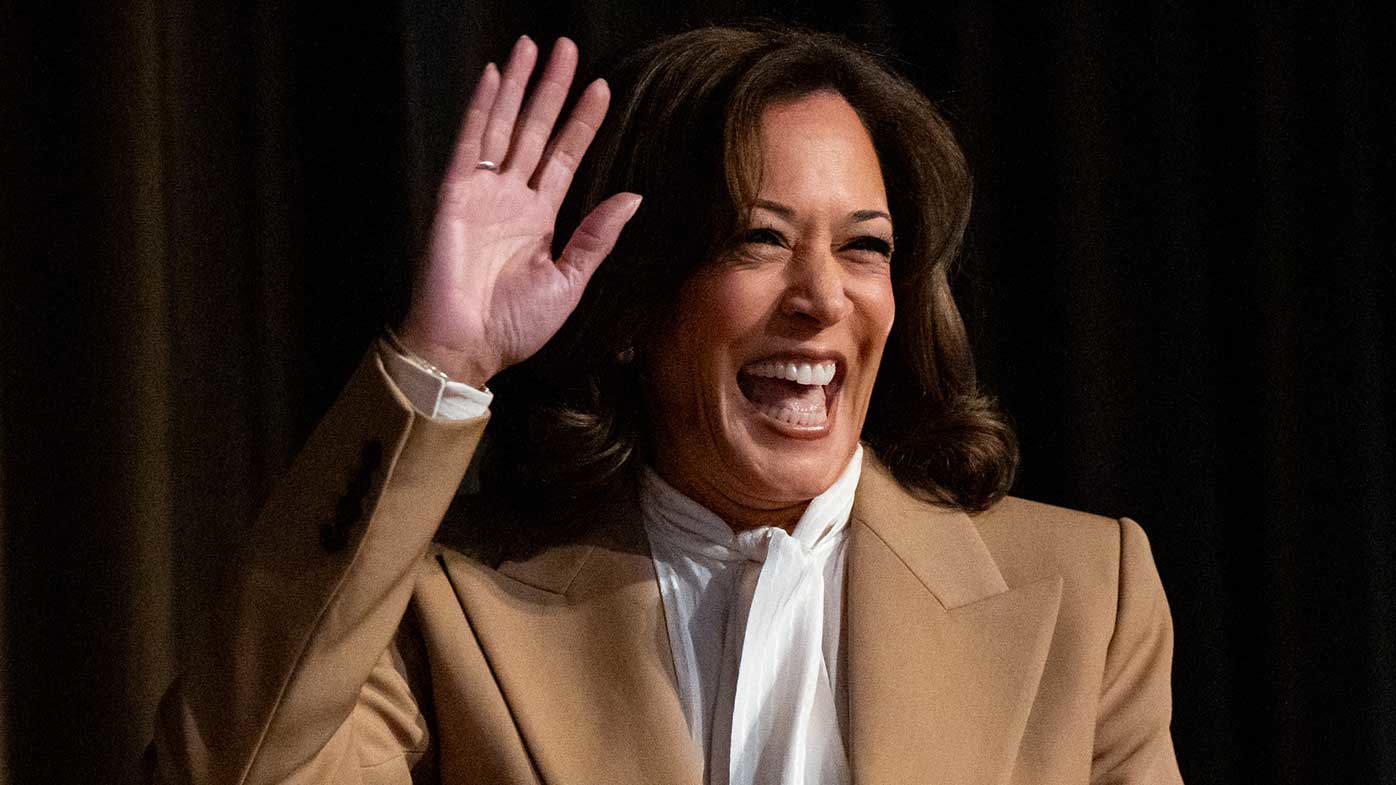
Kamala Harris is officially testing the air for a 2028 comeback, telling a crowd at the National Action Network convention in New York that she is "thinking about" another run for the presidency. This revelation, delivered with a coy "I might" during a fireside chat with Reverend Al Sharpton, confirms what political insiders have whispered since her 2024 defeat to Donald Trump. After months of strategic silence and a refusal to jump into the 2026 California gubernatorial race, Harris is positioning herself not as a retired politician, but as a leader-in-waiting.
The timing is far from accidental. By making this move now, Harris is attempting to freeze the donor class and claim the mantle of the "loyal opposition" before the 2026 midterms truly ignite. But beneath the raucous "run again" chants in Manhattan lies a much grittier reality. The Democratic Party of 2026 is no longer the unified front that rallied behind her in the frantic weeks of July 2024. It is a fractured coalition currently engaged in a brutal autopsy of why she lost 312 electoral votes to Trump’s populist surge.
The Strategy of Forced Inevitability
Harris is banking on the "heartbeat away" argument. At the convention, she leaned heavily on her proximity to power, reminding the audience of her countless hours in the Situation Room and the West Wing. This is the Incumbency Advantage without the Incumbency. By emphasizing that she "knows what the job requires," she is trying to frame any other challenger as a risky experiment.
However, the "status quo is not working" line she delivered in New York is a double-edged sword. To win in 2028, Harris has to perform a near-impossible political maneuver: she must distance herself from the Biden-Harris record on affordability while simultaneously claiming the experience gained from it.
The investigative reality is that her team is already scouting for a "Bureaucracy Buster" persona. Her recent comments about moving away from "process" toward "progress" suggest a pivot toward a more populist, results-oriented rhetoric. They want to strip away the "San Francisco Liberal" label that Trump used to bury her in the Sun Belt and replace it with a pragmatic, battle-hardened reformer image.
The 2026 Midterm Gatekeepers
Harris is not the only one in the room. The National Action Network convention was essentially a high-stakes cattle call for the next generation of Democratic talent.
- Gavin Newsom: The California Governor is playing a longer, more calculated game. He has tied his 2028 ambitions to the 2026 House elections. If he can deliver a Democratic majority in the House through his fundraising and campaigning in 2026, he enters the primary as a kingmaker.
- Josh Shapiro and Wes Moore: These governors represent the "Blue Wall" and "New South" archetypes. Moore, specifically, issued a veiled warning at the convention, stating he is "hungry, but not thirsty." This was a direct shot at anyone prioritizing 2028 ambitions over the immediate 2026 fight.
- JB Pritzker: With a massive personal war chest and a focus on "plain language" economics, Pritzker is positioned as the adult in the room who can talk about grocery prices without sounding like a policy paper.
Harris’s early announcement is a preemptive strike against these rivals. If she can lock in the support of the Black voter base—the most loyal bloc in the party—she creates a formidable firewall. But reliance on that firewall failed her in 2024 when Trump made significant inroads with Black and Latino men.
The Arithmetic of 75 Million Votes
The Harris camp is currently circulating a specific set of numbers to anyone who will listen: 75 million. That is the number of votes she secured in 2024. Her allies, including Sharpton, are framing her as the second-largest vote-getter in history, behind only Joe Biden in 2020. They argue that she didn't lose because of her platform, but because of "uphill circumstances" and a lack of time.
This narrative ignores the shifting tectonic plates of the American electorate. Internal party data suggests that the "vibe-based" campaign of 2024 hit a ceiling. While she surpassed the totals of Obama and Clinton, the raw numbers don't account for population growth or the massive turnout triggered by the Trump era.
To win a primary, she needs to prove she can win back the working-class voters in the Rust Belt who saw her as a symbol of the establishment. To do that, she is already recalibrating her stance on foreign policy. In New York, she labeled the ongoing conflict in Iran a "war of choice" and blamed Trump for the erosion of international alliances. It is an attempt to reclaim the "Commander-in-Chief" test early, showing she is ready to handle a world that has only grown more volatile since she left office.
Money and the Shadow Campaign
Behind the scenes, the Harris fundraising machine never actually stopped. While she hasn't officially filed with the FEC for 2028, her political action committees remain active. The "thinking about it" phase allows her to continue high-level donor meetings without the legal constraints of a declared candidacy.
The donor class is currently split. There is a "Loyalist" faction that feels she was dealt a bad hand and deserves a "fair" primary process. Then there is the "Donor Realist" faction, which is quietly funneling money toward Shapiro and Newsom, fearing that a Harris 2.0 campaign would simply be a repeat of the 2024 map.
The Obstacle of the 2026 Result
Harris's future is inextricably linked to the 2026 midterms. If Democrats fail to make gains, the party will likely look for a complete scorched-earth overhaul of its leadership, which would include purging the remnants of the Biden-Harris era. If they succeed, she will claim it as a validation of the "future-focused" vision she campaigned on.
She is betting that the American public will have "buyer's remorse" by 2028. By positioning herself as the person who "knows the job," she is waiting for the moment when the electorate tires of the chaos and looks for a return to professional governance. It is a high-stakes gamble on the short memory of the American voter.
The "I might" wasn't a moment of indecision. It was a flare sent up to see who still has their eyes on her. The Democratic civil war hasn't just begun; it has moved into its next, more aggressive phase.
Harris has stopped hiding. Now, the rest of the party has to decide if they are willing to follow her back into the fire or if they are ready to burn the old playbook entirely.