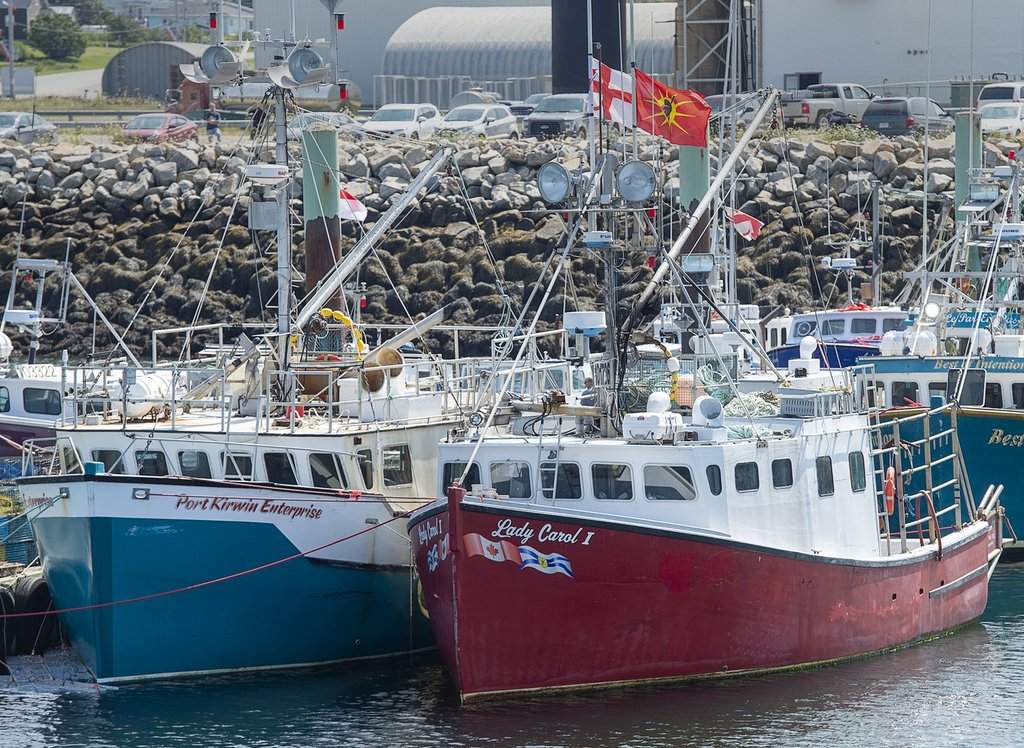
Adversarial litigation is structurally incapable of resolving constitutional resource disputes where private parties attempt to force a definition of Indigenous treaty rights. The July 2026 ruling by Nova Scotia Supreme Court Justice Ann Smith dismissing the Unified Fisheries Conservation Alliance (UFCA) lawsuit against the Sipekne’katik First Nation demonstrates this institutional limit. By striking down the claim as "fatally flawed," the court exposed a profound strategic error: the misuse of private standing to compel bilateral constitutional negotiations between First Nations and the federal government.
Understanding this failure requires evaluating the legal frameworks, structural friction points, and the economic game theory that drives the Atlantic lobster fishery impasse.
The Tripartite Legal Architecture of Section 35
The structural breakdown in this dispute stems from a misinterpretation of how Section 35 of the Constitution Act, 1982 operates within Canadian common law. Private entities cannot force a declaration of constitutional validity regarding federal legislation when no government action or law is being directly challenged.
To map the logic of the dispute, the legal frameworks must be divided into three distinct operational categories:
- The Crown-Indigenous Treaty Relationship: Established via the Peace and Friendship Treaties of 1760–1761, this is a bilateral relationship between the Crown and First Nations. The Supreme Court of Canada’s landmark R. v. Marshall (1999) decisions affirmed that these treaties protect the right to hunt, fish, and gather to secure a "moderate livelihood."
- The Regulatory Power of the State: Marshall (No. 2) clarified that this treaty right is not absolute. The federal Minister of Fisheries and Oceans retains the authority to regulate the fishery, provided regulations can be justified on grounds of conservation or other public interest objectives.
- The Food, Social, and Ceremonial (FSC) Framework: Distinct from commercial or moderate livelihood communal fisheries, FSC fisheries operate under separate communal licenses rooted in the R. v. Sparrow (1990) framework. These allow out-of-season harvesting for community sustenance but strictly prohibit commercial sale.
The UFCA’s legal strategy attempted to weaponize the second category (regulatory power) to extinguish or constrict the first category (treaty rights) by asking the court to declare that the Fisheries Act and its regulations do not infringe upon Sipekne’katik’s rights. Justice Smith’s ruling confirmed that a third-party interest group lacks the legal standing—either private or public—to trigger this constitutional review. The court lacks jurisdiction because the claim did not contest a crown action; instead, it sought to use the judiciary to compel an independent sovereign entity to prove its rights in an adversarial forum.
The Asymmetrical Incentives of Litigation and Mediation
The dissolution of this lawsuit, alongside Sipekne’katik’s withdrawal of its own 2021 lawsuit against Ottawa in 2025, reveals an escalation in litigation friction. The First Nation cited legal costs exceeding $500,000 as a primary catalyst for dropping its challenge to federal enforcement actions.
This financial burden exposes an asymmetric incentive structure between community-funded or industry-funded advocacy groups and First Nations band councils.
[Adversarial Litigation] ---> High Capital Attrition ($500k+) ---> Zero Legal Precedent
                                                                        |
[Bilateral Mediation]   ---> Crown-Indigenous Reconciliation ------------+---> Operational Framework
The Supreme Court of Canada’s 2024 jurisprudence explicitly states that protracted, multi-year litigation processes are diametrically opposed to reconciliation. When commercial fishing groups attempt to intercede as intervenors or primary plaintiffs, they introduce market-driven adversarial dynamics into a constitutional space that demands bilateral negotiation.
The structural bottleneck is not a lack of judicial clarity; it is the deliberate refusal of successive federal administrations to codify what constitutes a "moderate livelihood" commercial harvest. By leaving the term undefined, Ottawa has offloaded regulatory friction onto local waters, leading to the self-regulated summer and fall fisheries launched by Sipekne’katik in St. Marys Bay since 2020.
The Conservation Matrix: Data vs. Perception
The core operational argument advanced by commercial harvesters is that out-of-season harvesting during the summer and early fall disrupts lobster biological cycles, specifically molting and egg-bearing periods, leading to resource depletion. While this commercial concern is localized and real for harvesters operating within fixed Lobster Fishing Areas (LFAs), the biological reality requires a more nuanced ecosystem assessment.
Resource sustainability in these waters is governed by three primary variables:
- Biomass Scalability: Oceanographic data indicates that regional lobster biomass fluctuations are heavily influenced by macro-environmental variables, such as rising sea surface temperatures in the Gulf of Maine and the Bay of Fundy, rather than localized, low-impact harvesting.
- Effort Scaling: The total number of traps deployed by self-regulated treaty fisheries represents a fraction of the industrial effort deployed during the commercial season. Independent marine scientists have noted that the potential for overfishing based on the limited scale of these community fisheries is statistically minimal on a macro-regional level.
- The Black-Market Arbitrage: The true threat to conservation is not the overt assertion of treaty rights, but the illicit commercialization of FSC landings. When catch from food, social, and ceremonial licenses is illegally diverted into commercial supply chains—often exported via international transit hubs—it bypasses regulatory accounting, creating an unmonitored data gap in the total allowable catch (TAC) models.
Definitively Shifting the Regulatory Playbook
The Nova Scotia Supreme Court ruling leaves the Atlantic lobster fishery in a state of regulatory equilibrium that satisfies no commercial participant. However, it provides absolute clarity on the next strategic move. Commercial industry groups must permanently abandon the judiciary as a mechanism for restricting Indigenous treaty rights.
The path forward requires commercial associations to lobby the federal government to establish a Tripartite Harvest Co-Management Framework. This operational model must decouple the political question of treaty definition from the practical execution of fisheries management.
Ottawa must utilize the ongoing, confidential mediation channels guided by senior federal mediators to fund the buy-back of existing commercial licenses. These licenses can then be transferred to First Nations communities, integrating moderate livelihood fishing into the existing seasonal and spatial framework without increasing total regional effort. Until the Department of Fisheries and Oceans commits to a quantified, fully funded transfer of access, the operational uncertainty in St. Marys Bay will persist, governed not by law, but by the ongoing friction of an unresolved constitutional relationship.