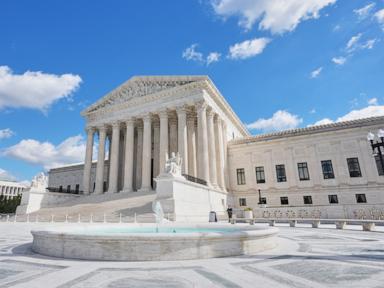
Standard reporting on Justice Elena Kagan’s warnings about the Supreme Court treats judicial rulings and political polarization as a simple linear chain: conservative precedents alter campaign finance or redistricting rules, voters grow angrier, and democratic health deteriorates. That linear model is analytically incomplete because it conflates institutional allocation of authority with guaranteed electoral outcomes. When a court removes federal judicial oversight from partisan gerrymandering, narrows statutory voting protections, or treats political spending as protected expression, it changes the structural rules of competition rather than pre-determining every winner. Understanding whether and how Supreme Court doctrine fuels polarization requires separating constitutional doctrine from electoral mechanics, mapping the feedback loops between judicial non-intervention and party incentives, and distinguishing verified legal and political facts from causal hypotheses.
Deconstructing the Competitor Narrative
Coverage centered on Kagan’s remarks typically relies on a three-part narrative structure:
- Doctrinal triggers: The Court’s refusal in Rucho v. Common Cause (2019) to police partisan gerrymanders in federal court, alongside decisions limiting campaign finance restrictions and narrowing Voting Rights Act protections.
- Systemic symptoms: Escalating partisan hostility, intensified redistricting battles, and heavy political spending chasing candidates.
- Institutional warning: A claim that judicial rulings blind themselves to real-world political damage and weaken democratic functioning.
The analytical weakness in this framing is not that it names real doctrines or real grievances, but that it stops at correlation and moral characterization. Saying a political system feels like a nightmare or that rulings fuel polarization does not specify which incentives changed for state legislatures, donors, candidates, and voters. Nor does it explain counter-examples where the Court’s majority checks executive power on issues such as tariffs, birthright citizenship, or mail ballots, or where voters overturn heavily advantaged incumbents despite steep resource asymmetries.
Known Facts Versus Educated Hypotheses
A rigorous analysis of judicial impact on democratic polarization must separate established institutional facts from contested causal claims.
Verified Institutional Facts
- Non-justiciability of partisan gerrymandering in federal court: In 2019, the Supreme Court held that claims of partisan gerrymandering present political questions beyond the reach of federal courts under the U.S. Constitution.
- Statutory and constitutional constraints: Separate lines of precedent have struck down or restricted key campaign finance regulations on First Amendment grounds and narrowed aspects of Voting Rights Act enforcement.
- Intra-Court pushback on executive action: Even as critics argue that the conservative majority reshapes electoral and regulatory rules, the Court has also ruled against President Donald Trump in areas including tariffs, birthright citizenship, and mail ballots.
- Electoral volatility despite structural tilt: High-dollar spending and redistricting efforts do not guarantee uniform results; competitive cycles still produce upsets and shifts in legislative control.
Educated Hypotheses and Open Analytical Questions
- The polarization amplification hypothesis: Removing federal judicial checks on partisan map-drawing may encourage state legislatures to draw safer partisan seats, shifting decisive conflict from the general election to low-turnout primaries where ideological extremes hold disproportionate leverage.
- The donor-influence hypothesis: Deregulating political spending may increase the influence of wealthy donors and super PACs, potentially widening the gap between voter priorities and legislative agendas while deepening public cynicism.
- The countervailing friction hypothesis: Competitive nationalization, candidate quality, voter backlash against overreach, and state-level legal or ballot mechanisms may blunt or reverse the partisan advantage a map or spending surge is designed to create.
The Four Structural Mechanisms of Judicial-Electoral Feedback
Rather than treating polarization as an automatic output of single opinions, strategy analysts can model the interaction between Supreme Court doctrine and mass politics through four mechanisms.
1. The Delegation of Map-Drawing Risk
When federal courts step back from partisan gerrymandering, the cost of aggressive map-drawing shifts away from constitutional invalidation and toward political and state-level constraints. State legislatures face a classic optimization problem: pack opponents into fewer districts and crack remaining supporters across neighboring seats to maximize seat share for a given vote share. That strategy raises expected seat efficiency in normal environments, but it introduces fragility. If the electoral environment shifts by several points, thinly stretched "pack-and-crack" maps can flip more seats than expected.
2. Primary Sorting and Affective Polarization
Safe districts alter candidate incentives. When a general election is heavily tilted toward one party, the primary election functions as the real contest. Primary electorates tend to be smaller, more ideologically engaged, and more skeptical of compromise than the median general-election voter. Over multiple cycles, rational candidates adapt by sharpening ideological signals and treating cross-party accommodation as an electoral liability. Affective polarization—distrust and animosity toward the opposing party—rises not merely because people disagree on policy, but because each side views the other’s winning coalition as illegitimate or structurally rigged.
3. Capital Concentration and Representation Friction
Campaign finance rules shape how political capital is assembled and deployed. When restrictions on political spending are narrowed, campaigns and outside groups can concentrate massive resources into decisive media markets and swing districts. This creates a two-sided friction:
- Operational friction for challengers: Candidates without access to major donor networks face steep barriers to matching paid media volume.
- Legitimacy friction for voters: When voters observe large sums flowing into races while everyday cost-of-living or governance issues remain unresolved, public skepticism toward both parties and the institutions governing elections rises.
4. Asymmetric Check-and-Balance Signals
Public perception of the Supreme Court often turns on which issues dominate headlines in a given window. Rulings on election administration, voting maps, and campaign money touch the rules of power directly, making them highly salient to partisan activists and election observers. Yet rulings that constrain executive authority—such as decisions pushing back on tariffs, birthright citizenship, or mail ballots—demonstrate that the Court does not operate as a simple rubber stamp for a single political actor. Analysts who ignore this distinction misread judicial behavior as pure partisan alignment, while analysts who ignore electoral rule changes underestimate how map and money doctrines shape legislative incentives.
How to Audit Claims About Courts and Polarization
Anyone evaluating commentary on the Supreme Court and democratic health can apply a four-step diagnostic before accepting a causal claim.
- Isolate the rule change from the election outcome: Identify the exact legal standard altered by the ruling (justiciability, statutory coverage, campaign expenditure limits, or emergency docket standards) before attributing a specific election result to it.
- Trace the intermediate incentive: Ask how the ruling changes behavior for mapmakers, donors, party committees, state election officials, or voters. A rule with no behavioral change produces no systemic effect.
- Check for counter-mechanisms: Look for offsetting forces such as wave elections, candidate recruitment errors, grassroots mobilization, or state constitutional rules that counteract gerrymandering or spending advantages.
- Separate institutional legitimacy from policy disagreement: Distinguish between citizens who dislike a ruling’s substantive outcome and citizens who reject the legitimacy of the constitutional process itself.
Limitations of Judicial and Institutional Fixes
A realistic assessment must also account for why quick fixes rarely resolve deep polarization. Courts operate within constitutional text, precedent, and institutional boundaries; treating every political dysfunction as a judicial failure overloads a body designed to adjudicate disputes rather than engineer balanced partisan outcomes. Conversely, assuming that elections alone can effortlessly neutralize structural distortions ignores how map design and spending asymmetries raise the cost of persuasion and coordination. Neither judicial intervention nor unguided electoral churn is a cure-all when underlying party coalitions are deeply divided.
Strategic Play for Analysts and Policymakers
Treat the Supreme Court’s electoral and structural rulings as boundary conditions on political competition rather than standalone causes of democratic decline. For political strategists, journalists, and civic analysts, the highest-value move is to track district-level seat-vote elasticity alongside donor and turnout shifts after major rulings—testing empirically where legal rule changes actually lock in durable advantages versus where voter backlash, coalition realignment, and competitive swings break through engineered margins.
Justice Elena Kagan's Gerrymandering Fix Is to Put Judges in Charge
This video adds relevant context by showing how critics debate Justice Kagan's warnings on gerrymandering and argue over whether judicial intervention or voter accountability better addresses democratic polarization.