The lights in a television studio have a way of burning off the polite fictions people bring into the room. You feel it on the back of your neck after ten minutes under the banks of warm quartz—a dry, insistent heat that makes every breath slightly more deliberate and every pause feel twice as long as it is on the clock.
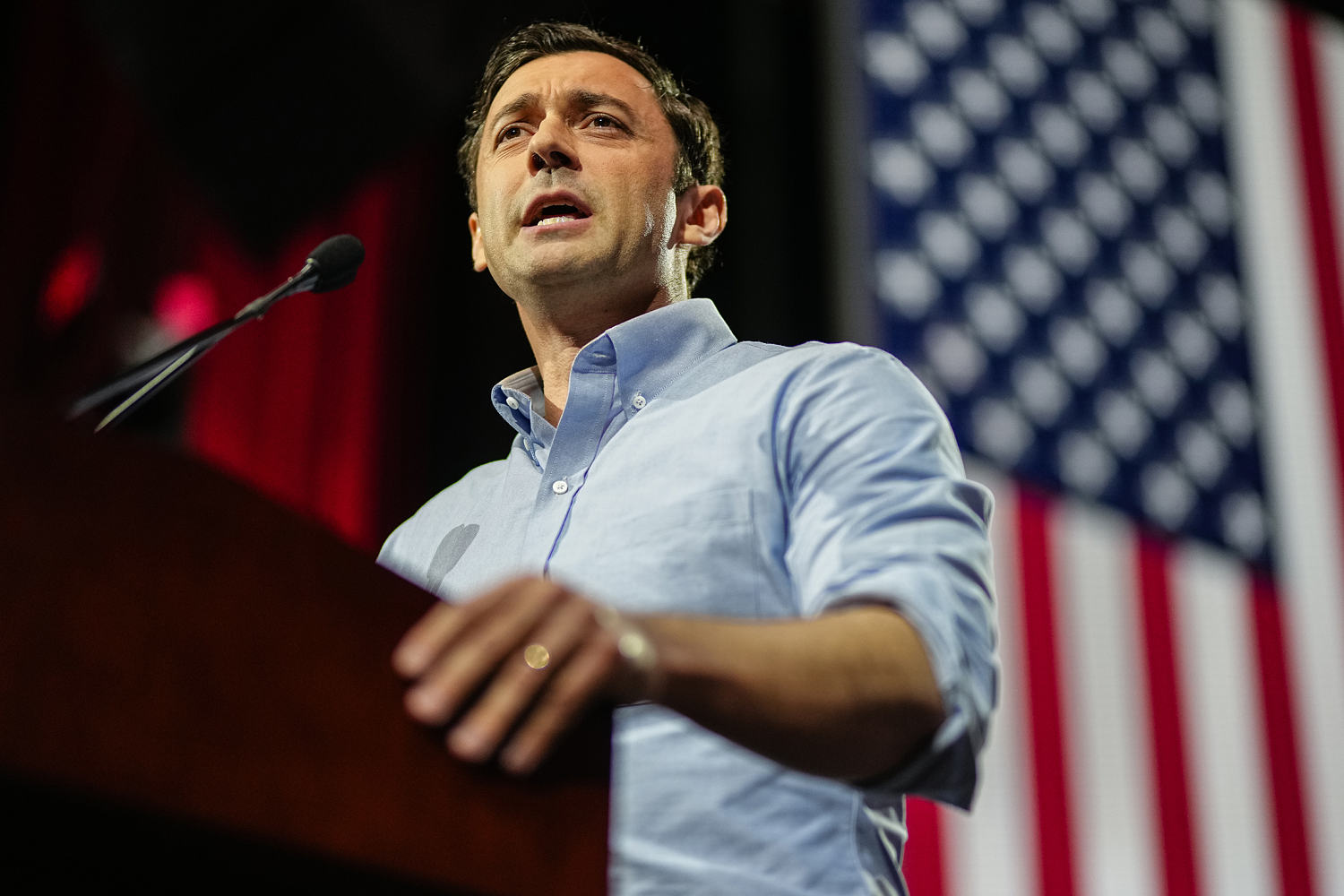
In a heated Georgia Senate debate, Jon Ossoff stood at his podium and drew a hard line across a map everyone else seemed eager to keep smudged. No. He will not run for president in 2028.
On paper, a political disclaimer like that looks like standard-issue hedging, the kind of neat sentence cable chyrons chew up and spit out before the next commercial break. A senator says he isn't eyeing the White House. A rival tries to make hay out of the ambition the senator claims not to have. The crowd murmurs. The moderator nudges the conversation back toward jobs, healthcare, or voting rights.
Yet something sharper happens when a politician says no to the biggest shiny object in American public life—especially in a state that has spent the last several election cycles acting as the nation's political pressure valve.
Georgia does not let politicians float in abstraction for very long. Out here, campaign season never quite ends; it just changes shoes. You see it in the yard signs that fade from deep navy to chalky gray along two-lane highways between Macon and Valdosta. You hear it in coffee shops outside Atlanta where conversations pivot in three sentences from grocery prices to federal judges to who might show up on a ballot four years down the road.
When a sitting senator from a fiercely contested battleground state says he is staying put in 2028 rather than chasing a presidential campaign, he is making a statement about time, loyalty, and leverage. He is also handing his opponents a sharp question they will test every single day: if you aren't looking up at the presidency, what are you actually trying to build right here at home?
The Weight of the Next Seat
To understand why a presidential non-starter matters in a Senate debate, it helps to think of politics the way carpenters think about load-bearing walls. (Note: This comparison is a metaphor for how political ambitions shift weight inside a campaign.) A wall can look solid from across the room, freshly painted and square to the eye, until someone tries to knock it down to open up a bigger space. Suddenly you find out what was holding up the ceiling.
In modern American politics, a Senate seat in a swing state is rarely treated as a destination anymore. Too often, it is treated as a launchpad—a six-year runway where every speech is audition tape for a national primary and every committee vote is filtered through how it might play in Iowa or New Hampshire.
Voters smell that audition from miles away.
Consider a hypothetical voter—let's call her Denise, a warehouse logistics coordinator living just outside Savannah who works early shifts and watches local news while drinking coffee that has gone lukewarm on the counter. (This is a hypothetical character created to illustrate common voter reactions.) Denise does not wake up thinking about party strategists in Washington. She thinks about whether her property taxes are going to climb again, whether the two-lane stretch of road she drives at dawn is going to get patched before hurricane season, and whether the people elected to represent her actually intend to stick around long enough to finish what they started.
When a candidate sounds like they are already packing a suitcase for another race, voters like Denise feel a quiet kind of friction. It is not always anger. Sometimes it is just exhaustion. Why invest emotional energy in someone whose eyes are already scanning the horizon for the next promotion?
By flatly ruling out a 2028 presidential run during a contentious Georgia Senate debate, Ossoff tried to strip away that suspicion in real time. No winking. No "never say never." Just a flat refusal to play the long-shot guessing game.
Politics rarely rewards absolute certainty, though. Say you're not running, and the very next week someone asks whether you're leaving the door cracked a quarter-inch. Say you're focused on Georgia, and your challenger argues that a senator who rules out the top of the ticket is either shrinking his own influence or dodging a tougher test later on.
Both readings live in the same room at the same time. That tension is what makes the moment electric rather than routine.
Why Georgia Makes Every Word Cost More
Geography changes the price of words.
For the past several years, Georgia has occupied a singular place in American civic life. Narrow margins have turned once-sleepy counties into household names. Every demographic shift, every turnout drive, every courtroom fight over election rules feels magnified because the margin for error is razor-thin.
Living inside a perpetual spotlight does something peculiar to a state's politics. It makes people hyper-aware of appearances. Voters in Georgia have seen national figures blow into town for a rally, promise the moon, and vanish back onto a campaign jet the next morning. They have also seen homegrown leaders get pulled into national cable wars until their day-to-day work in the state starts to feel secondary.
In that environment, declaring you are out of the 2028 presidential sweepstakes cuts two ways.
First, it is an attempt to claim seriousness. A presidential run is a massive distraction—years of travel, endless fundraising calls to donors across fifty states, constant positioning for national media narratives. Staying anchored to a Senate race and a single state's constituents is, at least in theory, a vote for focus.
Second, it carries a built-in vulnerability. In politics, ambition is currency, even when voters claim to dislike it. Opponents love to frame a refusal to run for higher office as caution, or worse, as a sign that a politician knows their ceiling. If a rival can convince voters that a candidate is playing small, the defensive crouch begins immediately.
Debate stages are built for exactly that kind of pressure. There is no time for a twenty-minute nuance. There is no warm-up act and no rewind button. A single sentence lands on the floor, echoes off the backdrop, and immediately becomes part of the permanent record of the race.
In a high-stakes debate, what a candidate refuses to chase can reveal just as much about their strategy as the promises they make.
Think about the psychology of that exchange. When a politician says "I'm not running for president in 2028," they aren't just answering a hypothetical about four years down the road. They are trying to set the terms of the present argument. They are saying: Hold me to this race. Judge me by this seat. Don't grade my answers on a national curve.
Whether the audience buys that framing depends on trust—and trust in a battleground state is earned one unglamorous week at a time.
The Invisible Stakes Behind the Soundbite
Most coverage of a heated debate zooms in on the clash. Who landed the sharper jab? Who looked rattled? Who got the loudest reaction?
Those details are entertaining, sure. They give pundits something to dissect at midnight. Yet they often miss the quieter stakes sitting underneath the rhetoric.
A Senate seat shapes real lives through slow, unflashy mechanisms: federal infrastructure grants that decide whether a rural county gets high-speed internet or a bridge replacement; healthcare subsidies that keep a family's monthly premium manageable; judicial confirmations that ripple through federal courts for decades; appropriations battles that determine how local agencies operate.
None of that fits neatly into a fifteen-second clip. Still, it is the actual substance of the job.
When a senator signals they are not treating the office as a stepping stone to a 2028 White House bid, the implied bargain is straightforward: I am asking for your vote to do this job, not to use it as a springboard.
Of course, voters have heard promises of devotion before. Political history is littered with leaders who swore up and down they had zero interest in higher office—right up until the calendar turned and the incentives shifted. Skepticism isn't cynicism in a place like Georgia; it is pattern recognition.
Let's picture another hypothetical person to see how that skepticism plays out on the ground. Imagine Marcus, a small-business owner in Augusta who runs a light-manufacturing shop with fourteen employees. (Again, this is a hypothetical character meant to ground everyday trade-offs.) Marcus doesn't care much about national political gossip. What keeps him up at night is supply chain reliability, insurance costs for his crew, and whether Washington's endless partisan gridlock is going to stall another round of rules or funding his shop depends on.
To someone like Marcus, a candidate's 2028 plans sound like a parlor game. What matters is whether the person in office shows up consistently, listens without reading off a script, and treats the state's problems like they belong to them rather than treating the state like a stage.
If Ossoff's refusal to run for president in 2028 helps keep the focus locked on Georgia's immediate stakes, voters like Marcus might pay closer attention to the policy record. If it instead looks like sidestepping a bigger question—or if opponents successfully paint it as political calculation—it becomes just another line in a noisy campaign.
Reading Between the Lines of a Political "No"
In Washington and Atlanta alike, nobody treats a flat denial as the end of a story without testing it first. That isn't paranoia; it's how the ecosystem works.
Strategists immediately ask what a candidate gains by closing a door early.
One obvious answer is clarity. In a crowded national field where dozens of hopefuls spend years quietly courting donors, consultants, and early-state activists, stepping aside before the starting gun even fires saves immense time and energy. It also lets a candidate tell local voters they aren't auditioning for a different job.
Another answer is contrast. By saying no to 2028 presidential ambitions during a tense Senate debate, a candidate tries to cast themselves as grounded and present while framing rivals or nationalized politics as untethered from everyday concerns.
Yet there is always a catch. Politics has a funny habit of testing firm resolutions against changing realities. Four years is an eternity in American public life. Coalitions shift. New issues erupt. Political maps redraw themselves in ways nobody predicts during a fall debate. A firm "no" today can become a political trap if circumstances change—or a badge of honor if a politician actually sticks to it when pressure mounts.
That uncertainty is part of why voters sometimes hesitate to lean all the way in. Nobody likes feeling fooled by political theater. At the same time, people still crave leaders who sound like human beings rather than focus-grouped brochures.
When a debate gets heated, the masks slip a little. You hear the cadence of someone actually defending their turf, pushing back against attacks, and trying to make their case stick before the clock runs out. For all the polish modern campaigns bring to the stage, live friction still exposes what a candidate cares most about protecting.
In Georgia, protecting your standing means answering to a tough, watchful electorate that knows how to spot spin. You can't coast on national buzzwords when your neighbors are counting votes down to fractions of a percentage point.
The debate lights eventually cool. The cameras cut away. Out in the parking lot, the night air feels cool and damp after the glare of the studio, and the real work of persuading skeptical people—one conversation, one shift, one election cycle at a time—starts all over again.