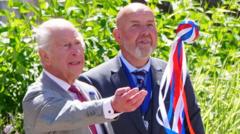
You don't normally see a British monarch standing in a crowded Scottish town square, tossing a leather ball into a pack of local men ready to tear each other apart for it. Yet, that's exactly what happened when King Charles stepped into Jedburgh. Impeccably dressed in a sharp grey suit, the King threw the ball high into the air and immediately took a swift step back. Smart move. Within seconds, a massive, writhing human scrum formed right on the tarmac in front of him.
This isn't your typical sanitized royal photo-op. It is Jedburgh hand ba', a brutal, chaotic street sport that locals have played fiercely since 1704. The King's decision to launch the game during his Holyrood Week tour highlights something outsiders rarely understand. These ancient, borderline lawless traditions aren't just quirky history notes. They're the literal heartbeat of the Scottish Borders.
Inside the Chaos of Border Hand Ba'
If you've never witnessed a traditional Scottish ba' game, forget everything you know about modern sports. There are no referees, no field boundaries, and very few rules. It's essentially a massive, hours-long street wrestle over a small leather ball.
The town splits down the middle into two teams based on where you live.
- The Uppies: Those born south of the town cross, traditionally the "up-town" crowd.
- The Doonies: Those born north of it, the "down-town" residents.
The goal is simple. Uppies try to get the ball to a designated mark at the top of the town, while the Doonies fight to drag it down to the town's lower boundary. The struggle takes place in the streets, alleys, and sometimes right through shop doorways. It's full-contact, unapologetic, and incredibly exhausting.
King Charles didn't stick around to get tackled, but his presence gave a massive nod to a tradition that has survived centuries of political change and modernization. The game coincided with the annual Jethart Callant festival, a key piece of the region's famous "common ridings" where townsfolk ride horses along their historic boundaries to commemorate their ancestors' defense of the land.
Beyond the Scrum in Jedburgh
While the hand ba' game took center stage, the visit wasn't just about watching a human pile-up. The town of Jedburgh turned the event into a massive showcase of local culture, giving the King a taste of real Border life.
A full pipe band marched up the main street, followed closely by a spectacular procession of horses led by the Callant—the young man elected to represent the town's spirit for the year. In the middle of the square, the Callant and his entourage dismounted their horses to dance a traditional reel accompanied by a single accordion player while hundreds of schoolchildren waved Saltires and Union flags.
The King spent hours wandering through local shops and market stalls. The gifts he received tell you everything you need to know about the area's heritage:
- Fresh local honey from regional hives.
- A hand-crafted shepherd's crook carved meticulously from a goat horn.
He also stopped by the Jed Shed, a community workshop where local men share woodworking skills and chat. True to form, Charles didn't just look around; he picked up a screwdriver and helped secure the roof onto a wooden birdhouse before sitting down to talk about the importance of mental health and local community spaces.
Why These Ancient Customs Refuse to Die
Many historic street games across Europe were banned decades ago due to safety concerns or modern property laws. Jedburgh hand ba' survives because the community protects it fiercely. It isn't a reenactment for tourists. It's a living, breathing connection to the town's gritty past.
For the small businesses and residents lining the High Street, the royal visit provided a massive boost in morale and visibility. Local veterans from the Royal British Legion stood alongside estate agents and florists, sharing brief, unscripted chats with the monarch.
If you want to experience the raw, unfiltered energy of the Scottish Borders, you need to see these festivals firsthand. Don't just watch from afar. Head to the Borders during the summer common ridings, visit the independent shops on Jedburgh’s historic streets, and support the local heritage groups keeping these centuries-old games alive.