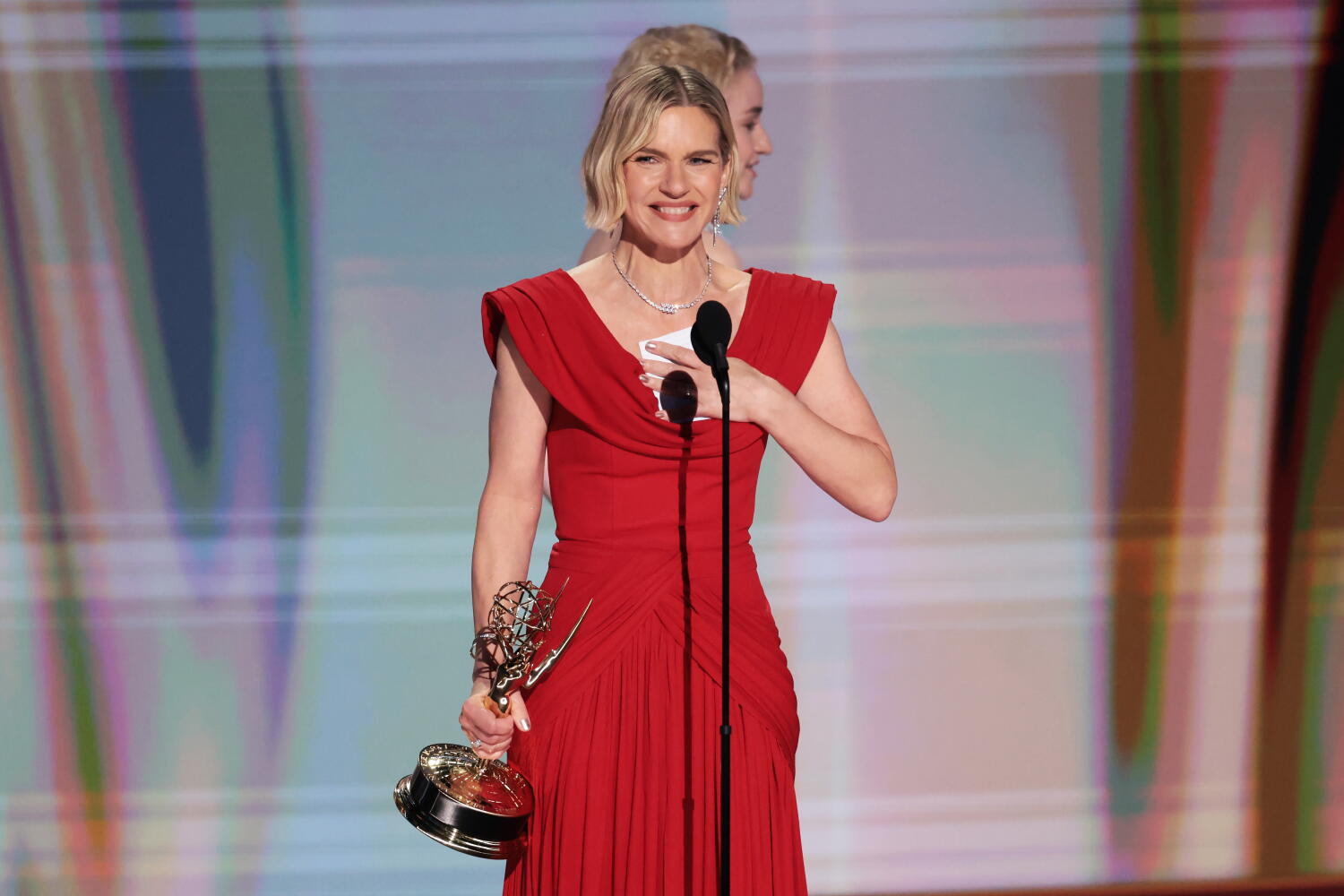
Five seasons of Hacks. Five Emmys for Jean Smart.
That math shouldn't work in modern television. Peak TV is supposed to eat shows alive after season two, or at least let voter fatigue turn a frontrunner into a punchline. Instead, Smart walked up to the stage at the 78th Primetime Emmy Awards on September 14, 2026, and collected her fifth Lead Actress in a Comedy Series trophy for playing Deborah Vance. Eight acting Emmys total. Tied with Cloris Leachman and Julia Louis-Dreyfus for the all-time acting record.
Most recap pieces treat this like a neat trivia stat. Tying Leachman and Louis-Dreyfus is huge, sure. Yet looking only at the trophy count misses the weirder, more interesting story underneath: Jean Smart just proved that an actor can sweep every single season of a long-running show without ever coasting on reputation.
What the Hacks Final Season Emmy Win Actually Means
When a performer wins once, Hollywood calls it a breakthrough. Twice, a streak. Five times for the exact same role—across a five-season run that wrapped in May 2026—stops being a streak and becomes structural dominance.
Smart won for Hacks in 2021, 2022, 2024, 2025, and 2026. Notice the gap in 2023. The writers' and actors' strikes pushed the 75th Emmys into early 2024, compressing the calendar, and Smart still came out on top every single time the category was decided. Before her, Bill Cosby had swept every season of a series with I Spy, but that was a three-season run from 1966 to 1968. Smart stretched a clean sweep across five seasons and a full decade-plus of television evolution.
Look at who she beat in 2026 just to get that fifth statue. Quinta Brunson (Abbott Elementary), Ayo Edebiri (The Bear), Elle Fanning (Margo's Got Money Troubles), and Lisa Kudrow (The Comeback) were all in the mix. Kudrow coming back as Valerie Cherish alone carries massive nostalgia weight with Television Academy voters. Brunson and Edebiri represent the younger guard voters love to reward. Smart beat all of them anyway.
Why? Because Deborah Vance refused to shrink into a static caricature. In the final season, Deborah was rebuilding her career after walking away from her late-night talk show, banging her head against walls while trying to pull off a Madison Square Garden headlining gig that ended up landing in Central Park. A lesser actor would've played that arc as pure pathos or pure brassy ego. Smart kept flipping the switch mid-sentence.
The Record Tie Nobody Expected This Fast
Let's be honest. When Smart was playing Charlene Frazier Stillfield on Designing Women in the late 1980s, nobody mapped out an eight-Emmy trajectory. Her early Emmy wins came in guest and supporting lanes—two guest comedy Emmys for Frasier in 2000 and 2001, plus a supporting comedy Emmy for Samantha Who? in 2008.
Then came the late-career surge that defied every ageist rule in Hollywood. Between 2020 and 2026, Smart stacked supporting drama wins for Watchmen and Mare of Easttown right alongside her five Hacks lead comedy trophies. That range—from Fargo and Mare of Easttown to Hacks—is why her eight-win total feels earned rather than accumulated by default.
Julia Louis-Dreyfus racked up six lead comedy wins for Veep, arguably the sharpest political satire of its era. Cloris Leachman built her eight-trophy haul across comedy and drama decades earlier. Smart got to eight by doing something slightly different: splitting her firepower between high-wire comedy and heavy dramatic prestige, then closing out with an unbroken five-for-five run on Hacks.
Why Voters Didn't Get Tired of Deborah Vance
Here is the mistake people make when analyzing awards dynasties. They assume voters just check the first familiar name on the ballot.
Sometimes that happens. Sometimes voters get lazy. Watch the actual performance in Hacks season five, though, and you can see why lazy voting doesn't explain this.
Deborah Vance starts as a Vegas relic—tanned, sharp-tongued, terrified of irrelevance, guarding her jokes like jewelry. Over five seasons, co-creators Lucia Aniello, Jen Statsky, and Paul W. Downs peeled back the armor without turning her into a soft cuddly grandma. Smart never let Deborah become likable in a cheap way. Even when Deborah is trying to claw her way back after leaving late night, she's petty, defensive, weirdly generous, and fiercely funny in the same breath.
That tension is hard to sustain. Comedy rewards rhythm; drama rewards vulnerability. Smart treats Deborah's comedy routines like armor and her breakdowns like sudden system failures. When she stepped up to the Peacock Theater microphone in September 2026, she didn't even drop the bit. "Just the men stay standing. The girls get to sit down," she cracked as the room rose for a standing ovation. She followed it up by roasting her own Spanx, corsets, fashion tape, and foot-destroying shoes, joking that people only stood up because she's old.
Then she pivoted straight to Aniello, Statsky, and Downs, saying it all begins and ends with them. Before walking off stage, she tossed the Emmy into the air and caught it. That tiny throw-and-catch wasn't rehearsed PR. It looked like a veteran comedian capping a five-season high-wire act without a net.
What Competitor Recaps Miss About Late-Career Peaks
Most entertainment coverage treats Smart's win like a neat closing chapter. Done, dusted, put it in the encyclopedia.
That misses what this does to casting and showrunning math going forward. For years, studios treated actresses over 60—and certainly over 70—as prestige guest stars or reliable moms in someone else's show. Smart turned 75 right around this era, and she was carrying the single most decorated comedy lead run in television history.
Showrunners are paying attention. When a series built around an older female lead sweeps every season, holds critical goodwill, and pulls in awards-season oxygen year after year, the old "younger skewing demo" excuse loses a lot of teeth. You can't argue that older leads don't anchor hit shows when the receipts are sitting on a shelf in Los Angeles.
Common Misconceptions About Smart's Emmy Record
A few claims floating around social feeds after the September 2026 ceremony need clearing up.
- Misconception 1: This is her eighth win for Hacks. Wrong. She has five Emmys for Hacks (2021, 2022, 2024, 2025, and 2026). Her other three come from Frasier (two guest wins) and Samantha Who? (one supporting win).
- Misconception 2: She broke the all-time acting record. Not quite. At eight wins, she tied Cloris Leachman and Julia Louis-Dreyfus. Nobody has broken nine yet.
- Misconception 3: Sweeping every season of a show was already common. Only Bill Cosby had swept every season of a series before Smart, and I Spy ran for three seasons. Smart did it across five.
There's also a fair counterargument worth acknowledging. Some viewers and critics get fatigued when one performer locks up a category for half a decade, wondering what happens to younger leads waiting for their moment. Fair point. Awards shows are zero-sum rooms. When Smart wins five times for Hacks, four other nominees go home empty-handed every year.
Still, look at the bar she set. You don't get handed five straight season sweeps unless the show keeps giving you material worth fighting for, and you keep delivering scenes people replay.
How to Watch and Judge the Hacks Run Yourself
If you haven't watched the full five-season arc of Hacks, don't start with season five clips out of context. The payoff of Deborah's post-late-night scramble only hits hard if you've watched her collide with Ava across seasons one through four first.
Pay attention to three specific things as you watch:
- How Smart uses silence before a punchline. Half her funniest moments happen before she opens her mouth—a micro-squint, a stiff shoulder, a delayed blink.
- Where Deborah's jokes turn into defense mechanisms. Notice how often a sharp line shows up right after someone questions her relevance or her choices.
- How the final season handles the Central Park pivot. Instead of handing Deborah an easy Madison Square Garden fairy tale, the show forces her to recalibrate what success actually looks like at this stage of her life.
Check the Television Academy bio and Emmy history for Jean Smart if you want to trace her full nomination path from 2000 through 2026, or revisit her earlier Frasier and Mare of Easttown turns to see how consistent her instincts have been. Smart didn't just tie a record with Hacks—she proved that an actor can stay at the center of a show from pilot to finale without losing an ounce of edge.