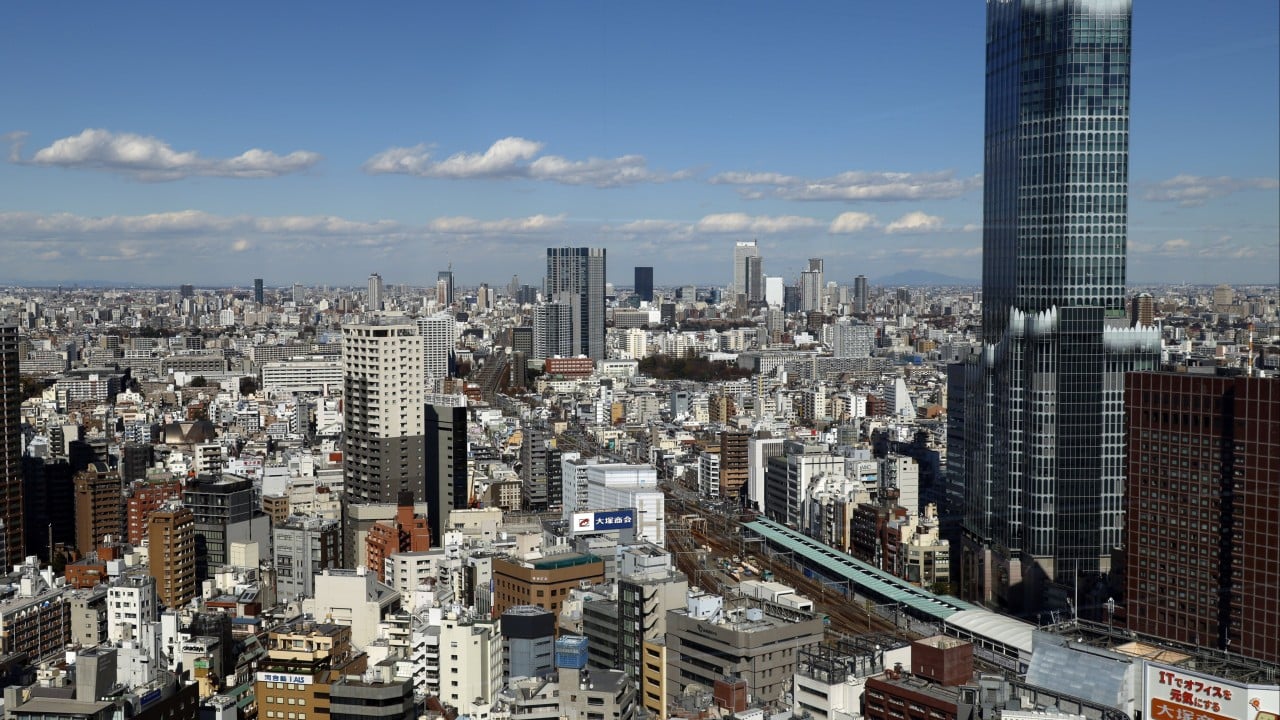
The narrative is comfortably set. Analysts are lining up to tell you that Japanese property is the ultimate "defensive play" against a Middle Eastern energy shock. They point to the yen’s historical status as a refuge. They highlight Tokyo’s low vacancy rates. They tell you that because Japan has weathered decades of deflation, a spike in oil prices is just another Tuesday in Minato City.
They are wrong.
They are operating on a 1990s playbook in a 2026 world. If the Strait of Hormuz shuts down and energy prices go vertical, the Japanese property market won't just "withstand" the shock—it will be the epicenter of a structural collapse that most investors are too timid to forecast. The consensus is lazy. It ignores the brutal reality of Japan’s imported inflation, the fragility of the Bank of Japan’s (BoJ) balance sheet, and a demographic clock that has finally run out of batteries.
The Energy Trap No One Mentions
Japan imports over 90% of its energy. This isn't a secret, but the market’s reaction to it is consistently delusional. The "safety" of Tokyo real estate is predicated on the idea of stable, low-interest debt. That debt exists because Japan has kept rates pinned to the floor to combat deflation.
A massive energy shock changes the math.
When oil and gas prices skyrocket, the BoJ faces a nightmare: import-driven inflation that they cannot control with domestic monetary policy. If they keep rates at zero, the yen gets slaughtered. If they raise rates to protect the currency and curb the cost of energy imports, the debt servicing costs for every major developer in the country explode.
I have seen funds pour billions into "safe" REITs (Real Estate Investment Trusts) in Tokyo, convinced that the yield spread is eternal. It isn’t. We are one geopolitical spark away from a scenario where borrowing costs for a standard 35-year mortgage or a commercial development loan don't just "tick up"—they double.
The "Safe Haven" Yen is a Ghost
The competitor’s article hinges on the yen being a flight-to-safety currency. That was true when Japan was the world's largest creditor and ran massive trade surpluses. Today, Japan’s trade balance is a seesaw leaning heavily toward deficit whenever energy prices move.
In a true Iran-driven energy crisis, the yen doesn't strengthen; it collapses. Why? Because Japan has to sell yen to buy the dollars needed to pay for $150-a-barrel oil.
For the foreign investor, this is a double-tap. Your property value in yen might stay flat, but your value in USD or EUR vanishes. You are buying an asset in a country that is effectively a giant, energy-dependent manufacturing plant with no fuel of its own.
The Myth of the "Resilient" Office Market
The consensus says Tokyo’s office market is back. They cite occupancy rates in Marunouchi and Otemachi. They ignore the fact that these rates are propped up by "ghost leases"—legacy contracts with massive Japanese conglomerates that are too culturally rigid to downsize, even if their floors are half-empty.
An energy shock is the perfect catalyst for these companies to finally slash costs. High heating, cooling, and operating costs for massive skyscrapers in a high-inflation environment will force the hand of even the most traditional CEO.
Imagine a scenario where 15% of the "A-grade" office space in Minato is suddenly dumped back onto the market because the utility bills alone are eating the profit margins of the tenants. The ripple effect across the residential market—where those same employees live—would be catastrophic.
The Demographic Delusion
People also ask: "Doesn't Tokyo always grow because of internal migration?"
This is the ultimate industry cop-out. Yes, Tokyo has drained the Japanese countryside of its youth for decades. But the countryside is now empty. There is no more "reserve army" of 22-year-olds in Niigata or Hokkaido to keep the Tokyo rental market buoyant.
When you combine a shrinking population with a massive energy tax on the economy, the fundamental demand for new square footage disappears. You aren't "well-placed" to withstand a shock when your core customer—the Japanese middle class—is seeing their disposable income eaten by the cost of electricity and imported food.
Stop Asking if it’s Safe, Ask Who is Selling
If the market is so resilient, why are the most sophisticated domestic players quietly offloading secondary assets?
Institutional giants like Mitsubishi Estate and Mitsui Fudosan are increasingly looking at global diversification. They know the domestic game is reaching its endgame. If you are an individual investor or a mid-market fund buying "safe" Japanese condos right now, you aren't a visionary. You are the liquidity for the guys who actually know the math.
The Brutal Reality of Construction Costs
This is where the contrarian view gets granular. Real estate isn't just land; it's the structure on top of it. Japan imports the vast majority of its construction materials. An energy shock sends the cost of steel, glass, and concrete into the stratosphere.
Developers who have already signed fixed-price contracts for upcoming projects will face one of two choices: go bankrupt or cut corners. The "quality" of Japanese construction—one of its main selling points—is about to take a massive hit.
What You Should Do Instead
Forget the "stable yield" myth. If you must be in Japan, you need to be in assets that benefit from a weak yen and high energy costs, not assets that are crushed by them.
- Logistics, Not Offices: If the global supply chain is in chaos, warehouse space for domestic storage becomes the only game in town.
- Short-Term Rentals: Focus on the tourism rebound that a weak yen fuels, rather than the long-term residential market which is a demographic trap.
- Energy Infrastructure: Stop buying the building; buy the grid.
The idea that Japan is a "fortress" in an energy war is a comforting fairy tale told by people who get paid a commission to sell you REITs. The reality is a high-stakes gamble on a central bank that is out of options and a country that is out of energy.
Japan is not "well-placed." It is exposed. It is leveraged. And it is one oil tanker explosion away from a massive repricing of risk that will leave the "safe haven" crowd staring at an empty ledger.
The era of the "low-volatility Japan play" is over. Welcome to the volatility.