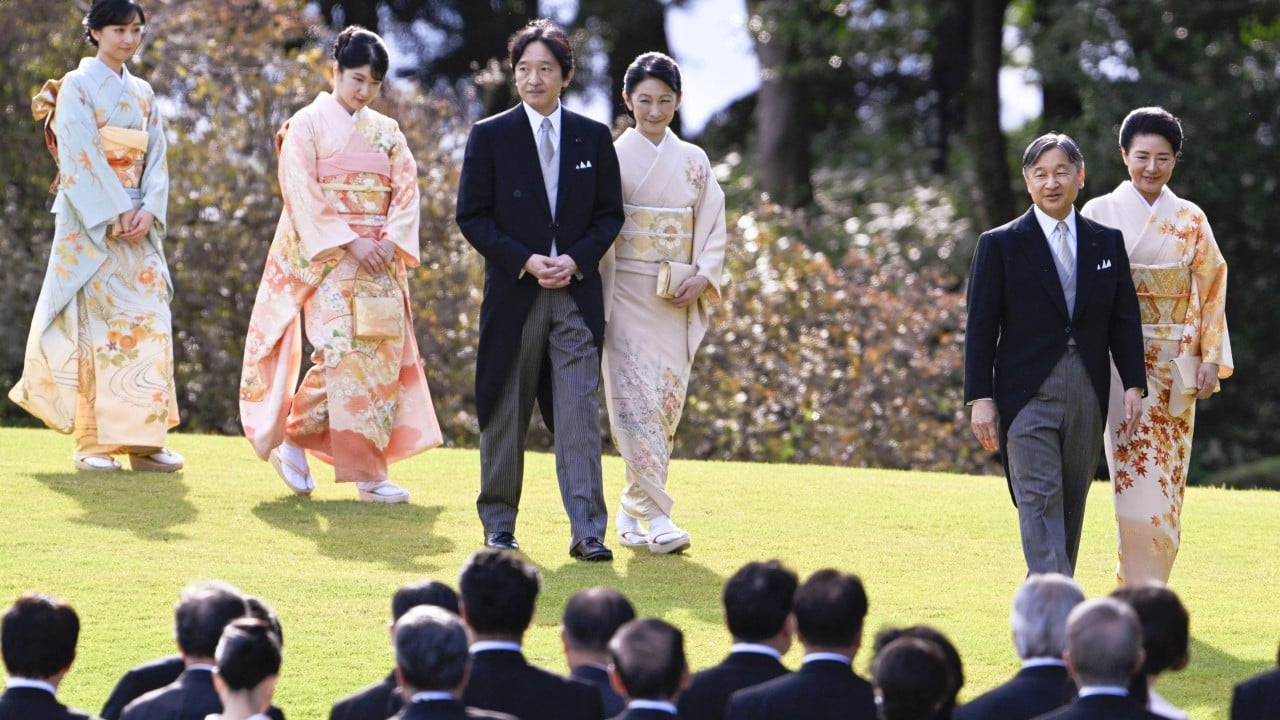
The Japanese imperial family is running out of time.
It is the oldest continuous hereditary monarchy in the world, yet it stands on the brink of a demographic cliff. Right now, only three people are left in the line of succession. One is an 80-something uncle. Another is the Emperor’s middle-aged brother. The entire future of the Chrysanthemum Throne rests on the shoulders of just one teenager, Prince Hisahito.
To fix this, a special government panel has put forward proposals to change the rules of the imperial household. But there is a massive catch. The ruling politicians are stubbornly refusing to touch the one rule that would actually solve the problem. They refuse to let women inherit the throne.
This is a masterclass in political foot-dragging. By trying to preserve an outdated male-only succession rule, Japan is choosing complex, deeply unpopular workarounds over common sense.
The math simply does not work.
The brutal numbers behind the imperial crisis
Let's look at the actual lineup. Under the 1947 Imperial Household Law, only male descendants on the father's side can ascend the throne. This strict rule has shrunk the royal family to a mere 17 people. Only five of them are men, and only three are eligible to succeed Emperor Naruhito.
Here is the succession line as it stands today
- Crown Prince Akishino (the Emperor’s 60-year-old brother)
- Prince Hisahito (the Emperor’s 19-year-old nephew)
- Prince Hitachi (the Emperor’s 90-year-old uncle)
Prince Hitachi is in his nineties. Crown Prince Akishino is senior. Realistically, Prince Hisahito is the only hope for the future.
Think about the psychological weight on this young man. He is expected to marry and produce a male heir. If he does not, or if he only has daughters, the oldest monarchy in the world ends. It is an absurd amount of pressure to place on a teenager in the 21st century.
Meanwhile, Emperor Naruhito has a child of his own. Princess Aiko is incredibly popular with the Japanese public. She is highly educated, active in public duties, and widely respected. Yet, simply because of her gender, she is legally barred from ever ruling. Even worse, under current rules, when Princess Aiko eventually marries a commoner, she will be stripped of her royal status entirely. She will be forced to leave the family.
We are watching a system actively expel its own members during an existential labor shortage.
The awkward compromises on the table
Instead of taking the obvious path and allowing Princess Aiko to become Empress, the government has cooked up two bizarre workarounds.
The first proposal is to allow female members of the family to keep their royal status after they marry commoners. This sounds progressive on the surface, but the fine print reveals the truth. Under this plan, their husbands and children would still be legally classified as commoners. Their sons would not be allowed to inherit the throne.
This creates a messy, confusing double standard. Why would a princess stay in the imperial family, taking on heavy public duties, knowing her own children will be treated as second-class royals? It is a half-measure designed to keep women working for the firm while denying them any real power.
The second proposal is even more desperate. The panel suggests adopting male descendants from the eleven branch families that were stripped of their royal status during the U.S. occupation of Japan in 1947.
This plan is practically and socially bizarre. These branch families have lived as private citizens for nearly eighty years. They pay taxes, run businesses, and live normal lives. The government wants to pluck a young man from this group, adopt him into the imperial family, and potentially put him on the throne.
Imagine telling the Japanese public that a random citizen who happens to share a distant male ancestor from the 1940s is more fit to rule than Princess Aiko, who has lived her entire life in the public eye preparing for royal duties. It is a tough sell.
The myth of unbroken male history
Conservative politicians in Japan argue that male-only succession is an sacred tradition that has remained unbroken for over two millennia. They claim that changing this rule would destroy the very essence of the monarchy.
This argument is historically illiterate.
Japan has had eight reigning Empresses throughout its history. Empress Suiko ruled in the late sixth and early seventh centuries. Empress Koken ruled in the eighth century. These women were not just placeholders. They ruled in their own right, made critical political decisions, and stabilized the country during times of transition.
The ban on female rulers is not an ancient tradition. It was actually imported from Prussia in the late 19th century. During the Meiji Restoration, Japan's leaders wanted to modernize the nation and look strong to the West. They copied European military states and codified male-only succession in the 1889 Imperial House Law. They kept this rule in the 1947 revision under Allied occupation.
In other words, the current crisis is caused by a modern, imported rule, not an ancient Japanese tradition.
What the Japanese public actually wants
If you ask the people of Japan what they want, the answer is incredibly clear.
Poll after poll conducted by major Japanese news outlets like Kyodo News and the Asahi Shimbun show overwhelming support for change. Around 80% of the public consistently says they would support a reigning Empress. They love Princess Aiko and see no reason why she shouldn't lead.
The opposition does not come from the public. It comes from a small, highly vocal group of ultra-conservative politicians within the ruling Liberal Democratic Party. These politicians hold outsized influence over the succession debate. They view the male line as a matter of national identity and are willing to risk the collapse of the monarchy to protect it.
They are living in a fantasy world. They believe they can somehow maintain a pure patrilineal line forever in a country with a declining birthrate.
The real path forward
If Japan wants to save its monarchy, it needs to stop looking for loopholes and face reality.
First, the government must repeal the rule that strips royal women of their status when they marry commoners. This is an easy win. It immediately keeps talented, experienced women like Princess Aiko inside the family to share the public workload.
Second, they need to allow female-line succession. This means if a princess has a child, that child—regardless of gender—can join the line of succession. This is exactly what European monarchies did decades ago, and they are thriving. Sweden, the Netherlands, and the United Kingdom all adapted. Japan can too.
The current strategy of adopting distant relatives and keeping women powerless is a recipe for a slow, painful decline. It places an unethical burden on Prince Hisahito and alienates a public that genuinely wants to support the imperial family.
The politicians need to stop hiding behind fake history. It is time to let the women of the imperial house step up and lead. If they don't, they might not have a monarchy left to protect.