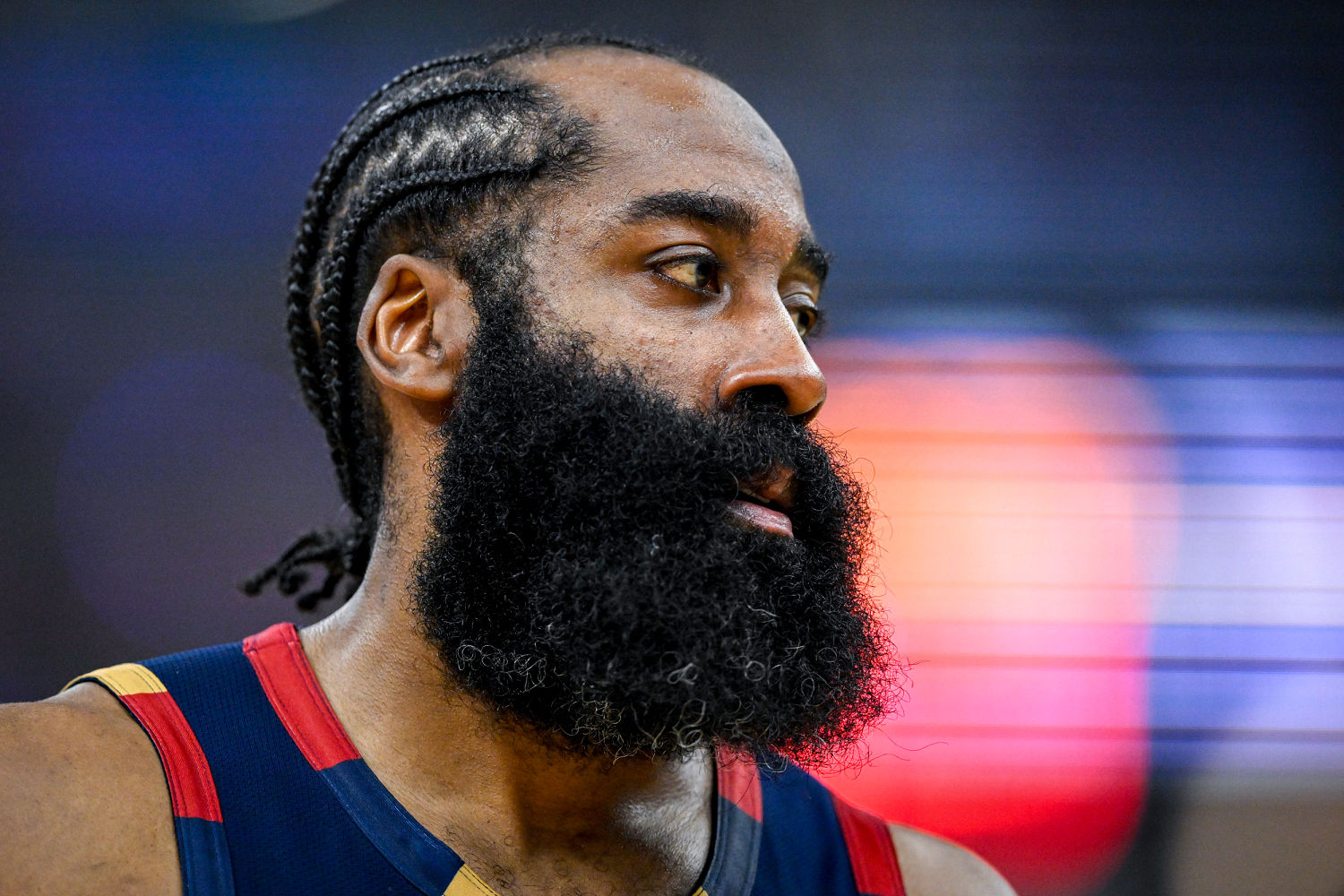
The misdemeanor gun charge against NBA star James Harden was officially dismissed by a Texas judge, quietly closing a legal chapter that most sports fans barely noticed when it opened. It happened without the high-drama media circus that usually surrounds high-profile celebrity arrests. No perp walk flashed across cable news networks. No sensationalized mugshot leaked to TMZ. Instead, the entire process ground forward with bureaucratic quietude in a Texas municipal court before vanishing from the active docket.
For the average observer, the story begins and ends with the dismissal. Case closed. Move on. But when an elite professional athlete with multi-million dollar corporate partnerships and an international profile catches a weapons charge, the paperwork rarely tells the full story. Legal machinery for the wealthy operates on a different frequency than it does for ordinary citizens. To understand how a misdemeanor gun charge simply evaporates in the Lone Star State, you have to look past the court docket and examine the convergence of local jurisprudence, high-priced defense strategy, and the pragmatic realities of municipal prosecution.
The Anatomy Of A Quiet Arrest
Details surrounding the initial citation are remarkably scarce. That scarcity is not an accident. High-profile arrests in major metropolitan areas often feature a distinct friction between the arresting agency and the individual's legal representation. Police blotters are public records, yet information regarding high-net-worth defendants frequently trickles out through tightly controlled channels or gets buried under layers of procedural redactions.
In Texas, misdemeanor weapons offenses typically involve the unlawful carrying of a weapon or possession issues tied to vehicle stops. The state maintains specific statutes regarding how firearms must be transported, secured, and registered. When an ordinary citizen runs afoul of these laws, the consequences involve standard processing, bond hearings, and a mandatory court appearance that rarely escapes local media attention.
James Harden experienced none of the standard degradation.
His legal team deployed preemptive defensive measures before the incident could metastasize into a public relations crisis or a league disciplinary matter. Professional athletes retain legal counsel on annual retainers precisely for this scenario. These attorneys do not wait for arraignment. They interface with precinct commanders and district attorneys hours after the cuffs come off. They manage the narrative before the narrative manages them. The goal is simple. Keep the file thin, keep the media blind, and keep the matter out of the public eye.
How Misdemeanor Charges Vanish In Texas
Dismissals in Texas municipal and county courts happen every single day. Prosecutors drop cases due to evidentiary issues, procedural missteps by law enforcement, or successful completion of diversion programs. Yet the velocity and silence surrounding the James Harden dismissal point to specific mechanisms available to defendants who can afford elite representation.
Prosecutorial discretion is the ultimate gatekeeper in the American criminal justice system. District attorneys and municipal prosecutors face crushing caseloads. Thousands of low-level infractions, drug possessions, and minor property crimes clog the system. When a high-profile defendant enters the ecosystem with a pristine prior record and a defense team ready to pick apart every syllable of the arresting officer's probable cause affidavit, prosecutors often calculate the cost of a trial.
Trials consume time, public resources, and expert witness fees. If a defense attorney uncovers a minor constitutional violation during the traffic stop or weapons seizure—such as an improper search or a lack of reasonable suspicion—the state's case softens immediately.
Consider a hypothetical example of how this plays out in municipal courts across Houston or Dallas. A defendant is pulled over for a minor traffic infraction. Officers smell cannabis or notice a bulge, leading to a search that uncovers a handgun. If the initial traffic stop is found to be pretextual or extended beyond a reasonable duration without justification under state law, the exclusionary rule applies. The firearm discovery becomes fruit of the poisonous tree. The evidence gets suppressed. The prosecutor faces a dismissed case because the foundation of the charge has crumbled.
Whether that exact scenario occurred in the Harden matter remains protected by the sealed and dismissed nature of the record. However, the legal mechanics remain identical. Prosecutors do not dismiss charges against famous athletes out of goodwill. They dismiss them because the state burden of proof becomes too difficult to sustain under aggressive judicial scrutiny.
The NBA Angle And Corporate Silence
The National Basketball Association operates under a strict collective bargaining agreement that addresses off-court conduct, substance abuse, and firearms violations. Article VI of the CBA grants the league office broad authority to investigate and discipline players for conduct detrimental to the league. Yet the league rarely acts on arrests that do not result in convictions or formal guilty pleas.
The commissioner's office relies on legal certainty. If a player is convicted of a violent felony or a serious weapons offense involving bodily harm, the response is swift and heavy. Suspensions follow. Public condemnation ensues. But a low-level misdemeanor charge that gets tossed out by a local judge creates a different dynamic.
It creates plausible deniability for corporate partners.
James Harden has spent over a decade building a global brand encompassing signature shoe lines, minority ownership stakes in professional sports franchises, and lucrative endorsements with beverage and lifestyle brands. Corporate sponsors abhor volatility. An active criminal trial featuring mugshots and courtroom sketches represents toxic risk. A dismissed misdemeanor, on the other hand, allows corporate PR departments to pretend the event never happened.
The silence from the league office was deafening. No statements were issued. No internal reviews were announced. By the time sports blogs picked up the court record update, the legal threat had already been neutralized. The system absorbed the shock, processed the paperwork, and returned the asset to the hardwood without a scratch.
The Two-Tiered Reality Of Criminal Justice
It would be naive to analyze this case without confronting the broader structural reality of American jurisprudence. The swift erasure of James Harden's gun charge highlights the stark disparity between how the justice system treats wealth versus poverty.
In major Texas counties, thousands of defendants sit in pretrial detention facilities unable to post modest cash bonds for minor misdemeanor offenses. They linger for weeks or months because they cannot afford private counsel to file motions for speedy trials or demand immediate evidence disclosure. Their cases languish in overloaded public defender offices where attorneys manage caseloads three times higher than recommended ethical limits.
Contrast that reality with the Harden trajectory.
Within hours of the incident, top-tier defense lawyers were reviewing dashcam footage, interviewing witnesses, and engaging in back-channel negotiations with prosecutors. Within a remarkably short window, the matter was resolved in chambers or via administrative filings that bypassed the public trial docket entirely.
This is not a conspiracy. It is simply how the market economy intersects with constitutional law. Justice in America is an expensive commodity. You get as much of it as you can afford. When you possess the financial resources to hire former prosecutors, constitutional scholars, and local fixers who understand the unwritten rules of the courthouse, the friction of the legal system disappears.
The Broader Impact On Public Accountability
When cases involving celebrities and athletes vanish quietly into the administrative ether, public trust in the legal apparatus erodes further. Citizens watch as ordinary people face severe mandatory minimums or life-altering criminal records for weapons infractions, while elite figures see their charges dismissed with a flick of a judge's pen and zero public explanation.
Transparency suffers. Courts are designed to be public forums where the community can observe justice being administered fairly and impartially. When high-profile cases are resolved behind closed doors or through expedited procedural dismissals with minimal documentation, the public is left to fill in the blanks with speculation and cynicism.
The legal system achieved its formal objective in the James Harden case. The charge was dismissed. The constitutional rights of the defendant were presumably protected. But the lingering questions about transparency, equal protection, and the silent mechanics of power in the Texas court system remain completely unanswered.
The paperwork is filed away in a dusty municipal archive. The star player continues his career unhindered. And the machinery of justice grinds on, treating the powerful and the powerless with two entirely different sets of rules.


