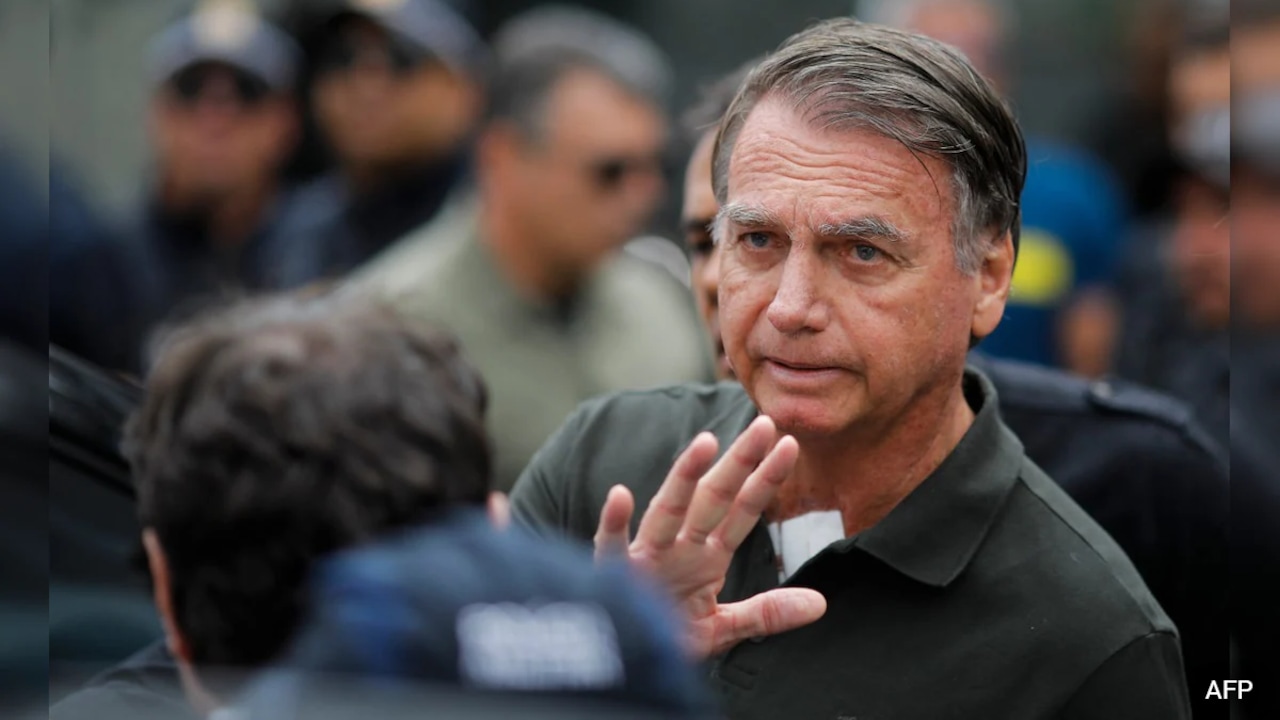
Jair Bolsonaro isn't going back to a standard prison cell anytime soon. Brazil's Supreme Court Justice Alexandre de Moraes just ruled that the 71-year-old former president can remain under house arrest. It's a massive sigh of relief for the right-wing leader's legal team, especially after a chaotic few weeks that threatened to throw him back behind bars.
The decision comes down to health. Moraes noted that continuing what he called "humanitarian house arrest" makes sense right now. Bolsonaro has been serving a massive 27-year prison sentence since November 2025 for masterminding a coup plot after his 2022 election loss to Luiz Inácio Lula da Silva. He's old, he's sick, and the court thinks he's safer to monitor at his gated community residence in Brasília than in a maximum-security ward. For an alternative look, see: this related article.
The Medical Drama Keeping Bolsonaro Out of Jail
You can't understand this ruling without looking at Bolsonaro's medical history. His health has been a mess ever since he was stabbed in the stomach on the campaign trail back in 2018. That assassination attempt left him with permanent intestinal issues and a fragile immune system.
Fast forward to March 2026. Bolsonaro caught a severe case of acute pneumonia and ended up in the intensive care unit at the private DF Star hospital. His lawyers immediately begged the court for mercy. They argued that a regular prison simply couldn't provide the level of medical attention he needed to survive. Moraes gave him a temporary 90-day window of house arrest to recover. Similar analysis on this matter has been provided by TIME.
That 90-day clock ran out. His defense team fought hard for an extension, claiming his health would completely tank if he returned to the federal police headquarters or a military battalion. Moraes agreed that Bolsonaro showed improvement while serving his time at home. Sending him back now would just complicate things.
Weapons and Ankle Monitors
The road to this extension wasn't smooth. Just last month, a police checkpoint intercepted a member of Bolsonaro's security detail. The cops found a firearm owned by the former president inside the vehicle. For a guy convicted of trying to violently overthrow the democratic rule of law, having your security team roll around with unauthorized weapons is a terrible look.
Critics and political opponents expected Moraes to lose his patience. Before his official prison term even began, Bolsonaro used a soldering iron to melt off an electronic ankle monitor because he thought he was going to be thrown in jail immediately. Moraes considered him a major flight risk back then.
This time, the system showed unexpected leniency. Prosecutor General Paulo Gonet reviewed the firearm incident and officially recommended that Bolsonaro stay right where he is. Moraes followed that advice. He stated there was zero proof of serious misconduct by the former president himself during his initial house-arrest period.
High Walls and Strict Rules
Don't mistake this for freedom. Bolsonaro's house arrest is incredibly restrictive. He's trapped in a gated community under heavy police surveillance. Protesters can't gather outside. He has to wear an electronic ankle monitor at all times.
The court stripped away his ability to influence the public. He can't use cellphones. He can't post on social media. He can't give interviews to journalists. The only people allowed through his front door are family members and medical staff.
The strategy is obvious. The Brazilian judiciary wants to neutralize his political power while avoiding the optics of letting a former head of state die in a jail cell. His three lawmaker sons have tried to keep his movement alive online, but it's hard to rally a crowd when the leader can't even send a tweet. Just last month, his son Eduardo Bolsonaro was hit with a four-year prison sentence by the Supreme Court for trying to lobby US officials to interfere in the coup investigation. The family is isolated, and the walls are closing in.
For now, Bolsonaro stays in his residence. The legal system showed a rare flash of humanitarian flexibility, but the 27-year sentence isn't going anywhere.