The global energy map just shifted. Israel’s reported readiness to supply kerosene to Germany marks more than a simple trade agreement; it represents a fundamental realignment of Mediterranean power dynamics and European survival strategy. This is not about a few tankers. It is about a desperate Berlin securing fuel for its aviation sector while Tel Aviv cements its status as a critical energy hub for the West.
The logic is simple. Germany needs to diversify away from Russian influence and middle-eastern volatility. Israel, meanwhile, has transformed from an energy importer into a regional powerhouse with a surplus of refined products and raw gas. By stepping in to stabilize Germany’s kerosene reserves, Israel is using its industrial capacity to buy long-term diplomatic leverage in the heart of the European Union.
The Strategic Pivot from Gas to Refined Fuel
For years, the conversation around Israeli energy focused almost exclusively on the Leviathan and Tamar offshore gas fields. The narrative was about heating homes and powering turbines. But gas is difficult to transport without expensive pipelines or liquefaction plants that take a decade to build. Kerosene is different. It is liquid, mobile, and immediately usable by the massive logistics and travel hubs that keep the German economy breathing.
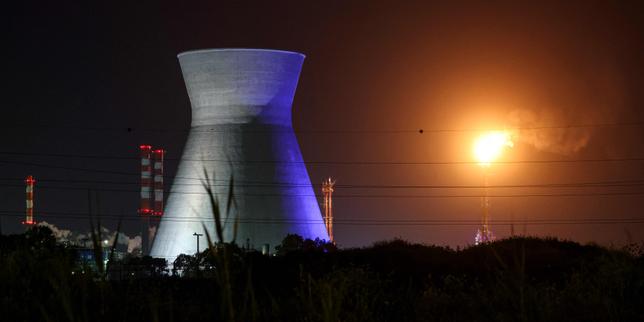
Israel has spent the last decade upgrading its refining capabilities, specifically in Haifa and Ashdod. These facilities are now operating at a level where domestic demand is comfortably met, leaving a significant margin for export. When Berlin looks at its fuel gauges, it sees a continent still reeling from the loss of cheap eastern supply. Israel sees an opening to become the indispensable partner that provides the one thing Europe cannot manufacture out of thin air: stability.
Moving Beyond the Mediterranean Bubble
This deal shatters the old assumption that Israel would only ever be a local energy player. Usually, Israeli refined products stay within the immediate neighborhood—Jordan, Egypt, or the Palestinian Authority. Exporting to Germany requires a complex logistical chain involving the port of Eilat or the Mediterranean terminals, followed by a journey through the Gibraltar Strait or the Suez Canal.
The cost of shipping fuel over such distances is high. Under normal market conditions, this trade might not make sense. However, these are not normal conditions. Germany is currently paying a "security premium" on its energy. They are willing to pay more for kerosene from a stable democratic ally than for cheaper fuel that comes with political strings attached to hostile regimes.
Why Berlin is Trading Diplomatic Capital for Kerosene
The German government finds itself in a tightening vice. Their aggressive push toward green energy has left a massive gap in the interim period where heavy industry and aviation still require fossil fuels. Planes do not run on wind power. The Lufthansa fleet, the backbone of German global trade, requires millions of barrels of jet fuel to remain operational.
By sourcing this fuel from Israel, Germany is performing a delicate balancing act. They are reducing their reliance on traditional Gulf suppliers who often use energy exports as a tool for geopolitical signaling. This move signals a "Realpolitik" approach that prioritizes industrial continuity over the traditional, often friction-filled diplomatic channels of the past.
The Refinement Gap
There is a quiet crisis in European refining. Over the last twenty years, the continent has shuttered dozens of refineries, betting that they could simply import finished products from elsewhere. This bet failed. Now, Germany finds itself with the raw crude but lacking the high-tech cracking capacity to produce enough high-grade kerosene.
Israel’s refineries are modern and highly efficient. They can produce jet fuel that meets the stringent environmental and technical standards of the EU without the need for additional processing. This "plug and play" nature of Israeli kerosene makes it an attractive emergency valve for a German energy grid that is currently stretched to its breaking point.
Risk Factors in the Pipeline
No energy deal is without friction. The logistics of moving massive quantities of fuel from the Eastern Mediterranean to Northern Europe are vulnerable to maritime disruptions. The Red Sea and the Mediterranean are increasingly contested spaces. Any escalation in regional tensions could immediately spike the insurance costs for these tankers, making the deal economically unviable overnight.
There is also the internal political pressure within Germany. A segment of the German electorate remains critical of close military and industrial ties with Israel. However, the cold reality of an empty fuel tank usually outweighs ideological purity. The Ministry of Economics in Berlin knows that a grounded airline industry would cause more political damage than a controversial fuel contract.
The Logistics of the Ashdod Connection
The technical execution of this trade involves the Port of Ashdod and the Pipeline and Storage Company (KAPC). Israel’s infrastructure is designed for rapid intake and export. They have the deep-water berths necessary to handle the LR2 tankers that typically move refined products across oceans.
Security of supply is the primary metric here. Unlike pipelines that can be turned off with a single valve in a hostile territory, ship-borne trade offers flexibility. If one route is blocked, another can be found. For Germany, this flexibility is worth the higher per-barrel cost associated with the Israeli supply chain.
The Broader Impact on Mediterranean Energy
This agreement puts a target on the Mediterranean as the primary energy corridor for the 21st century. It isn't just about Israel. It involves the integration of Greek and Cypriot waters, and the eventual creation of a network that connects the Levant directly to the European heartland.
Italy and Greece are watching this closely. If Israel can successfully integrate its refined products into the German market, it sets a precedent for other Eastern Mediterranean nations to fast-track their own export infrastructures. We are witnessing the birth of an energy bloc that stands as a direct competitor to both the Russian and the OPEC+ influence spheres.
Economic Weight and Currency Flows
The financial scale of a sustained kerosene export deal reaches into the billions of Euros. This provides Israel with a massive influx of foreign currency, further strengthening the Shekel and providing a buffer against domestic economic volatility. For Germany, it is a massive capital outflow, but one that is viewed as an investment in national security.
The contract structures are likely to be long-term. Short-term "spot" buys don't provide the security Berlin needs. They want five-to-ten-year commitments that guarantee a specific volume of fuel regardless of market fluctuations. This locks both nations into a symbiotic relationship that will be difficult to untether.
Refining the Future of the Alliance
The shift in energy dependency changes the way Berlin speaks in Brussels. When Germany becomes dependent on Israeli fuel to keep its airports open, its voting record on Middle Eastern issues at the UN and the EU naturally begins to shift. This is the "soft power" of hard energy.
Israel has learned from the mistakes of the 20th century. They know that being a military power is not enough; one must be a commercial necessity. By refining the fuel that powers the German economy, they aren't just selling a commodity. They are selling an insurance policy for the German industrial machine.
The infrastructure required for this trade—the tankers, the storage vats, the refined cracking units—is already in place. The only thing that was missing was the political will. That will has now been forged in the heat of Europe's energy crisis. The ships are ready to move, and the map of the world is being redrawn one barrel of kerosene at a time.
Berlin’s quiet scramble for fuel has met Tel Aviv’s loud emergence as a regional titan. The result is a partnership born of necessity, executed with clinical industrial precision, and destined to redefine the power balance of the European continent. Keep your eyes on the tankers leaving Ashdod; they carry more than just fuel. They carry the weight of a new geopolitical era.