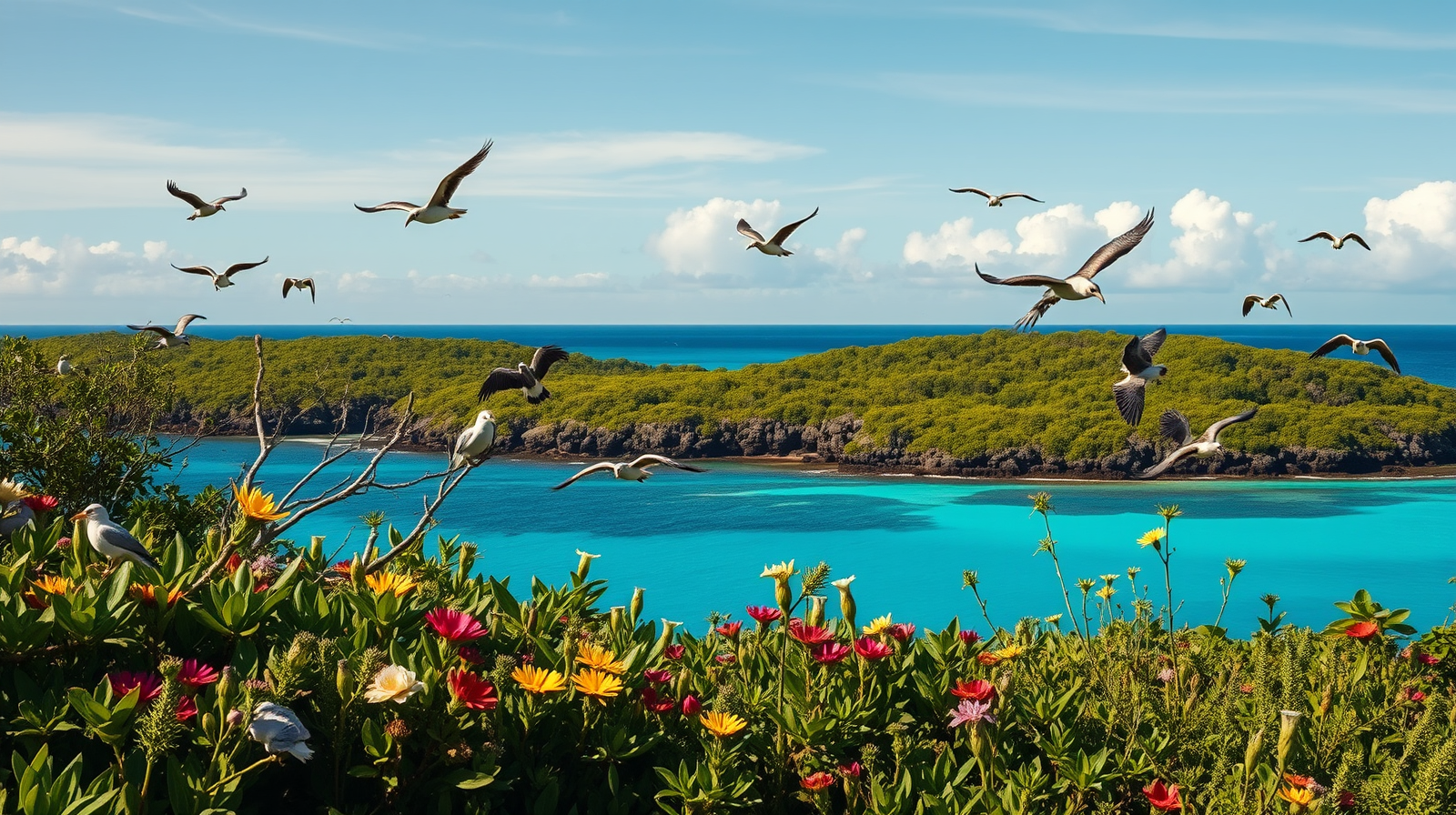
Conservationists love a good triumph-over-adversity narrative. For decades, the feel-good story coming out of the Indian Ocean focused on Mauritius. The narrative was simple: spend 40 years poisoning rats, hunting feral goats, and trapping cats across fragile offshore islets like Ile aux Aigrettes or Round Island. The reward? A triumphant return of endangered seabirds, pink pigeons, and Telfair’s skinks.
It sounds like a flawless victory for ecological purity. It is actually a textbook example of a dangerous, short-sighted fixation on a romanticized past that no longer exists.
The mainstream conservation industry is obsessed with a concept I call "baseline nostalgia"—the unscientific belief that we can, and should, freeze ecosystems in a pre-human snapshot. Millions of dollars are funneled into these isolated rock outposts to achieve a temporary state of artificial balance. Meanwhile, the broader, systemic drivers of global biodiversity collapse are starved of funding. Worse, the ecosystem engineers we label as "invasive" are often the only things keeping these degraded habitats functional in a changing climate.
We need to stop treating island eradication campaigns as the gold standard of environmental stewardship. They are expensive, biologically unstable triage zones that ignore the realities of the Anthropocene.
The Illusion of the Pristine Island
The core flaw of the Mauritius model—and similar high-profile projects from the Galápagos to New Zealand—is the myth of permanent eradication.
Ecologists treat islands like closed laboratory dishes. They aren't. Biogeography dictates that if a habitat is suitable for a highly adaptable species like the black rat (Rattus rattus), that species will eventually find a way back. A single pregnant rodent hitching a ride on a supply boat, a tourist yacht, or washed-up debris instantly resets a 40-year, multimillion-dollar timeline.
When you strip an island of its dominant mammalian predators, you create an ecological vacuum. Nature loathes a vacuum. What the breathless press releases omit is the concept of hyperpredation and competitive release.
Remove the feral cats, and the rat population explodes. Poison every last rat, and suddenly minor pests—invasive ants, scale insects, or exotic weeds—surge unchecked because their primary predators or competitors vanished overnight. You haven't restored an ecosystem; you have just triggered a chaotic cascade of new management headaches.
Consider the sheer economic asymmetry of these interventions. A 2022 study on global invasion costs highlighted that the world spends billions annually on eradication, yet the rate of new introductions shows zero signs of slowing down. We are emptying the ocean with a leaky bucket, celebrating every cupful we throw back while the tide rushes in over our heads.
The Uncomfortable Truth About Ecological Substitutes
Let’s talk about what actually happens when you violently purge an island’s naturalized inhabitants.
For centuries, Mauritius was home to giant tortoises that fulfilled vital roles: grazing vegetation, crushing undergrowth, and dispersing large seeds. When humans wiped them out, the island’s native flora began to suffocate. Realizing this, conservationists on Round Island didn't magically resurrect the extinct native tortoise. Instead, they introduced Aldabra giant tortoises from the Seychelles.
Look closely at that decision. It is an explicit admission that the "native" framework is broken. The Aldabra tortoise is an exotic, introduced species. It is, by definition, invasive to Mauritius. Yet it is celebrated because it performs a desired function.
If we can accept an exotic tortoise as an ecological proxy, why do we maintain a dogmatic, scorched-earth policy against other introduced species that are actively adapting to degraded landscapes?
In many parts of the world, introduced species have become the scaffolding holding damaged ecosystems together. Exotic plants often provide the only viable nesting structure or food source left for endangered birds in areas where native forests have been obliterated by climate-driven droughts or diseases.
When you blindly eradicate an introduced species based on its zip code of origin rather than its ecological function, you risk pulling the rug out from under the very native species you claim to protect.
The Fatal Flaw in "People Also Ask" Conservation Logic
If you look at public forums or standard environmental FAQs, the questions asked by the public reflect the spoon-fed consensus of major conservation NGOs:
- Don't invasive species always cause extinctions on islands?
- Isn't eradication the only way to save endangered seabirds?
The honest answer to both is a resounding no. The premise is fundamentally flawed.
First, extinction dynamics are rarely driven by a single smoking gun. Invasives get the blame because they are an easy, visible villain. The underlying culprit is almost always habitat fragmentation, industrial pollution, and shifting climate baselines. A healthy, resilient ecosystem can frequently tolerate the presence of naturalized predators. An ecosystem stripped of its genetic diversity and chopped into isolated fragments cannot. Eradicating rats on an islet does nothing to fix the fact that the surrounding ocean is warming, acidifying, and being stripped of the fish stocks the seabirds need to feed their young.
Second, eradication is far from the only path. The alternative is intensive, localized management and acceptance of novel ecosystems.
Instead of chasing the ghost of a predator-free utopia, resources should be allocated toward building resilience into the populations themselves. This means genetic rescue, establishing mainland sanctuaries protected by smart fencing, and optimizing the habitats we can control, rather than playing an endless game of whack-a-mole on remote rocks.
The Toxic Cost of Purity
There is a dark side to these environmental purges that the industry prefers not to highlight: the methods are brutal and ecologically hazardous.
The standard operating procedure for island rodent eradication involves aerial broadcasting of second-generation anticoagulant rodenticides, primarily brodifacoum. Tons of toxic bait are dropped from helicopters across entire landmasses.
While practitioners claim the risks are minimized, the reality of non-target poisoning is a persistent shadow over these operations. The poison bioaccumulates. It enters the soil, leaches into the marine environment, and finds its way into the tissues of crabs, fish, and the very raptors and scavengers meant to be protected.
I have watched organizations gloss over the collateral damage of these campaigns, treating the deaths of native reptiles or non-target birds as acceptable losses in pursuit of ideological purity. We are poisoning the foundations of an ecosystem to fix its canopy. It is a corporate restructuring strategy disguised as environmental science: burn the department down to meet a specific quarterly KPI.
Move Beyond the Nativism Trap
Am I arguing that we should actively seed islands with rats and goats? Of course not.
I am arguing for a shift from knee-jerk nativism to functional pragmatism. We must stop measuring conservation success by the body count of eradicated pests or the number of years spent policing a single beach.
The future of global biodiversity is not going to be saved on a handful of heavily guarded, sterilized islets off the coast of East Africa. It will be decided on mainlands, in agricultural landscapes, and through the management of novel ecosystems where native and introduced species have negotiated a new equilibrium.
Stop funding the endless war against island invasives. Accept that the baseline has shifted permanently. Invest those millions where they can actually alter the trajectory of global extinction, or accept that you are just paying for an expensive boutique museum exhibit that a single rogue rodent will eventually destroy.