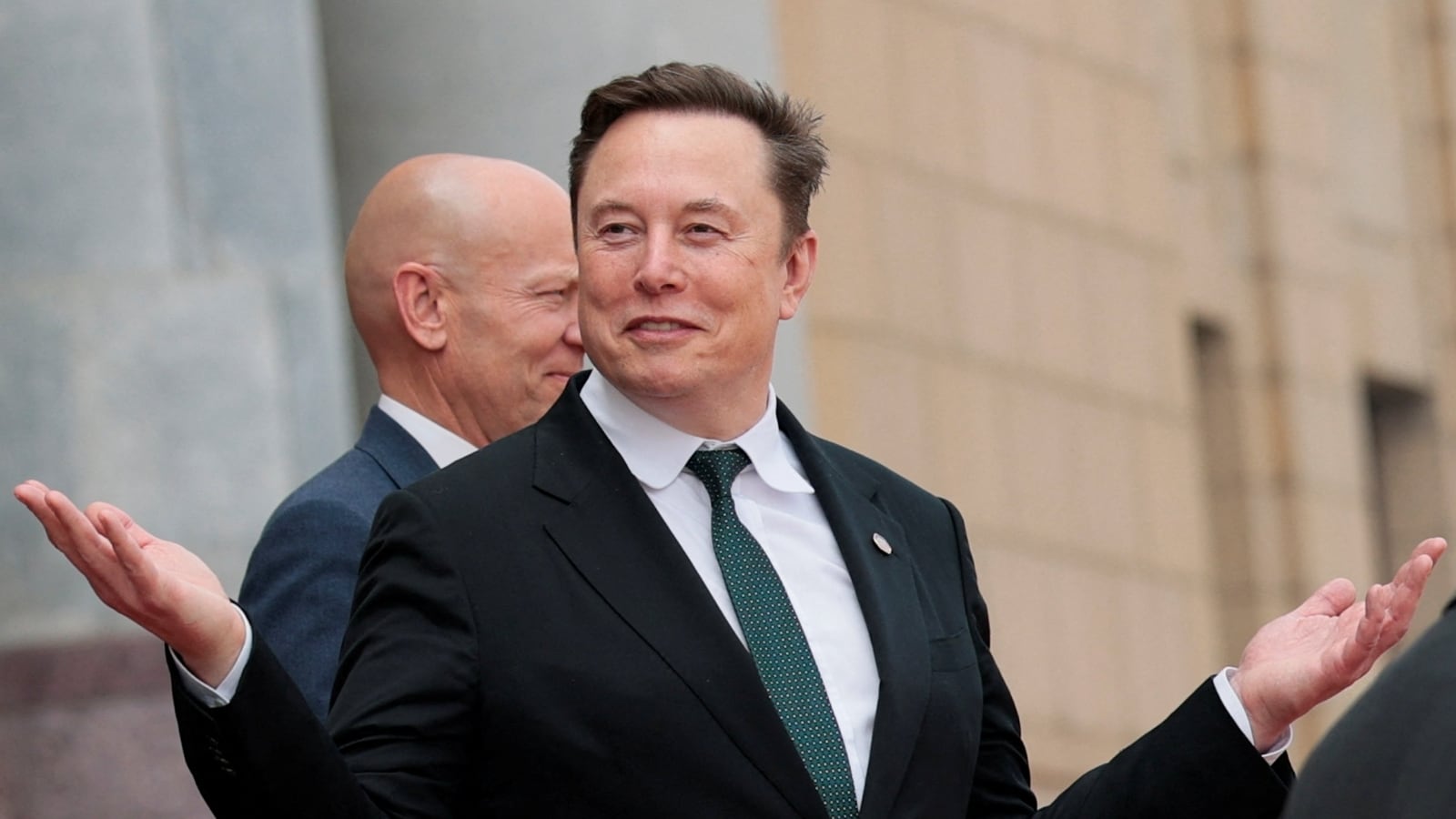
The ticker tape does not care about the weight of a planet. It moves in silent, green increments on a glass screen while somewhere in South Texas, a steel collar releases with a sharp hiss and a thousand tons of machinery begin their violent climb toward the vacuum. Elon Musk sits between two rooms. In one, battery cells click into aluminum cooling plates with the precise, repetitive rhythm of a loom. In the other, telemetry streams from a scorched metal cylinder tumbling through the upper stratosphere. They look like different worlds. They are governed by the same ledger.
For years, the market treated Tesla and SpaceX as distant cousins who shared a brilliant, chaotic architect. One builds earthbound cars designed to navigate the congested asphalt of suburban America. The other builds interplanetary transport systems designed to die in fire and be reborn in titanium. Yet wall street whispers have grown louder, shifting from idle cocktail party speculation to serious mathematical modeling. What happens if the electric car maker and the private space monopoly fuse into a single corporate behemoth?
The answer is rarely found in the spreadsheets. It lives in the geography of power.
Consider a hypothetical engineer named Marcus, standing on a concrete floor in Fremont fifteen years ago. He remembers when batteries were a luxury item, heavy and sulfurous, bought in small batches from suppliers who held all the cards. Today, that supply chain is a brittle wire stretched across oceans, vulnerable to the stroke of a foreign pen, an environmental decree, or a sudden shift in naval tariffs.
Now, look up. Orbit is not a neutral zone. The Starlink constellation overhead relies on thousands of low-earth orbit satellites, each one packed with autonomous navigation systems, radiation-hardened chips, and crucially, immense battery reserves to survive the cold shadow of the earth. When sunlight fails, lithium-ion takes over. The technology that keeps a Model Y rolling down a highway in Ohio is the exact technology keeping global internet routing alive four hundred miles above our heads.
To merge these entities is not merely to combine revenue streams. It is to create a closed-loop technological empire that answers to no single domestic market.
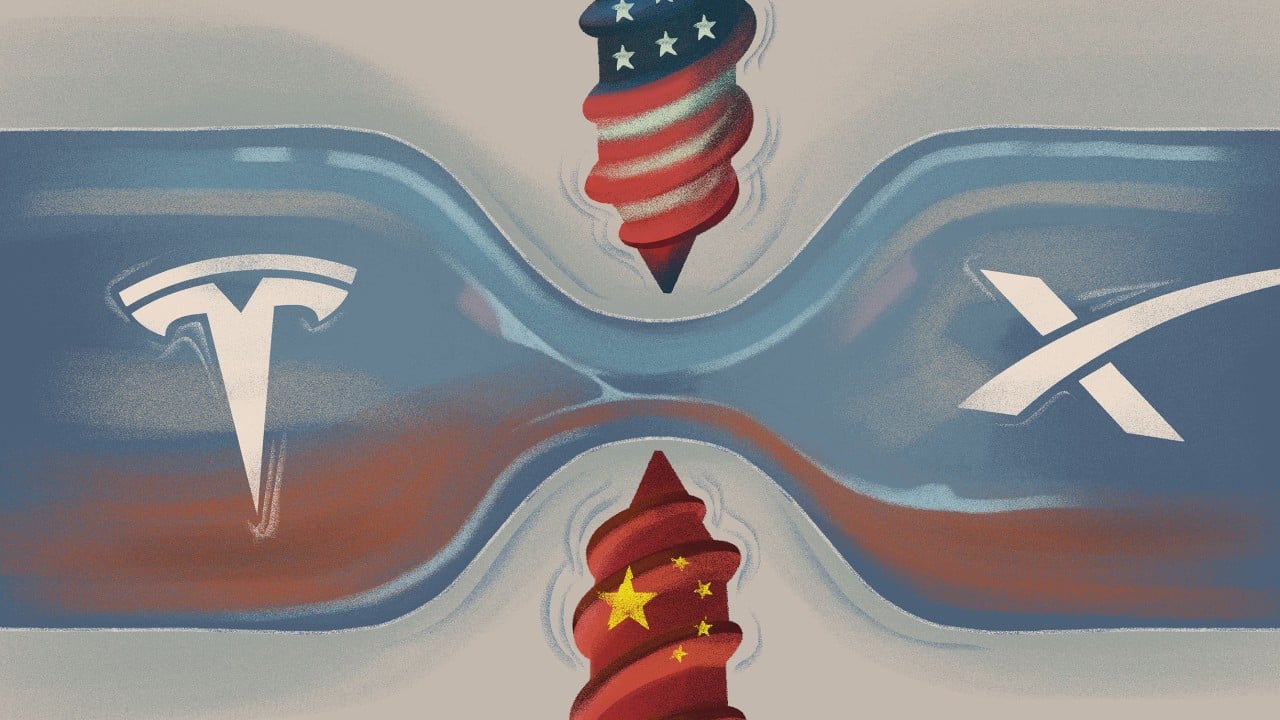
Geopolitics is the shadow cast by borders, and borders are the one thing neither rockets nor electrons respect. This is where the merger thesis collides with the messy reality of global sovereignty. Imagine regulators in Brussels or Washington waking up to find that the company ferrying NASA astronauts to the International Space Station is financially and operationally intertwined with the entity controlling the largest private vehicle data network on earth. The regulatory scrutiny would not be a hurdle; it would be a wall.
National security agencies already look at SpaceX with a mixture of profound gratitude and cold dread. The Pentagon relies on Falcon 9 rockets to launch classified payloads because there is simply no domestic alternative that works with the same ruthless efficiency. But what happens when the rocket company is legally bound to an automotive balance sheet exposed to foreign manufacturing hubs, rare earth mineral extraction in contested zones, and consumer markets halfway across the globe?
A supply chain disruption in East Asia does not just delay the delivery of a sedan touchscreen. It starves the guidance systems of an orbital launch vehicle. That vulnerability is the spanner in the works. Governments do not surrender critical infrastructure to private conglomerates easily, and they certainly do not do so when the ownership structure resembles the personal fiefdom of a single individual whose geopolitical opinions change as fast as his social media feed.
We have seen this before, though the scale was smaller. In the late nineteenth century, rail barons realized that owning the locomotive was only half the battle; they had to own the timber, the steel mills, and the telegraph wires running alongside the tracks. They became states unto themselves until the antitrust hammers came down. But the modern landscape moves at the speed of software updates. By the time regulators finish drafting a subpoena, the target has already launched three hundred more satellites and retrofitted an entire assembly line for humanoid robotics.
The emotional core of this potential merger is not greed. It is urgency.
Musk operates with a clock ticking quietly in the background of his mind, driven by an existential dread of civilizational collapse. Electric vehicles were never just about reducing urban smog; they were the bootstrapping mechanism for sustainable energy generation. Rockets were never just about tourism; they were an insurance policy for a fragile biosphere. Every dollar generated by a sedan sold in Munich or Shanghai is a dollar funneled into Raptor engine development. To split them is to starve the future to feed the present. To merge them is to create a financial leviathan so vast that traditional nation-states will struggle to regulate its boundaries.
The risk is profound. If the mothership stumbles, everything falls. A catastrophic failure in autonomous driving software could trigger safety recalls that bleed the cash reserves needed to fund a Mars transport architecture. Conversely, a launch failure that grounds the orbital fleet could spook the equity markets so severely that the automotive division's credit rating freezes overnight. They are tied together by an invisible iron cable.
We stand at a strange hinge in history. The entities building our escape routes from this planet are currently financed by the cars we use to drive to the grocery store. Whether the corporate paperwork ever officially binds them together matters less than the reality that they are already the same organism, breathing the same air, burning the same capital, and reaching blindly into the dark.
The ticker tape keeps moving. The rocket sits on the pad. Somewhere in the middle, the world holds its breath, waiting to see if the borders we drew on maps can contain the things we are building to leave them behind.