Stand at the edge of Belfast Lough when a winter gale rolls in from the Irish Sea, and you will hear them before you see them. Samson and Goliath do not whisper. They groan.
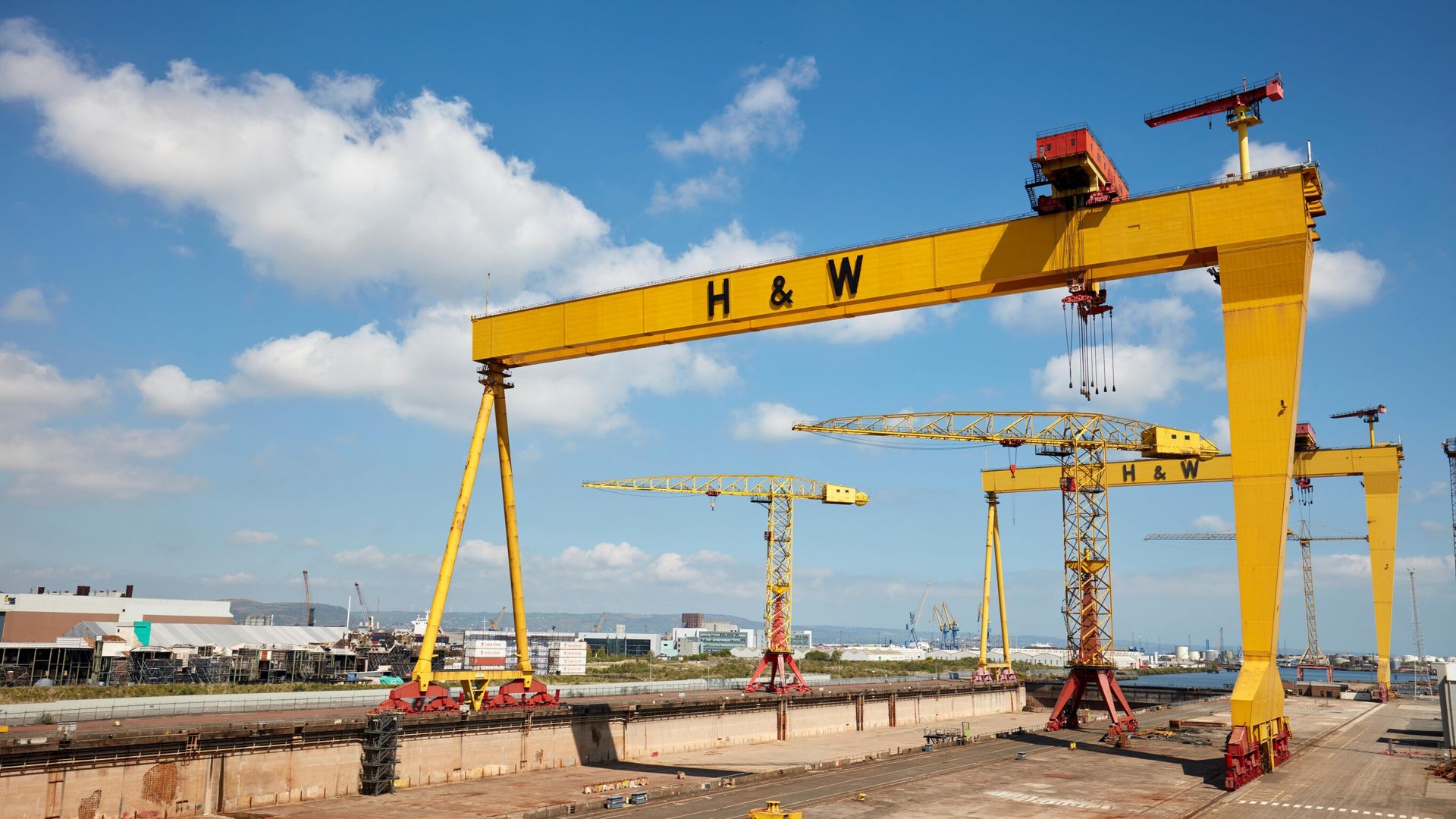
These twin yellow titans, painted in the high-visibility warning hues of a construction site, dominate the skyline of Northern Ireland like modern-day pharaohs. They are massive. They are imposing. And, truth be told, they are getting tired.
For generations, these towering gantry cranes have stood as the stubborn spine of Harland and Wolff, the legendary shipyard where men with soot on their faces and iron in their blood riveted the fate of the RMS Titanic into history. When you look up at them—stretching hundreds of feet into a bruised northern sky—you are looking at more than just heavy machinery. You are looking at a monument to human ambition, a place where workers once breathed life into floating palaces using little more than muscle, sweat, and raw geometry.
Yet, iron ages. Saltwater bites. Wind shears.
Recently, a heavy injection of capital was announced—a 3.1 million pound refurbishment aimed at dragging these aging giants away from the brink of structural decay. To a bean counter sitting in a London boardroom, it is a line item. A maintenance cost. A ledger entry labeled asset preservation.
To the people who walk these docks, it is a pulse.
Let us step back for a moment. Consider what happens when a city loses its landmarks. It does not just lose metal. It loses its memory.
Imagine an old shipfitter, a hypothetical composite of the thousands who have labored beneath these shadows over the last century. Let us call him Thomas. Thomas is seventy now, his hands shaped by arthritis like old driftwood, his lungs carrying the faint, permanent ghost of shipyard dust. When Thomas was twenty, he climbed the internal ladders of Goliath. He tells stories of the world looking small from up there, the Belfast docks sprawling out below like a scattered tin-plate layout, the roar of the shipyard deafening and absolute.
"You didn't just work there," Thomas might tell you over a pint of bitter, his eyes fixed on the amber liquid. "You belonged to it. Those cranes... they were our weather vane. If Samson was moving, the city was moving."
When the shipyard floundered through bankruptcies, corporate bailouts, and the bitter economic winters of the late twentieth century, the cranes stood still. That stillness was terrifying. It meant silence. And silence in Belfast has historically been the precursor to worse things.
So, when funding is secured to strip away the rust, reinforce the structural joints, and repaint those iconic yellow letters, it is not merely about keeping a piece of industrial equipment operational. It is a stubborn declaration that this place is not finished yet.
Maintenance at this scale is an art form. You cannot simply roll a crane into a garage. Every single bolt, weld, and cable must be inspected with surgical precision, often suspended hundreds of feet in the air while Atlantic gales try to shake the scaffolding loose. Engineers dangling from ropes become modern tightrope walkers, wrestling with structural fatigue that has accumulated over decades of lifting multi-ton ship modules.
The mechanics of it are staggering. Samson and Goliath can lift loads weighing up to 840 tonnes combined, operating on railway-style bogies that distribute weight across massive concrete foundations. But scale brings vulnerability. The sheer surface area of their massive steel girders acts like a giant sail against the wind. Every storm tests their structural integrity to its absolute limit.
Without this multi-million-pound overhaul, the structural decay would eventually become terminal. Metal fatigue does not negotiate. Left unchecked, rust eats through load-bearing steel like a slow-moving fire, turning a symbol of engineering triumph into a liability.
And that is why the money matters. It buys time against entropy.
We live in a world obsessed with the shiny and the new. We discard smartphones every two years, tear down office blocks after three decades, and chase the ephemeral rush of digital disruption. We treat our physical environment like disposable packaging.
These cranes offer a radical alternative. They demand permanence. They ask us to look at something built in the twentieth century and say: this is worth saving, not because it is cheap or efficient, but because it anchors us.
When the refurbishment is complete and the fresh yellow paint catches the rare flash of Belfast sunshine, the giants will look back down at the water where the world's most famous doomed liner once slid down the slipway. They will creak in the wind. They will lift new loads for modern green-energy projects, pivoting from the fossil-fueled past toward offshore wind turbines that stretch toward the same horizon.
The iron remains. The work changes. The giants stand watch.
Listen closely, and you can still hear the hammers.