At 4:45 in the morning, before the humid air of Manaus settles into its heavy midday heat, Mateo unlocks the corrugated metal shutter of his family’s hardware shop. The fluorescent bulb flickers twice before buzzing to life, illuminating shelves stacked with PVC pipes, bags of cement, and boxes of imported copper wire.
Mateo is a hypothetical composite of thousands of small business owners across northern Brazil, yet his daily arithmetic is entirely real. Every invoice sitting on his scarred wooden desk tells a story that reaches far beyond the banks of the Amazon River. When the price of imported fertilizer spikes, his farming customers delay buying irrigation tubing. When global interest rates climb, the local credit union tightens its lending rules, freezing his plans to buy a second delivery truck. Expanding on this topic, you can find more in: Coalition Mechanics and Endorsement Transfer in Michigan Statewide Primaries.
For Mateo, the runoff election between Luiz Inácio Lula da Silva and Jair Bolsonaro is not an abstract debate over political theory. It is a referendum on whether his shop survives the next four years.
Yet, thousands of miles away in Washington, D.C., policy analysts and diplomats are staring at the exact same election map with an entirely different set of anxieties. According to reporting and foreign policy analyses from outlets like Reuters and the Council on Foreign Relations, this runoff represents a defining moment for United States influence across Latin America. Observers at NBC News have provided expertise on this situation.
Two vastly different worlds are colliding on a single ballot.
The Architecture of a Divided Nation
To understand why this runoff feels like a seismic event rather than a routine transfer of power, you have to look at the sheer scale of the country at its center. Brazil is not merely the largest nation in South America; it is an economic and ecological engine that accounts for roughly half of the continent’s territory, population, and gross domestic product.
When Brazil shifts its weight, the entire hemisphere tilts.
In the first round of voting, the nation split down the middle with startling precision. Luiz Inácio Lula da Silva, the former metalworker and two-term president who led Brazil through a commodity-fueled economic boom in the 2000s, captured roughly 48.4 percent of the vote. Jair Bolsonaro, the incumbent right-wing populist and former army captain who rode a wave of anti-establishment anger into office in 2018, defied numerous pre-election polls by securing 43.2 percent.
Neither man crossed the 50 percent threshold required to win outright. The country was plunged into a four-week sprint toward a final, winner-take-all runoff.
The numbers alone tell a story of deep polarization, yet numbers cannot capture the kitchen-table tension splitting families from São Paulo to the rural interior of Mato Grosso. In the industrial belt outside São Paulo, retired factory workers remember Lula’s social welfare programs—initiatives like Bolsa Família—that lifted tens of millions of Brazilians out of extreme poverty and put meat back on dinner plates. To them, his return represents dignity, state-backed protection, and environmental stewardship of the Amazon.
Drive a few hundred miles west into the agricultural heartland, however, and the air smells of diesel and freshly turned earth. Here, among the soybean farmers and cattle ranchers who feed a massive portion of the globe, Bolsonaro is seen as a defender of economic freedom, traditional family values, and property rights. Supporters point to his administration’s deregulation efforts, tax cuts, and resistance to strict environmental mandates that agribusiness leaders argue would strangle their livelihoods.
It is an exhausting, high-stakes standoff. Both camps view the other not merely as political opponents, but as existential threats to the nation they love.
The View from the Potomac
While Brazilians weigh the cost of groceries against the preservation of democratic norms, officials in Washington are watching with a quiet, urgent intensity.
Think of international diplomacy in the Western Hemisphere like a massive suspension bridge. For decades, the United States assumed its anchor cables on the southern end were permanently fixed in place. Washington was the default partner of choice for trade, security cooperation, and diplomatic alignment.
That assumption no longer holds.
Over the past twenty years, China has steadily built its own bridge across the Pacific, becoming Brazil’s largest trading partner and a primary buyer of Brazilian soy, iron ore, and crude oil. Meanwhile, a wave of leftist electoral victories across Latin America—in countries like Mexico, Colombia, Chile, and Argentina—has reshaped the regional political map, often bringing leaders to power who are skeptical of traditional U.S. foreign policy priorities.
Analysts at the Brookings Institution and the Wilson Center have noted that the outcome of Brazil’s runoff will largely dictate how much room Washington has to maneuver in the region over the coming decade. Because Brazil is the undisputed heavyweight of South America, its president sets the diplomatic tone for neighboring capitals.
Consider what happens next depending on who takes the oath of office in Brasília.
If Bolsonaro secures a second term, Washington faces a familiar yet complicated reality. During the Trump administration, Bolsonaro forged a close ideological bond with the White House, aligning closely with U.S. positions on Venezuela and skepticism toward international multilateral bodies. Under the Biden administration, however, that relationship cooled significantly. U.S. officials have repeatedly clashed with Bolsonaro’s government over rising deforestation rates in the Amazon rainforest and his persistent, unsubstantiated questioning of Brazil’s electronic voting system. A second Bolsonaro term would likely mean continued friction with Washington over climate policy and democratic governance, leaving less space for broad diplomatic cooperation.
Conversely, a Lula victory offers Washington a tantalizing opportunity paired with a sobering reality check. On climate change—a top priority for the Biden administration—Lula has pledged to end illegal deforestation in the Amazon and re-establish Brazil as a global environmental leader, creating immediate common ground with the United States and European allies.
Yet, as foreign policy scholars at the Carnegie Endowment for International Peace point out, Lula is no ideological ally of Washington. His worldview is rooted in non-alignment and multipolarity—the belief that developing nations should balance relationships with the United States, China, and Russia without bowing to any single superpower. Under a Lula presidency, Brazil would likely push to revitalize regional blocs like Mercosur and UNASUR, seeking greater South American autonomy and resisting U.S. pressure to isolate Beijing or Moscow.
The Heavy Cost of Uncertainty
To grasp how this geopolitical chess match filters down to ordinary lives, return for a moment to Mateo’s hardware shop in Manaus.
Manaus sits in the middle of the Amazon basin, a sprawling industrial free-trade zone surrounded by dense jungle. The city exists because of delicate policy decisions made thousands of miles away—tax incentives designed to keep manufacturing jobs in the region so people do not have to clear-cut the rainforest to survive.
When Brazil’s foreign policy shifts, those delicate balances tremble.
If Brazil alienates Western trading partners over environmental destruction, international investment funds pull back, and trade agreements stall. If Brazil leans too heavily into state-controlled economic intervention, domestic inflation can flare up, eroding the purchasing power of the real and driving up the cost of every imported wrench and spool of wire on Mateo’s shelves.
I have spent years reporting on the intersection of local economies and global politics, and one truth remains stubbornly consistent: ordinary citizens always pay the interest on geopolitical instability. When leaders treat foreign policy as an ideological performance, it is the small-town merchant, the seasonal harvest worker, and the young family trying to finance a modest apartment who absorb the shockwaves.
There is an honest, unsettling vulnerability in admitting that neither path guarantees an easy rescue. Brazil’s economy faces structural headwinds—sluggish productivity growth, a complex tax code, and deep social inequality—that no single election can erase overnight. Whoever wins the runoff will inherit a fiercely divided Congress, a restless electorate, and an international environment marked by war in Europe, supply chain disruptions, and intensifying competition between Washington and Beijing.
The Silence Before the Count
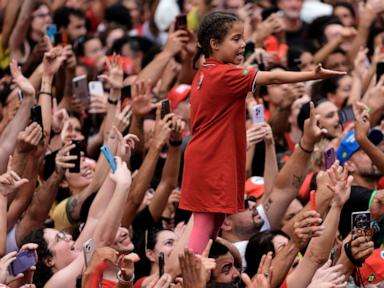
In the final days before a Brazilian runoff, the noise reaches a deafening crescendo. Sound trucks rumble down cobblestone streets blasting campaign jingles. WhatsApp groups buzz endlessly with urgent voice notes, memes, and competing claims about the economy. Flag-waving rallies paint entire avenues in either the red of the Workers’ Party or the green and yellow of the national jersey.
And then, on Sunday morning, the noise stops.
Under Brazilian law, campaigning halts, and millions of citizens walk quietly to local schools and community centers to stand in line. They step behind cardboard privacy screens, type two digits into an electronic terminal, and press a green button marked Confirma.
A brief, high-pitched chime rings out inside the booth.
It is a tiny sound, barely audible over the shuffle of footsteps on a tiled floor. Yet multiplied more than 120 million times across four time zones, that chime decides the fate of the world’s largest tropical rainforest, the trajectory of South America’s biggest economy, and the balance of power across an entire hemisphere.
Back in Manaus, Mateo will close his metal shutter early on Sunday afternoon, walk down to the neighborhood school, and cast his ballot. When he returns home to watch the tally unfold on a small television in his kitchen, he will not be thinking about diplomatic cables in Washington or trade corridors in Beijing. He will be looking at the numbers on the screen, wondering what Monday morning will bring when he unlocks his door again.