Two thousand feet below the flight deck of a commercial airliner crossing the Persian Gulf, the water looks like hammered pewter. From that altitude, the Strait of Hormuz appears almost impossibly narrow, a pinched waist of salt water squeezed between the jagged, sun-bleached mountains of Oman and the fortified coastline of Iran.
It is barely twenty-one miles wide at its tightest point.
Yet through that slender blue ribbon passes roughly a fifth of the world’s petroleum consumption and a massive share of global liquefied natural gas. Every single day, supertankers riding low in the water thread through designated shipping lanes only two miles wide in either direction, separated by a two-mile buffer zone.
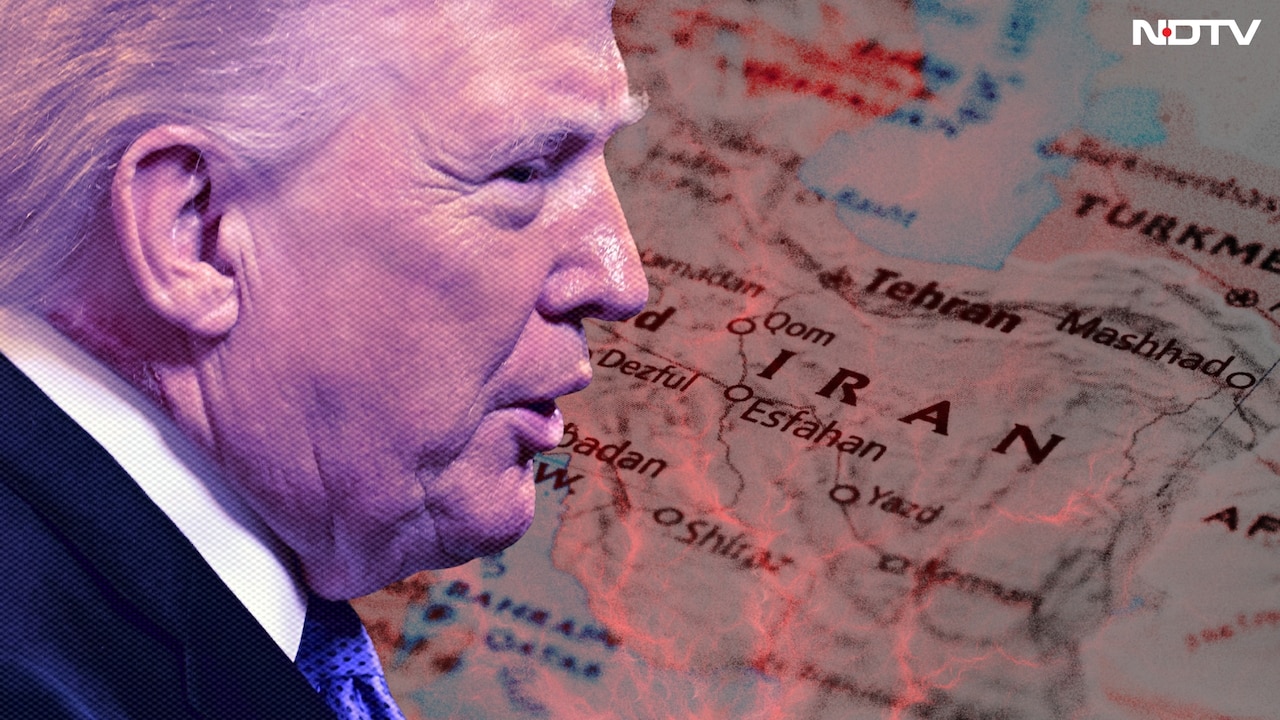
When diplomats in Washington and Tehran argue over this stretch of water, the headlines usually reduce the friction to sterile geopolitical chess moves. Statements are issued. Proposals are floated. Rejections are announced. This week, the news cycle churned through another sharp turn: President Donald Trump formally rejected an Iranian proposal regarding security, transit arrangements, and sanctions relief tied to the Strait of Hormuz.
To a casual reader scrolling past a news feed, it sounds like just another diplomatic impasse in a forty-year standoff. Another Tuesday in the Middle East.
It is not.
To understand what actually hangs in the balance when a diplomatic off-ramp is waved away at the Strait of Hormuz, you have to leave the briefing rooms of Washington and the ministries of Tehran. You have to step onto the steel deck of a Very Large Crude Carrier in the middle of a Persian Gulf summer, where the air feels like wet wool and the horizon shimmers with heat haze.
The Men on the Bridge
Consider a hypothetical ship captain—let’s call him Captain Henrik Lindqvist, a composite drawn from the real-world testimonies of veteran merchant mariners who run the Gulf route.
Henrik stands on the bridge of a 1,000-foot tanker carrying two million barrels of crude oil bound for Rotterdam. His vessel is not a warship. It has no deck guns, no missile defense systems, no armor plating. Its top speed is a lumbering fifteen knots. Its hull is packed with enough volatile energy to power a mid-sized European city for weeks.
When diplomatic talks stall—when a proposal from Tehran is summarily dismissed by the White House—Henrik does not hear about it from a foreign policy analyst. He feels it in the sudden crackle of VHF radio static, in the abrupt appearance of fast-attack craft skimming the waves off his starboard bow, and in the frantic overnight emails from his company’s marine underwriters in London.
War risk insurance premiums do not wait for missiles to fly. They spike on rhetoric alone. Within hours of a diplomatic breakdown, the cost of insuring a single hull transiting the Strait can jump by hundreds of thousands of dollars per voyage. Someone pays that bill. Eventually, that someone is a commuter filling a tank in Ohio, a baker heating ovens in Munich, or a factory owner running looms in Vietnam.
The Anatomy of a Rejection
Why did the White House reject Tehran’s overture, and why did Iran offer it in the first place? Stripping away the diplomatic posturing reveals two fundamentally incompatible visions of what the Strait of Hormuz actually is.
According to administration officials and foreign policy analysts tracking the exchange, Tehran’s proposal was built around a familiar core premise: regional ownership. Iranian officials have long argued that security in the Persian Gulf should be managed exclusively by the littoral states bordering it, paired with mechanisms that would give Iran a formal role in regulating transit—or, more directly, relief from the crushing economic sanctions that have choked its oil exports and battered its currency. In Tehran’s framing, peace in the waterway is indivisible from its own economic survival. If Iran cannot freely sell its oil through the Strait, the implicit argument goes, why should anyone else expect frictionless passage?
President Trump’s rejection reflects an entirely different doctrine, one rooted in the post-World War II American commitment to freedom of navigation as a non-negotiable global right, coupled with a strategy of maximum economic and military pressure. From the White House’s perspective, accepting any framework that grants Tehran regulatory leverage over an international waterway—or trades sanctions relief merely for a promise not to disrupt global shipping—is tantamount to paying protection money at a toll booth Iran has no legal right to operate.
Under the United Nations Convention on the Law of the Sea, the Strait of Hormuz is governed by the regime of transit passage. Even though the waters fall within the territorial seas of Iran and Oman, ships of all nations enjoy the right of unimpeded movement. To Washington, negotiating over a right that already exists under international law sets a catastrophic precedent. If a coastal nation can extract concessions simply by threatening to choke a maritime chokepoint, every narrow strait on Earth—from Bab el-Mandeb to the Strait of Malacca—becomes a hostage.
The Illusion of the Off-Switch
There is a persistent myth in public commentary that Iran could simply "close" the Strait of Hormuz with the flip of a switch, and an equally persistent counter-myth that the United States Navy could reopen it in an afternoon without breaking a sweat.
Both assumptions collapse under scrutiny.
Think of the Strait of Hormuz not as a doorway with a heavy wooden bolt, but as a crowded, six-lane highway running through a narrow mountain pass during a blizzard. You do not need to build a concrete wall across all six lanes to stop traffic. You only need to jackknife two tractor-trailers and scatter nails across the asphalt.
Naval strategists and maritime historians point out that Iran does not need a blue-water navy capable of defeating a U.S. aircraft carrier strike group to paralyze commercial shipping. Asymmetrical warfare thrives on uncertainty. Naval mines laid under cover of darkness, mobile coastal anti-ship missile batteries hidden in the rugged terrain of the Zagros Mountains, swarms of explosive-laden unmanned surface vessels, and electronic GPS spoofing that tricks a tanker’s navigation computer into thinking it is sailing on dry land—none of these require sinking the U.S. Fifth Fleet. They only need to make the journey too dangerous for commercial captains to risk their crews and for Lloyd’s of London to underwrite.
On the other hand, clearing that highway under fire is a grinding, perilous undertaking. Mine countermeasures take weeks, not hours. Escorting every commercial tanker through a twenty-one-mile gauntlet while hunting mobile missile launchers concealed in coastal caves demands massive naval resources and carries the constant risk of miscalculation.
That is the invisible tension sitting beneath every diplomatic rejection. Neither side wants an all-out war that would devastate Iran’s remaining infrastructure and trigger a global economic recession. Yet both sides are locked into postures where backing down looks like surrender.
The Ripple Effect in Your Kitchen
It is easy to treat Middle Eastern diplomacy as a distant spectacle, something that happens to other people in places with unfamiliar names. We watch the news clips, note the stern faces at the podiums, and go back to our lives.
I remember standing at a gas station in the American Midwest during an earlier spike in Gulf tensions, watching the digital numbers on the pump spin faster than the fuel could flow. Beside me, a woman in nursing scrubs stared at the total, muttered something under her breath, and stopped the pump ten dollars short of a full tank. She wasn't thinking about the United Nations Convention on the Law of the Sea. She was doing mental math on her grocery budget for the rest of the week.
That is how geopolitics translates into human reality.
Global oil markets are brutally efficient at pricing fear. Even when not a single barrel of crude is actually lost, the mere probability of disruption in the Strait of Hormuz injects a "geopolitical risk premium" into the price of Brent crude. Because oil is priced globally, an incident off the coast of Bandar Abbas raises the cost of diesel in Iowa. Higher diesel prices raise the cost of freight. Higher freight costs raise the price of milk, lumber, medicine, and fertilizer.
By rejecting Tehran’s proposal without offering a new diplomatic track, Washington has signaled that it intends to rely on deterrence—warships, sanctions, and intelligence—rather than negotiation to keep that highway open. Supporters of the administration’s stance argue that clarity and strength are the only currencies Tehran respects, and that past diplomatic compromises only bought time while allowing Iran to expand its regional influence. Critics, including several European diplomats and energy analysts, warn that leaving Tehran with zero diplomatic exit ramps increases the odds that hardliners in Iran’s Islamic Revolutionary Guard Corps will engineer a crisis just to prove they still hold cards worth playing.
Where the Standoff Leaves Us
So where do things actually stand in the wake of the rejection?
Diplomatically, the channel is frozen. Tehran has framed the White House’s refusal as proof that Washington is interested in capitulation rather than dialogue, a narrative designed to rally domestic support inside an Iranian population weary of inflation, isolation, and political repression. Washington, meanwhile, continues to tighten the screws on Iran’s shadow fleet of oil tankers—the aging, transponder-dark vessels that ferry discounted Iranian crude to buyers willing to ignore U.S. sanctions.
Militarily, the Strait remains on a hair trigger. U.S. naval assets and allied coalition patrols maintain a heavy presence in the Gulf of Oman and the Persian Gulf, shadow-boxing with Iranian fast boats and drones in encounters that rarely make the evening news unless someone fires a warning flare.
Economically, the world is walking a tightrope with no net underneath. Global spare oil production capacity—the emergency cushion held mostly by Saudi Arabia and the United Arab Emirates—also sits behind the Strait of Hormuz. If the chokepoint is ever truly sealed, the world’s backup generators are locked inside the very room that just caught fire.
It is tempting to look for a clean resolution, a moment where wisdom prevails and the tension dissipates. History suggests otherwise. Chokepoints have dictated the fate of empires since Athenian triremes guarded the Hellespont to protect Athens' grain supply. The technology changes—wooden oars give way to nuclear-powered carriers and fiber-optic drones—but the geography remains stubbornly, mercilessly the same.
Tonight, while diplomats sleep in climate-controlled bedrooms thousands of miles away, another supertanker will approach the entrance to the Strait of Hormuz. On its bridge, a captain will check the radar, verify the GPS coordinates against the stars and the shoreline, and peer out into the warm, dark water, hoping the silence holds for just twenty-one more miles.