The coffee in Tariq’s plastic cup had gone cold twenty minutes ago, but he hadn’t noticed.
Inside the central control room of Saudi Arabia’s primary oil processing facility, the hum of computer banks formed a steady, low vibration that seemed to bypass the ears and settle straight into the bones. Green lights blinked in rhythmic, hypnotic waves across massive wall-mounted screens. To an outsider, it looked like the bridge of a starship. To Tariq, who had spent twenty-two years watching these indicators fluctuate through wars, pandemics, and market crashes, it was simply the heartbeat of modern civilization.
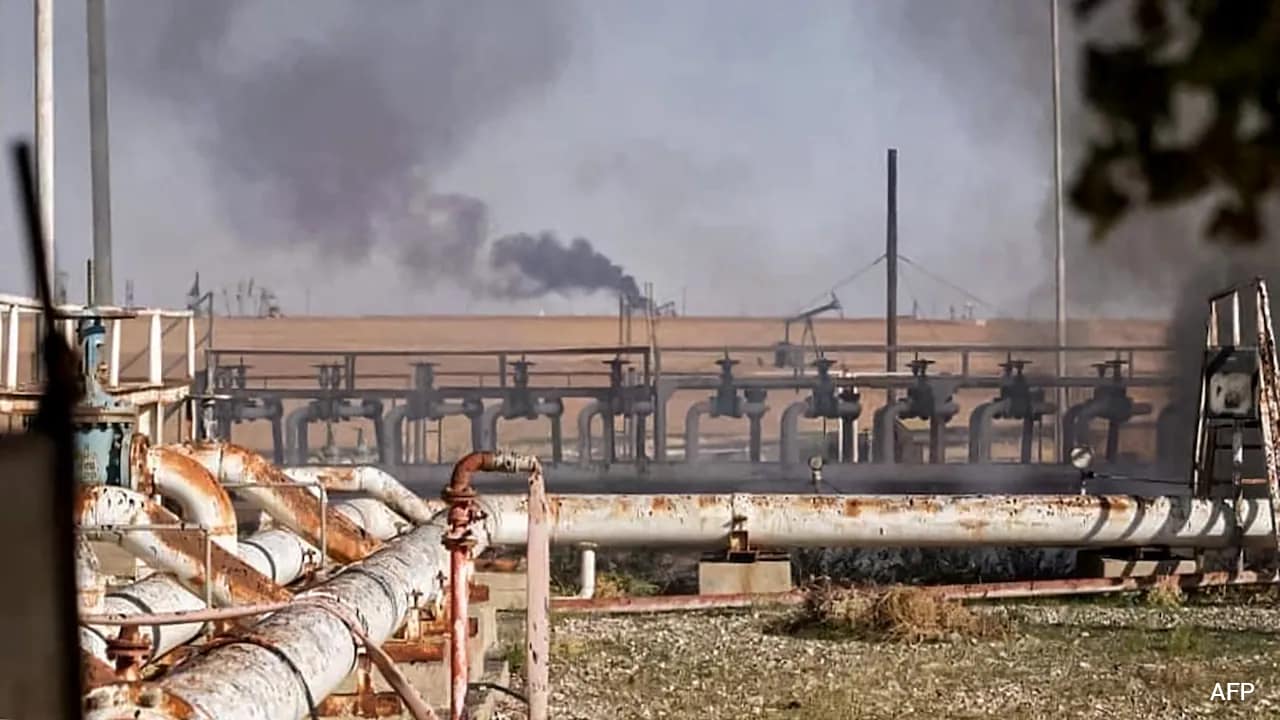
He glanced at the digital ticker in the corner of his monitor. Crude oil prices were sliding again, battered by whispers of oversupply, sluggish global manufacturing data, and the perennial anxieties of traders sitting thousands of miles away in air-conditioned London and New York skyscrapers. Those traders stared at spreadsheets. Tariq stared at valves the size of trucks and pipelines stretching across hundreds of miles of unforgiving desert sand.
The headlines on their screens screamed uncertainty. The reality on his screens was steady, pressurized flow.
"They talk about vulnerability," Tariq murmured to himself, wiping a speck of dust from his console. "They have no idea what keeps the lights on."
To understand modern global stability, you have to look past the financial ticker symbols and drop down into the physical world. Energy is invisible until it stops. When you flip a kitchen switch in Tokyo, turn the ignition of a delivery truck in Chicago, or power up a data center in Frankfurt, you are not thinking about a valve in the Ghawar field or a tanker threading the Strait of Hormuz. You assume the miracle will continue.
That miracle is maintained by discipline, capital, and an institutional memory born of crisis.
Consider what happens when panic seeps into the energy markets. A single rumor can send crude oil prices spiking, triggering a chain reaction that ripples through grain silos, shipping lanes, and municipal power grids. Traders react to shadows. They price in worst-case scenarios because their job is to survive volatility. But the Kingdom’s energy apparatus operates on a different clock. It operates on decades, not daily closing bells.
When officials in Riyadh step up to microphones to insist that global energy supplies remain resilient, skeptics roll their eyes. They hear political posturing. They suspect PR gloss masking internal strain. But walk the perimeter of these industrial installations, and you find a culture steeped in operational paranoia. Resilience here is not an abstract policy buzzword; it is an obsession with redundancy.
Imagine a sprawling industrial city carved into the dunes, powered by its own independent generation, defended by layers of physical and digital security, and backed by spare production capacity that can be brought online within hours to absorb sudden shocks. When disruptions threaten global supply chains—whether through geopolitical friction, weather anomalies, or infrastructure bottlenecks—this buffer is what prevents a localized hiccup from becoming a global seizure.
Yet, the anxiety persists, and for good reason. The global economy is walking a tightrope.
On one side lies the accelerating demand from emerging industrial hubs; on the other, the complex, capital-intensive transition toward alternative fuels. Producers are caught in a crossfire. Invest too little in traditional hydrocarbons, and you risk catastrophic price spikes and energy poverty before renewables are ready to carry the full load. Invest too much, and you face stranded assets in a decarbonizing future.
Saudi Arabia’s strategy through this turbulence has been deliberate, if controversial. By maintaining spare capacity—holding millions of barrels a day of shut-in production ready to flow at a moment's notice—the state acts as the ultimate shock absorber for the planet. It is an expensive insurance policy. Keeping billions of dollars of assets idle doesn't make immediate commercial sense to a quarterly-focused venture capitalist. But it makes geopolitical sense for a nation whose entire economy, and by extension the stability of the global trade architecture, rests on petroleum.
The market hates surprises. Producers hate vulnerability.
When global inventories tighten, prices tell a story of scarcity. But physical scarcity and financial anxiety are two different creatures. The former is a crisis of atoms; the latter is a crisis of sentiment. Time and again, the physical infrastructure proves more durable than the prevailing market mood. The oil moves. The tankers sail. The refineries churn.
Back in the control room, the shift change siren chimed softly, cutting through the low-frequency hum of the servers.
Tariq stood up, stretching his back, and handed his clipboard to the incoming engineer, a younger man whose eyes still held the bright, nervous energy of someone who hadn't yet lived through three major market crashes.
"How does it look?" the younger engineer asked, checking his own tablet.
"The numbers are quiet," Tariq said, pulling his jacket over his shoulders. "The pipes are full."
Outside, the desert night had swallowed the horizon, painting the dunes in shades of deep charcoal and silver. High above, unaffected by the price wars raging on trading floors across the globe, the stars burned with indifferent, ancient clarity. Down below, the invisible current kept flowing, holding the modern world together by the sheer force of human will and steel.