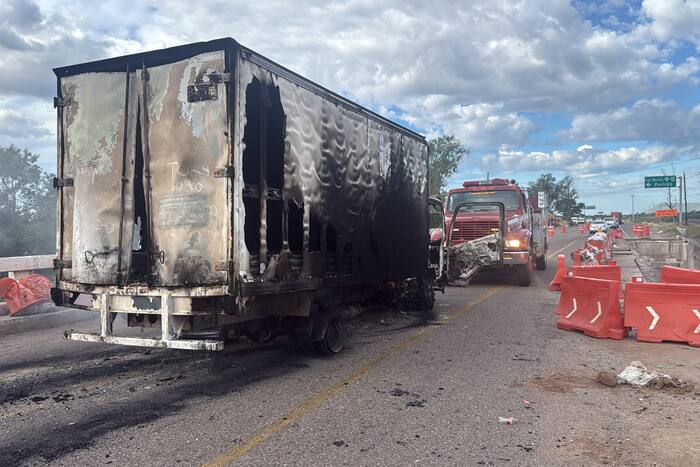
Cold water hides everything until it breaks the hull.
At four in the morning on a gray Baltic swell, the ocean does not look like a chessboard of geopolitical strategy, nor does it look like a glowing map in a defense ministry briefing room. It looks like wet slate. It smells of diesel exhaust, salt, and wet wool. For a deckhand standing watch on a commercial vessel moving between Kaliningrad and St. Petersburg, or a radar operator staring at a phosphor-green screen in southern Finland, the war in Ukraine is supposed to be a thousand kilometers to the south—a distant thunder heard only through evening news broadcasts and rising grocery bills. If you enjoyed this piece, you should check out: this related article.
Until a drone drops out of the low cloud cover onto the steel deck of a Russian cargo ship. And until, just hours later, the rotor wash of an unauthorized Russian helicopter churns the air inside Finnish sovereign airspace.
Silence. For another look on this story, refer to the recent coverage from Reuters.
Then the radios start squawking.
To understand what happened in the Gulf of Finland and the wider Baltic basin over those tense hours, you have to strip away the sterile language of military communiqués. Press releases speak of "suspected airspace violations," "unmanned aerial vehicles," and "ongoing border guard investigations." Those phrases are designed to sedate the public, to file sharp, jagged events into neat bureaucratic folders. They tell you what was logged on a radar tape, yet they completely miss why the air across northern Europe suddenly feels thinner, sharper, and charged with static.
Consider a hypothetical watch officer—let us call him Matti—sitting in a concrete coastal surveillance station outside Helsinki. Matti has spent fifteen years watching the Gulf of Finland. For most of his career, his job was an exercise in predictable monotony: container ships hauling timber and electronics, passenger ferries shuttling tourists between Helsinki and Tallinn, and the occasional Russian naval vessel transiting the narrow international corridor out of Kronstadt. Every transponder blinked its name. Every captain followed the maritime rules of the road because commerce required predictability, and predictability kept everyone alive.
Now, Matti watches ghosts.
In the aftermath of the drone strike on a Russian cargo ship in the Baltic Sea—an incident occurring mere hours before Finnish authorities reported a suspected incursion by a Russian helicopter—the Baltic has ceased to be a quiet northern lake. It has become a shadow theater where the boundaries between civilian shipping, covert warfare, and sovereign territory are deliberately blurred.
When the Sea Stops Being Neutral
Think of the Baltic Sea not as an open ocean, but as a narrow, crowded hallway in an apartment building where two neighbors are locked in a bitter, existential feud.
For decades, that hallway functioned on an unspoken truce. Finland maintained its historic posture of cautious neutrality, balancing western democracy with a 1,340-kilometer land border shared with Russia. Goods moved freely. Airspace was respected down to the meter. When Finland formally joined NATO in April 2023, that architectural blueprint changed overnight. The hallway suddenly had a new security door, and the Baltic Sea—surrounded now on almost every coast by NATO members—became a strategic bottleneck.
Russia’s Baltic Fleet and its commercial lifeline to the exclave of Kaliningrad now squeeze through a maritime corridor flanked by alliance radar, acoustic sensors, and patrol aircraft. Every ship leaving St. Petersburg runs a gauntlet of observation. Conversely, every coastal town in Finland, Estonia, Latvia, and Lithuania sits within minutes of flight time from Russian airbases.
When a drone strikes a Russian cargo vessel in these waters, the shockwave travels far beyond the scorched steel of the ship itself. Maritime shipping relies on an invisible web of insurance, maritime law, and the sacred distinction between a warship and a merchant vessel. Once cargo ships become targets—or once states suspect that commercial hulls are carrying dual-use military cargo, electronic warfare gear, or sanctioned fuel—the entire grammar of peace collapses.
A merchant mariner does not sign up to dodge loitering munitions in the dark. Yet, in modern conflict, the front line no longer respects trenches or border posts. It follows supply chains. If a cargo vessel is suspected of ferrying components for a war effort, the sea lanes themselves turn into contested territory. And when an attack happens in the Baltic, far from the Black Sea where Ukrainian naval drones have already rewritten modern naval warfare, every captain on the water suddenly checks the horizon twice.
The Geometry of a Provocation
Hours after reports of the Baltic drone strike surfaced, the Finnish Ministry of Defence announced a suspected territorial violation: a Russian helicopter had crossed into Finnish airspace.
To an outsider reading a two-paragraph news brief, an airspace incursion sounds like a navigational hiccup. Pilots make mistakes. Clouds sit low over the Gulf of Finland. Instruments drift.
Anyone who has ever flown near an international border—or worked beside those who guard it—knows that modern military aircraft do not wander across sovereign lines by accident. A military helicopter carries redundant satellite navigation, inertial measurement units, terrain-following radar, and constant ground-control vectoring. Crossing an invisible line in the sky is rarely an error; it is a calibration test.
Imagine walking up to a neighbor’s front door, tapping the glass lightly with your knuckles, and stepping back onto the sidewalk before the porch light flicks on. You haven't broken the window. You haven't stepped inside. You have simply measured how many seconds it takes for the footsteps to reach the hallway.
That is the anatomy of a probe.
When a Russian helicopter dips into Finnish airspace—especially on the heels of a maritime drone strike—it is performing a live-fire diagnostic on NATO’s northern nervous system. Air defense controllers in Finland immediately track the blip. Scramble protocols activate. Radar frequencies shift from passive scanning to active tracking. Across the border, Russian electronic intelligence stations listen intently, recording how fast Finnish interceptors respond, which radar bands light up, and how quickly information travels from a coastal outpost in Helsinki to alliance command centers.
It is a game of inches played at hundreds of kilometers an hour, and the margin for error is razor-thin.
Living Under the Gray Zone
I remember standing on a rocky shoreline near Hanko, on Finland’s southern tip, during an autumn gale. The wind came off the Baltic so hard it flattened the sea grass and pushed salt spray twenty meters inland. Looking south toward the open water, you could see the faint lights of cargo ships creeping along the horizon like slow-moving stars. Nothing looked threatening. Nothing looked urgent. Yet just beneath those waves ran the fiber-optic cables carrying financial data, internet traffic, and power grids connecting Finland to central Europe—the exact kind of seabed infrastructure that has suffered mysterious ruptures and anchor drags since the invasion of Ukraine began.
That is the psychological weight people in the Nordic and Baltic states carry every single day. It is not the cinematic terror of an imminent invasion; it is the exhausting, low-grade hum of "gray-zone" friction.
Gray-zone conflict is designed to live just below the threshold that would trigger a formal military response under NATO’s Article 5. It consists of GPS jamming that forces civilian airliners to abort landings in Tartu or Joensuu. It involves shadow-fleet oil tankers with murky ownership sailing through narrow straits without proper insurance. It includes sudden border closures when migrant flows are weaponized at remote Lapland checkpoints. And it includes drones hitting cargo ships in the night, followed by helicopters testing the edges of the sky at dawn.
You learn to live with a peculiar kind of vigilance. You still take your kids to school, buy rye bread at the corner market, and complain about the slush in November. At the same time, you know where the nearest civil defense shelter is located beneath your apartment building—because in Finland, maintaining blast-proof underground bunkers isn't a relic of Cold War paranoia; it is standard municipal building code.
Why This Matters Far Beyond Helsinki
It is tempting, when reading headlines from northern Europe, to treat a drone strike on a Russian vessel and a brief helicopter incursion as isolated sparks in a cold climate. We live in an era saturated by crisis notifications, where an incident in the Baltic competes for attention with elections, inflation, and conflicts across three continents.
That detachment is a luxury the modern world can no longer afford.
The Baltic Sea is one of the busiest maritime arteries on earth. Roughly fifteen percent of the world’s cargo traffic moves through its waters. The ports of Rotterdam, Antwerp, Hamburg, Gdansk, Stockholm, and Helsinki are bound together in a single, continuous logistical bloodstream. When drones begin striking cargo ships in the Baltic, insurance premiums spike overnight. Shipping companies reroute vessels, adding days and millions of dollars to supply chains. Energy markets twitch at the mere rumor of a blocked strait or a damaged undersea pipeline.
More importantly, the sequence of events—an unconventional strike at sea followed immediately by a military probe in the air—demonstrates how rapidly localized wars metastasize.
For years, western policymakers debated how to contain the war in Ukraine within its geographic borders, worried that supporting Kyiv too aggressively might trigger escalation elsewhere. What the events in the Baltic reveal is that escalation does not wait for permission. The conflict has already spilled into the electronic spectrum over northern Europe, onto the seabed where cables lie exposed, and into the shipping lanes where merchant crews keep watch in the dark.
Whether the drone strike on the Russian cargo ship was orchestrated by Ukrainian operatives extending their reach far north, carried out by covert actors, or connected to internal sabotage, the strategic reality remains identical: the sanctuary of distance is gone. Neither Russia’s logistical rear nor NATO’s northern flank is insulated from the war’s gravity.
The Thin Margin Between Probe and Crisis
Let us return for a moment to the radar room—not as a metaphor, but as a reality played out every single shift by young men and women in uniform across Finland, Sweden, Estonia, and Russia.
Every time an aircraft crosses a border without clearance, human beings have to make irreversible decisions in compressed timeframes. Is the transponder off because of an electrical failure, or because the pilot is on an attack profile? Is the helicopter turning back toward international waters, or pressing deeper toward critical infrastructure?
History teaches us that major wars rarely begin with a grand, cinematic declaration. More often, they ignite in the friction between two miscalculations—a radar operator who misreads an altitude drop, a pilot who misjudges a turn radius in heavy fog, or a commander who assumes a defensive reaction is an offensive strike.
Finland’s response to the suspected helicopter incursion was characteristically measured: public disclosure, calm verification by the Border Guard, and zero theatrical panic. Finnish defense doctrine has been built over eighty years on a simple, unsentimental premise—you do not posture, you do not bluff, and you never leave your guard down. You document the violation, reinforce the watch, and let quiet preparedness speak louder than rhetoric.
Yet beneath that Nordic composure lies an undeniable truth. Each incident lowers the ceiling of safety just a little further. Each drone launched in international waters and each rotor blade cutting unauthorized air normalizes behavior that, three years ago, would have triggered emergency diplomatic summonses across Europe.
Out on the Baltic tonight, the wind will rise again. The cargo ships will keep moving through the dark, their running lights red and green against the black swell, carrying grain, timber, steel, and fuel between ports that depend on peace to survive. Up in the coastal towers, the radar sweeps will keep turning—one revolution every few seconds, painting thin green lines across glass screens, watching the empty space between two worlds and praying that the next blip turns back before the line is crossed.