Wall Street just handed Elon Musk a $75 billion blank check.
The SpaceX initial public offering on June 11, 2026, locked in a historic valuation near $1.75 trillion. The deal officially cements Musk as the world's first trillionaire, with his personal stake in the rocket, satellite, and artificial intelligence giant valued at roughly $866 billion. Building on this theme, you can find more in: Inside the FTX Appeal Crisis Nobody is Talking About.
But if you opened his social media app, X, over the last 48 hours, you didn't see a CEO quietly preparing a corporate roadshow. Instead, you saw a billionaire leaning heavily into right-wing identity politics, mass deportations, and explicit commentary on race and crime.
Musk chose the exact week of the biggest financial triumph of his life to amplify some of his most controversial cultural views yet. He waded directly into the fallout of a stabbing in Belfast, Northern Ireland, involving a Sudanese refugee. Musk didn't just comment on the event. He replied "Yes" to a post calling to "deport the invaders," and posted claims that Black-on-White hate crimes are "vastly more" common than the reverse. British government officials openly accused him of stoking street violence. Observers at Harvard Business Review have shared their thoughts on this situation.
Ten years ago, a CEO behaving this way on the eve of a massive public listing would face a shareholder revolt. Today, the market shrugged. Bankers bought the shares anyway.
The disconnect reveals a fundamental truth about modern finance. Investors aren't buying into Musk because they agree with his politics. They're buying in because he built a multi-industry monopoly that nobody else can touch.
The Financial Reality of the SpaceX Monopoly
To understand why Wall Street overlooks the online rhetoric, you have to look at what SpaceX actually owns. It isn't just a rocket company anymore. Following the absorption of xAI earlier this year, SpaceX is a sprawling hardware and software conglomerate controlling orbital launch, satellite internet, and space-bound AI data centers.
SpaceX pioneered reusable rocket boosters, giving it an iron grip on global launch capabilities. Legacy competitors like Blue Origin are still playing catch-up. Meanwhile, Starlink plans to deploy 100,000 next-generation satellites to power global communications and space-based AI computation.
The financial upside is too massive for institutional funds to ignore. The company's IPO prospectus maps out a future that includes solar-powered orbital data centers and an AI enterprise market it values at trillions of dollars.
When a company owns the literal infrastructure of the future economy, traditional corporate governance metrics go out the window. Financial analysts call this the "Elon premium." It's a valuation bump driven purely by faith in his execution, regardless of the personal baggage that comes with it.
The Risk Tucked Inside the Prospectus
Don't think the money managers are completely blind to the drama. The risks are spelled out in black and white right inside the financial filings.
In the SpaceX IPO documentation, the company issued a direct warning regarding its leader. The filing notes that the actions and statements of Mr. Musk, whether directly related to the company or not, can draw significant public scrutiny and could negatively impact the business, customer relationships, and the stock price.
We've already seen this play out in other parts of his empire. In 2025, weakening Tesla sales in several international markets were directly tied by analysts to consumer boycotts over Musk's partisan political interventions. His high-profile stint co-leading the short-lived Department of Government Efficiency (DOGE) created severe political friction before a highly public falling-out with the administration.
Yet, institutional investors find themselves trapped. Large pension funds from California and New York recently voiced anger over the IPO structure. Because SpaceX is entering major market indexes, these funds are forced to buy the stock automatically via index replication, despite objecting to the company's dual-class share structure.
Musk holds the vast majority of Class B super-voting shares. The corporate structure means the only person who can fire Elon Musk is Elon Musk himself.
Separation of the Builder from the Account
The market has separated Musk the operational genius from Musk the online provocateur.
When Musk posts about race wars or immigration policy, the public sees a political activist. But when institutional investors look at the balance sheet, they see a man executing projects at a scale no government can match. JPMorgan Chase CEO Jamie Dimon recently called him the "Edison of our time."
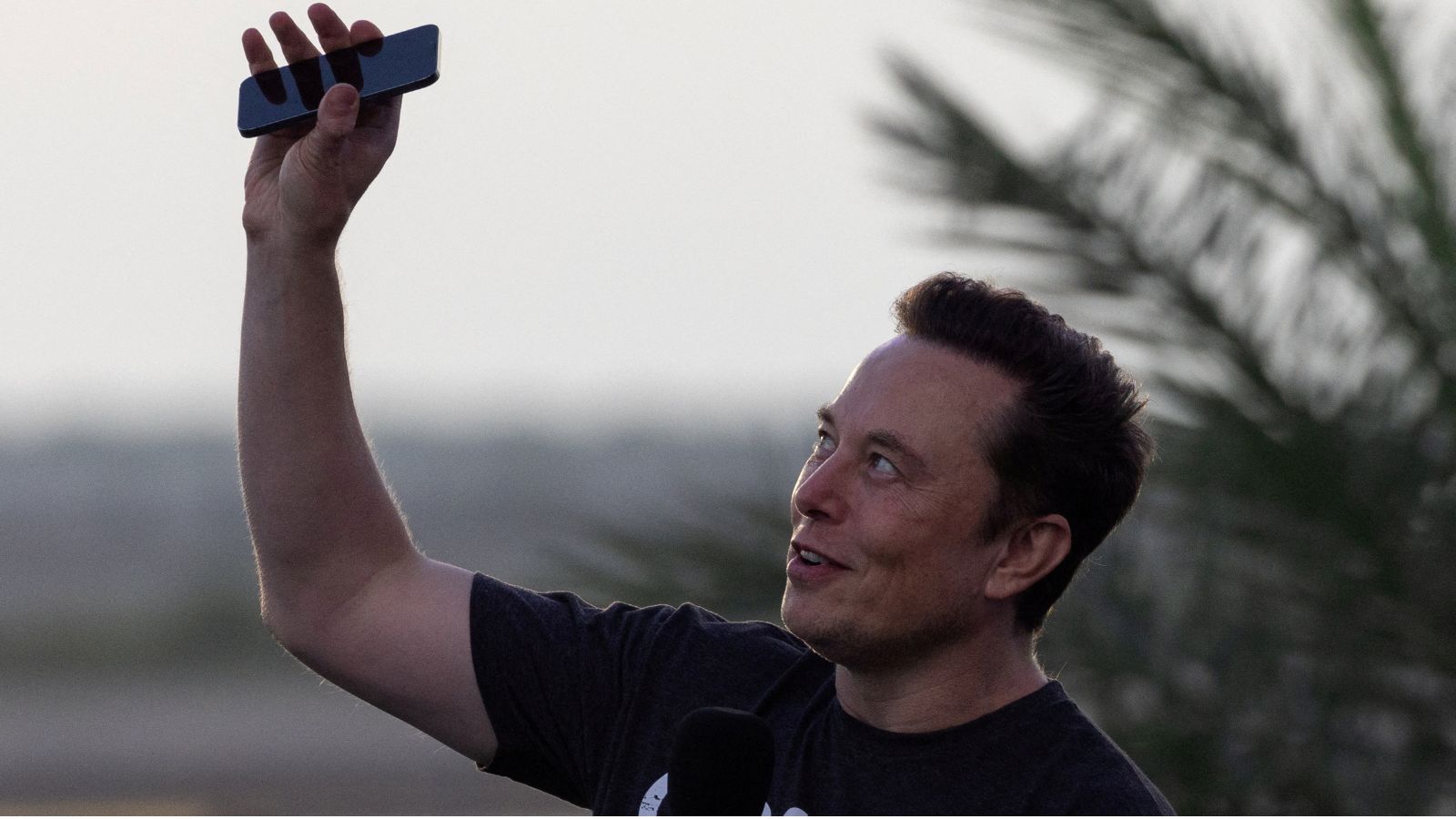
The strategy for investors has become simple: ignore the phone, watch the launchpad.
If Starship achieves full, rapid reusability and handles the heavy lifting for the upcoming lunar and Mars missions, the stock will likely soar, regardless of what happens on X. If the technical timeline slips, or if the unproven xAI integration fails to find a clear path to profitability, that's when the market will sour.
For anyone trying to navigate this landscape, the lesson is clear. Stop expecting corporate pressure to change Musk's behavior. The market had its ultimate opportunity to penalize his rhetoric during the SpaceX IPO roadshow. Instead, it made him a trillionaire.
If you're tracking his companies, judge them by their engineering milestones and capital expenditures, not by the timeline of an app he bought for fun. The financial world already made its choice. It chose the rockets.