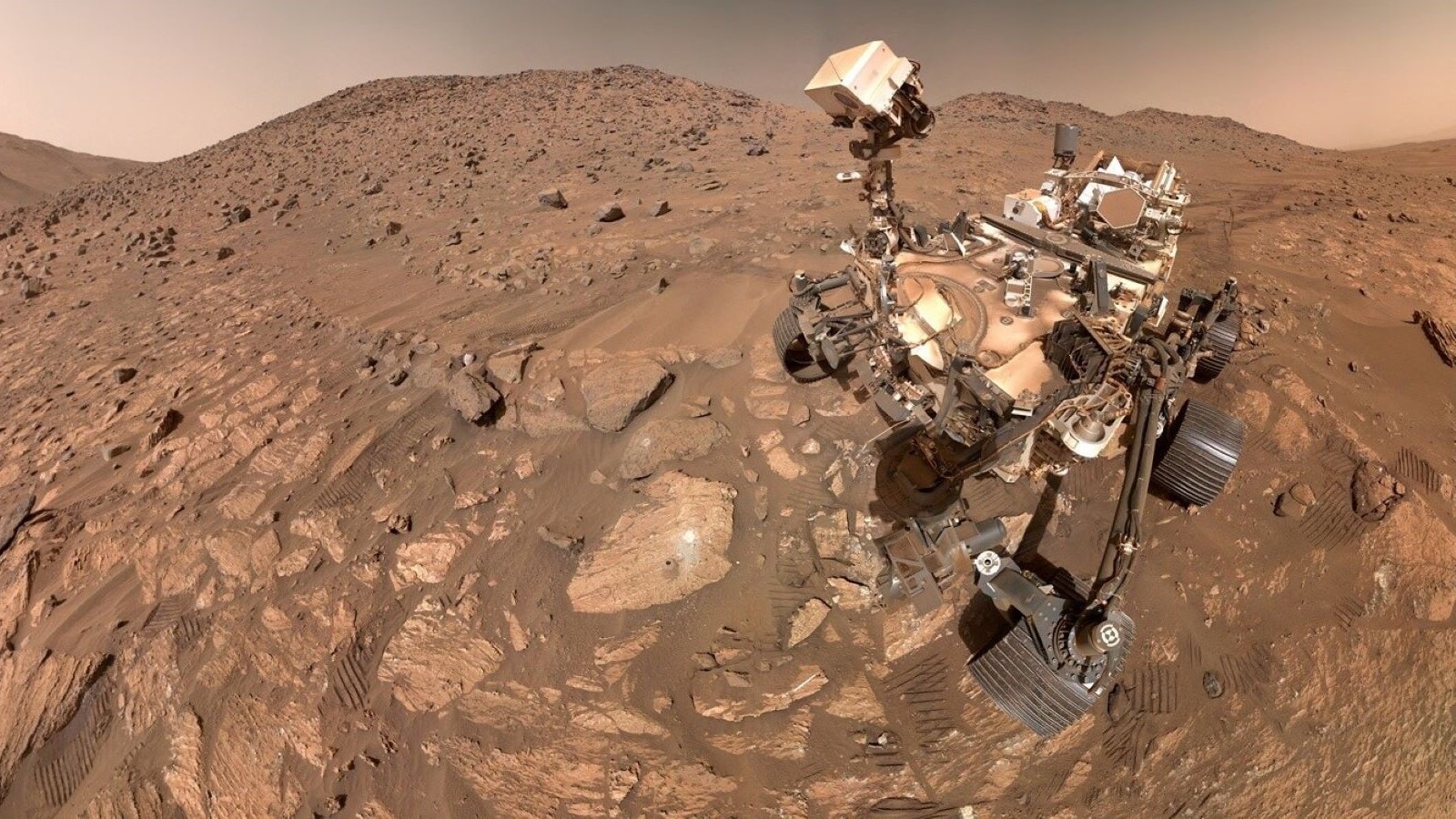
Autonomous long-distance robotic operations on foreign planetary bodies are bounded not by software complexity, but by mechanical degradation, power degradation curves, and latency constraints. When a robotic asset on the surface of Mars establishes a new distance milestone, the achievement represents a delicate equilibrium between terrain mechanics, thermal cycling, and fault-tolerance architecture. Understanding this milestone requires deconstructing the operational envelope of deep-space mobile platforms and the engineering trade-offs that govern their execution velocity.
The Operational Envelope of Surface Mobility
Surface mobility architecture on Mars operates under severe external constraints. Unlike terrestrial robotic systems that benefit from continuous satellite telemetry, high-bandwidth communication links, and rapid intervention protocols, Martian assets must execute complex navigation sequences under profound round-trip light-time delays ranging from 4 to 24 minutes. This operational reality demands a high degree of onboard autonomy, shifting the computational burden from Earth-bound flight controllers to the rover's local processing units.
The primary limitation on daily traverse distance is not raw motor speed, but hazard detection, avoidance, and slippage management. Martian regolith presents a chaotic matrix of fine dust, loose sand, sharp basaltic rocks, and steep slopes. Each wheel rotation induces complex soil-interaction mechanics characterized by sinkage and slip. When a wheel experiences high slip, odometry systems register a divergence between theoretical movement based on wheel revolution and actual physical displacement.
To prevent catastrophic immobilization, flight software constantly monitors sinkage thresholds. If wheel slippage exceeds critical parameters, the system halts execution to prevent the chassis from settling into a bowl of loose material, a failure mode that historically immobilized previous-generation assets. Consequently, maximizing traverse efficiency is less about velocity and more about precision path planning, minimizing wheel-soil shear, and optimizing power distribution across all six independent drive actuators.
Mechanical Stress and Component Fatigue
Every meter traversed on the Martian surface extracts a toll on the electromechanical hardware. The mechanical architecture of a long-duration rover must withstand severe thermal fluctuations, abrasive particulate intrusion, and radiation-induced material embrittlement.
The Tribological Challenge
The drive actuators operate in an unlubricated or solid-lubricated environment where traditional liquid lubricants would rapidly evaporate or collect abrasive dust. Bearings, gearboxes, and suspension pivot points experience continuous micro-abrasion from airborne and disturbed regolith. Over multi-year missions, this cumulative wear alters the mechanical clearance within gear assemblies, increasing friction and drawing higher electrical current for identical torque outputs.
Thermal Fatigue Vectors
Martian diurnal cycles subject the rover structure to extreme temperature swings, often shifting by more than sixty degrees Celsius between day and night. These rapid thermal expansions and contractions induce localized stress concentrations at material junctions, particularly where dissimilar metals or composite materials meet. Structural joints and mobility linkages must absorb these thermal gradients without deforming precision alignments necessary for camera pointing and antenna alignment.
Power Budgets and Energy Allocation
Mobility is an energy-intensive operation. The power subsystem must balance energy generation from radioisotope thermoelectric generators or solar arrays against instantaneous draw from drive motors, thermal survival heaters, and scientific instrumentation.
Energy management follows a strict hierarchical priority structure:
- Thermal survival of core electronics through localized heating loops.
- Communication windows with orbital relays for data downlink and command uplink.
- Science acquisition and data compression.
- Mobility operations and physical translation.
Because mobility consumes a significant fraction of the available power budget, extending a single drive operation requires careful optimization of the energy reserve. If an unexpected hazard forces an autonomous detour, the additional energy expenditure directly subtracts from the power available for subsequent science operations or night-time survival heating. Therefore, record-setting traverses are preceded by meticulous energy forecasting and risk-reward modeling to ensure the asset maintains positive energy margins throughout the sol.
Autonomous Navigation and Pathfinding Efficiency
The transition from human-in-the-loop driving to autonomy-driven traverses represents the single greatest enabler of distance accumulation. Early Martian surface missions relied entirely on Earth-planned driving sequences, where operators would visually inspect stereo imagery, select safe waypoints, and upload commands for the following sol. This methodology constrained daily advances to meters or tens of meters.
Modern architectures utilize onboard spatial mapping algorithms that construct three-dimensional elevation models from hazard-detection cameras in real time. The rover evaluates multiple potential paths, calculates cost functions based on slope steepness, rock distribution, and slip risk, and selects the optimal vector autonomously.
This capability eliminates the idle time inherent in the traditional command loop. The asset can continue driving even after it has moved beyond the field of view initially analyzed by mission controllers. However, this autonomy introduces computational latency. The rover must pause periodically to process imagery, construct the local terrain mesh, and recalculate its trajectory, creating a punctuated equilibrium of movement and computation.
Systemic Constraints and Mission Longevity
Achieving a distance record is an indicator of system health, but it also accelerates the approach toward failure thresholds. Every rotation of a wheel and every actuation of a steering servo brings the vehicle closer to mechanical fatigue limits.
The longevity of the mission depends on proactive fault mitigation. Flight software continuously monitors motor temperatures, current spikes, and wheel wear patterns. If an anomaly is detected, the system automatically engages conservative fault-protection routines, which may restrict speed, alter suspension configurations, or mandate operator intervention.
Maximizing operational yield under these conditions requires treating the rover not merely as a vehicle, but as an integrated, finite-lifetime system where every mechanical action is weighed against its long-term structural cost. The ability to execute prolonged, uninterrupted traverses demonstrates not only robust engineering and resilient software architecture, but also a sophisticated understanding of the mechanical limits imposed by an unforgiving planetary environment.

