For decades, economics departments have peddled a fairy tale. They call it comparative advantage. David Ricardo sketched it out on a napkin two centuries ago, and ever since, international trade theory has been treated like sacred scripture by global policymakers. The pitch is simple: specialize in what you do best, trade with the world, and watch wealth magically compound for everyone involved.
It is an intellectual fraud.
I have sat in boardrooms in emerging markets where local entrepreneurs were told to stick to agriculture and raw material extraction because that was their God-given comparative advantage, while wealthy nations kept the monopoly on high-margin, complex manufacturing and software. Trade theory as currently practiced is not a mechanism for mutual enrichment. It is an economic cast system designed to lock in core-periphery dynamics. When we pretend that free trade is inherently developmental, we ignore how real nations actually industrialize. Spoiler alert: none of them did it by following the textbooks.
The Ricardo Trap
Let us look at the core premise of classical trade theory. Ricardo argued that Portugal and England both benefit if England makes cloth and Portugal makes wine, even if one country is better at producing both. The logic rests on opportunity cost. It assumes capital and labor are mobile within a country but trapped inside national borders, and that technology is fixed.
None of those assumptions survived contact with the twentieth century, let alone the twenty-first.
Capital flows across borders with a keystroke. Technology transfers via foreign direct investment or industrial espionage. More importantly, productivity is not static. If a nation specializes in low-value commodities because that is what its current factor endowments dictate, it traps its workforce in low-wage sectors with zero learning curves.
Real development is about changing what you are good at, not resigning yourself to your current skill set. Yet international trade theory preaches specialization as a permanent destiny. If you are good at growing coffee beans, stay in the dirt, the trade theorists whisper. Do not try to build semiconductors. Leave that to Silicon Valley or East Asia.
This is how you keep a continent underdeveloped under the guise of economic science.
How Nations Actually Grow Rich
Look at history, not models. Did Great Britain become an industrial powerhouse by letting free markets dictate its fate? No. It used aggressive tariffs, mercantilist naval power, and state subsidies to crush Dutch and domestic textile competition. Did the United States follow free trade doctrines during its rise in the nineteenth century? Alexander Hamilton laughed at the idea, implementing steep protective tariffs to nurture domestic infant industries against British manufacturing juggernauts.
Even the East Asian tigers—South Korea, Taiwan, and post-war Japan—spat on neoclassical trade orthodoxy. They practiced export-led mercantilism. They shielded domestic firms from foreign competition, forced banks to funnel cheap capital into strategic industrial sectors, and disciplined corporations by tying subsidies to export performance.
They did not open their markets to unmitigated foreign competition until their domestic companies were strong enough to eat foreign lunch. Telling a developing nation to open its borders immediately to multinational giants is like throwing a toddler into a shark tank and calling it swimming lessons.
The Fallacy of Factor Endowments
Mainstream economists love the Heckscher-Ohlin model, which says countries export goods that make intensive use of the factors of production they have in abundance. If you have cheap, unskilled labor, you export t-shirts. If you have capital, you export microchips.
This model treats factor endowments as permanent geographical accidents. They are not. Factor endowments are manufactured. Governments and institutions build human capital, construct logistics networks, and subsidize research and development to create competitive advantages out of thin air.
When a country accepts that its only endowment is cheap labor, it races to the bottom. It cuts environmental regulations, suppresses labor unions, and offers tax holidays to multinationals, creating a domestic economy built on precarious, low-wage labor. The wealth generated does not trickle down; it leaks out through repatriated profits and imported luxury goods for the comprador elite.
Dismantling the Global Supply Chain Myth
We are told that global supply chains are marvels of efficiency. Lean. Just-in-time. Optimized.
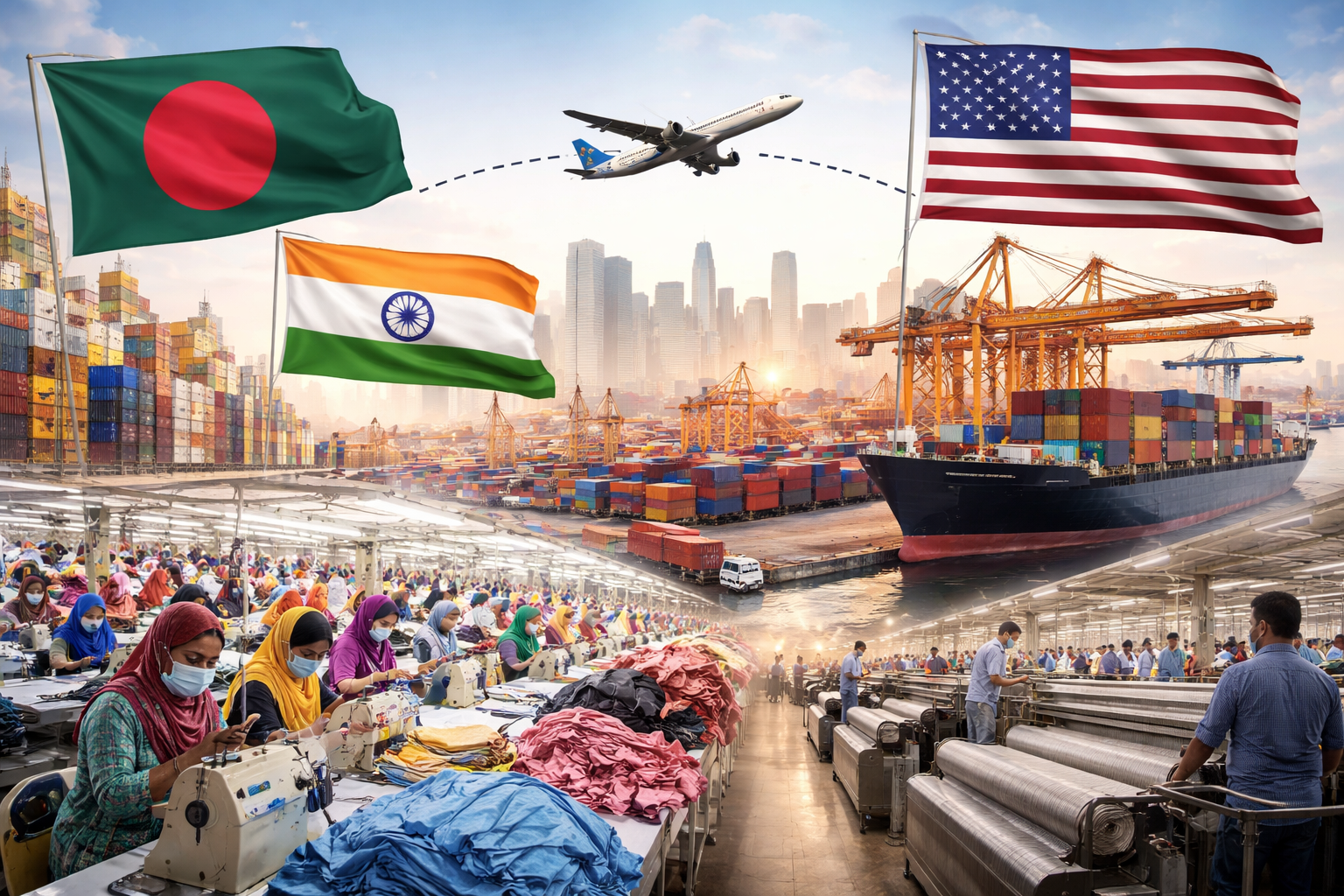
They are also fragile, highly centralized rent-extraction machines. A handful of multinational anchor firms capture the lion's share of value while pushing all the environmental, social, and financial risk down to supplier firms in the developing world. A garment factory in South Asia absorbs the cost of fluctuating cotton prices, strict safety retrofits, and squeezed margins, while the brand in New York or Paris pockets a seventy percent markup.
International trade theory ignores power dynamics. It assumes all market participants possess equal bargaining leverage. That is absurd. A multi-billion-dollar conglomerate negotiating with a factory owner in a developing nation with high unemployment is not a free market exchange. It is an extraction event.
What Real Development Requires
If nations want to break out of the middle-income trap or escape perpetual underdevelopment, they must throw out the standard trade playbook.
First, ignore Washington Consensus dogma. Protectionism is not a dirty word; it is industrial policy. You must nurture domestic capabilities before exposing them to global predatory pricing.
Second, focus on economic complexity, not volume. Exporting more tons of copper or millions of cheap plastic toys does not enrich a nation. Exporting complex goods and services that few other countries can replicate does. Complexity drives sustained economic growth because it fosters domestic technological spillover.
Third, treat foreign direct investment as a tool, not a savior. If foreign capital comes in, builds a walled garden, and takes all the intellectual property and profits out without transferring skills to local engineers and managers, you are running an extraction colony, not an economy. Demand technology transfer. Demand local supply chain integration.
The architects of classical trade theory wanted you to believe that the global economic hierarchy is natural. It is not. It is engineered. And until developing economies stop playing by rules written by the winners to keep them in second place, they will remain poor by design.