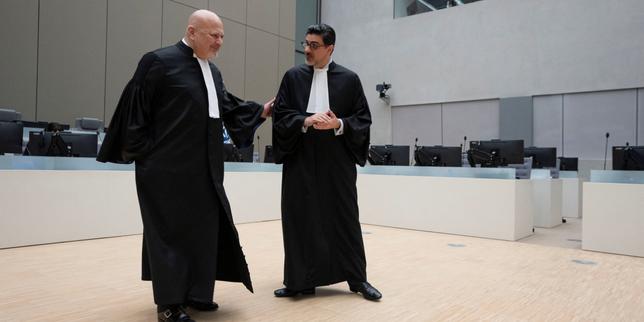
The conventional wisdom regarding international justice is dangerously naive. For decades, human rights advocates and mainstream commentators have parroted the same comfortable narrative: the International Criminal Court (ICC) is an imperfect but necessary shield against global impunity. They treat it as a flawed beacon of hope, arguing that even if it lacks teeth, its moral authority exerts a calming influence on the world’s worst actors.
This is a lie. The reality is far more cynical.
The ICC does not deter atrocities. It prolongs them. By inserting a rigid, judicial framework into the messy, compromise-driven theater of geopolitics, the court removes the single most effective tool for ending conflicts: the golden bridge. When you tell a ruthless dictator or a rebel commander that their only future involves a prison cell in The Hague, you strip away any incentive they have to surrender or negotiate. You turn them into cornered animals. And cornered animals fight to the death, dragging millions of civilians down with them.
It is time to dismantle the romantic myth of international criminal justice and look at the brutal, unintended consequences of institutionalized idealism.
The Peace Versus Justice Paradox
Mainstream pundits love to treat peace and justice as complementary goals. They are not. In the real world, they are frequently in direct, violent conflict with one another.
Consider how wars actually end. They rarely conclude with a neat, cinematic courtroom victory. They end because tired, blood-soaked factions sit at a table and cut a deal. Often, that deal requires offering the bad guys an exit ramp—exile, immunity, or a quiet retirement funded by plundered wealth. It is a nauseating compromise, but it stops the bleeding.
The ICC effectively outlaws these compromises. Under the Rome Statute, states parties cannot legally guarantee immunity to an indicted individual.
Look at the removal of Idi Amin from Uganda, or Charles Taylor from Liberia. Peace was secured because these men were given a way out. If The Hague had been hovering over the negotiations with handcuffs from day one, those conflicts would have raged for years longer.
When the ICC issued an arrest warrant for Sudan’s Omar al-Bashir, it didn't stop the violence in Darfur. Instead, Bashir expelled international aid agencies, digging his heels in because he knew he had nowhere left to go. The court transformed a political problem requiring a diplomatic solution into a legal stalemate with zero room for maneuver. I have watched international negotiators throw their hands up in despair because an ICC indictment suddenly froze a fragile, back-channel peace talk. The lawyers killed the peace before the diplomats could even draft the terms.
Selective Justice is Not Justice
The court's defenders argue that selective enforcement is better than no enforcement at all. They ask us to be patient while the court builds its authority. This argument ignores the corrosive effect of blatant hypocrisy.
The ICC is fundamentally a weapon of the powerful against the weak, or more accurately, a tool used by European states to police the Global South while the world's superpowers mock its jurisdiction. The United States, Russia, China, and India are not members. The U.S. went so far as to pass the American Service-Members' Protection Act—repurposed by critics as the "Hague Invasion Act"—which authorizes the use of military force to free any American detained by the court.
Consequently, the court's docket has historically been overwhelmingly dominated by African defendants. This isn't because atrocities only happen on one continent; it is because African nations lack the geopolitical muscle to shield themselves from the court's reach.
When a court can only prosecute the weak, it loses its claim to moral authority. It ceases to be a court of law and becomes an instrument of selective geopolitical pressure. Every time the ICC intervenes in a conflict while ignoring identical behavior by a permanent member of the UN Security Council, it signals to the world that justice is a luxury reserved for the undefended.
The Illusion of Deterrence
The foundational premise of the ICC is deterrence. The theory goes that if leaders know they will be held accountable, they will think twice before committing war crimes.
This completely misunderstands the psychology of the individuals who perpetrate these acts. Warlords, genocidaires, and desperate autocrats do not conduct a rational cost-benefit analysis based on the likelihood of a trial in the Netherlands fifteen years down the line. They are operating in survival mode. They believe that if they lose power, they and their supporters will be slaughtered. Compared to the immediate threat of a coup, a domestic uprising, or an assassin's bullet, the distant threat of an ICC warrant is entirely irrelevant.
- Exhibit A: The court has cost billions of dollars since its inception in 2002.
- Exhibit B: In over two decades, it has managed a shockingly low number of core convictions.
- Exhibit C: Global atrocities have not decreased; they have mutated and multiplied.
The numbers don't lie. The return on investment for global justice is abysmal. We are funding a massive, self-perpetuating bureaucracy of lawyers, investigators, and bureaucrats who excel at writing lengthy reports but fail miserably at stopping bullets.
The Flawed Premise of Universal Jurisdiction
People often ask: "If we don't have the ICC, how do we stop dictators from slaughtering their own people?"
The question itself is flawed because it assumes a centralized, top-down judicial body is the only mechanism for accountability. It ignores the power of domestic transition, regional courts, and traditional justice frameworks.
When accountability is imported from Europe, it strips local populations of their agency. True reconciliation cannot be achieved via a satellite feed from a sanitized courtroom thousands of miles away. It happens on the ground, through mechanisms that the local culture actually respects. Rwanda's Gacaca courts, for all their flaws, processed hundreds of thousands of cases and forced communities to confront their neighbors. The ICC could never achieve that scale or that level of local integration.
Furthermore, the ICC’s focus on individual criminal liability misses the systemic nature of modern conflict. Wars are not caused by single, comic-book villains; they are driven by deep-seated economic, social, and structural collapse. Locking up one warlord does nothing to fix the broken state apparatus that allowed him to rise to power in the first place. Another will simply step into the vacuum.
The High Cost of Legal Pureness
The insistence on absolute legal purity comes at a staggering human cost. It is easy for human rights lawyers sitting in comfortable offices in Geneva or London to demand justice at all costs. They do not have to live with the consequences of a prolonged civil war. They do not have to bury the children who die while a conflict drags on for an extra three years because the leadership refuses to surrender to an international warrant.
If you want to stop atrocities, you must prioritize stability and political settlements over retributive justice. This means accepting ugly realities. It means recognizing that sometimes, the price of peace is allowing a tyrant to escape to a villa in Saudi Arabia with his stolen millions.
It is a bitter pill to swallow, but it saves lives. The ICC’s refusal to swallow that pill makes it an accomplice to the ongoing slaughter. Stop trying to fix an inherently broken institution that prioritizes legal proceduralism over human survival. Turn off the funding, shutter the courtroom, and let the diplomats do the dirty, essential work of stopping wars.