The departure of Sir Olly Robbins from the Foreign, Commonwealth and Development Office (FCDO) is not merely a personnel change; it represents a critical failure in the institutional logic of the British civil service. When a high-ranking official exits amidst reports of friction and systemic dysfunction, the primary loss is not the individual’s labor, but the evaporation of institutional memory and the destabilization of the command structure. The FCDO currently operates under a triple-constraint crisis: a botched merger, a mandate-resource mismatch, and a leadership vacuum.
The Mechanics of Structural Fragility
The current instability originates from the 2020 merger of the Foreign & Commonwealth Office (FCO) with the Department for International Development (DfID). In organizational theory, mergers of disparate cultures often fail when the integration logic ignores the "operational friction" generated by conflicting mission statements. If you liked this piece, you might want to check out: this related article.
- The Diplomatic Mission (FCO): Geopolitical influence, security, and state-to-state relations.
- The Development Mission (DfID): Long-term poverty reduction, technical expertise, and aid delivery.
The FCDO attempted to synthesize these into a single "Global Britain" framework without reconciling the budget cycles or the professional incentives of the staff. Robbins, tasked with navigating this friction, encountered an environment where the internal administrative burden—reorganizing departments, aligning pay scales, and merging IT systems—drained the energy required for external foreign policy.
This creates a Resource Allocation Trap. When 40% of leadership bandwidth is spent on internal governance, the capacity for proactive geopolitical maneuvering drops by a disproportionate margin because high-stakes diplomacy requires continuous, deep-focus engagement. The exit of a figure like Robbins signals to the market of civil servants that the cost of internal navigation has exceeded the value of the policy output. For another perspective on this event, see the latest coverage from Associated Press.
The Cognitive Dissonance of Post-Brexit Diplomacy
The Foreign Office faces a "Mandate Gap." The government requires the department to project significant influence on the global stage while simultaneously reducing the headcount and operational budget. In economic terms, this is an attempt to increase output while decreasing capital and labor inputs without a corresponding leap in productivity-enhancing technology.
Three distinct vectors of pressure define this gap:
- The Competence Deficit: High-level negotiations require "deep-domain" expertise. When senior officials leave, they take with them informal networks—the "unwritten rolodex"—that cannot be transferred via briefing notes.
- The Accountability Pivot: In a destabilized department, officials move from "risk-managed innovation" to "defensive administration." The goal becomes avoiding failure rather than achieving strategic wins.
- The Authority Vacuum: Foreign counterparts sense when a department is in turmoil. A lead negotiator without the visible backing of a stable domestic institution loses 50% of their leverage before entering the room.
Robbins’ background as a key Brexit negotiator made him a lightning rod for political friction. His exit confirms that the "Technocrat vs. Politician" divide remains unbridged. When the political layer of government views the permanent civil service as an obstacle rather than an instrument, the result is "institutional sclerosis." Decisions are delayed, sensitive information is siloed, and the department enters a feedback loop of underperformance.
The Cost Function of High-Level Churn
The financial and operational cost of replacing an official at the Permanent Under-Secretary level is non-linear. It is not just the salary of the successor; it is the "onboarding lag."
- T+0 to T+6 Months: The new appointee must re-establish trust with international allies and internal stakeholders. During this period, the department is effectively in a "maintenance mode."
- T+6 to T+12 Months: The successor begins to implement their own structural changes, which often reverses the work of the predecessor, leading to "change fatigue" among mid-level staff.
- T+18 Months: The department finally regains the momentum it had before the exit.
In a rapidly shifting global security environment—defined by conflict in Eastern Europe, tensions in the Indo-Pacific, and the restructuring of global trade—an 18-month recovery period is an unacceptable strategic vulnerability.
The Erosion of the Northcote-Trevelyan Model
The FCDO’s struggle reflects a broader decay of the Northcote-Trevelyan principle: the idea of a permanent, politically neutral civil service. The increasing "politicization of blame" means that senior officials are now public-facing targets.
This shift changes the recruitment profile for the Foreign Office. Instead of attracting strategic masterminds, the department risks attracting "compliance officers"—individuals skilled at navigating political minefields but lacking the specialized grit required for hard-power diplomacy.
The Robbins exit is a symptom of a "Negative Selection" process. If the environment is perceived as toxic or structurally flawed, the highest-caliber candidates exit to the private sector or international NGOs, leaving a leadership tier composed of those who either lack better options or are willing to compromise policy rigor for political survival.
Geopolitical Opportunity Costs
While the FCDO manages its internal "personnel drama," the UK’s adversaries and competitors are not stationary. The opportunity cost of this turmoil is measured in:
- Lost Multilateral Influence: The UK’s ability to shape G7 or NATO agendas is diminished when its primary diplomatic engine is stalled by leadership turnover.
- Trade Negotiation Delays: Foreign policy and trade are inextricably linked. A distracted Foreign Office fails to provide the necessary "geopolitical cover" for trade envoys.
- Intelligence Integration Failures: The FCDO plays a vital role in synthesizing human intelligence with diplomatic strategy. Turmoil at the top breaks the "transmission belt" between raw data and actionable policy.
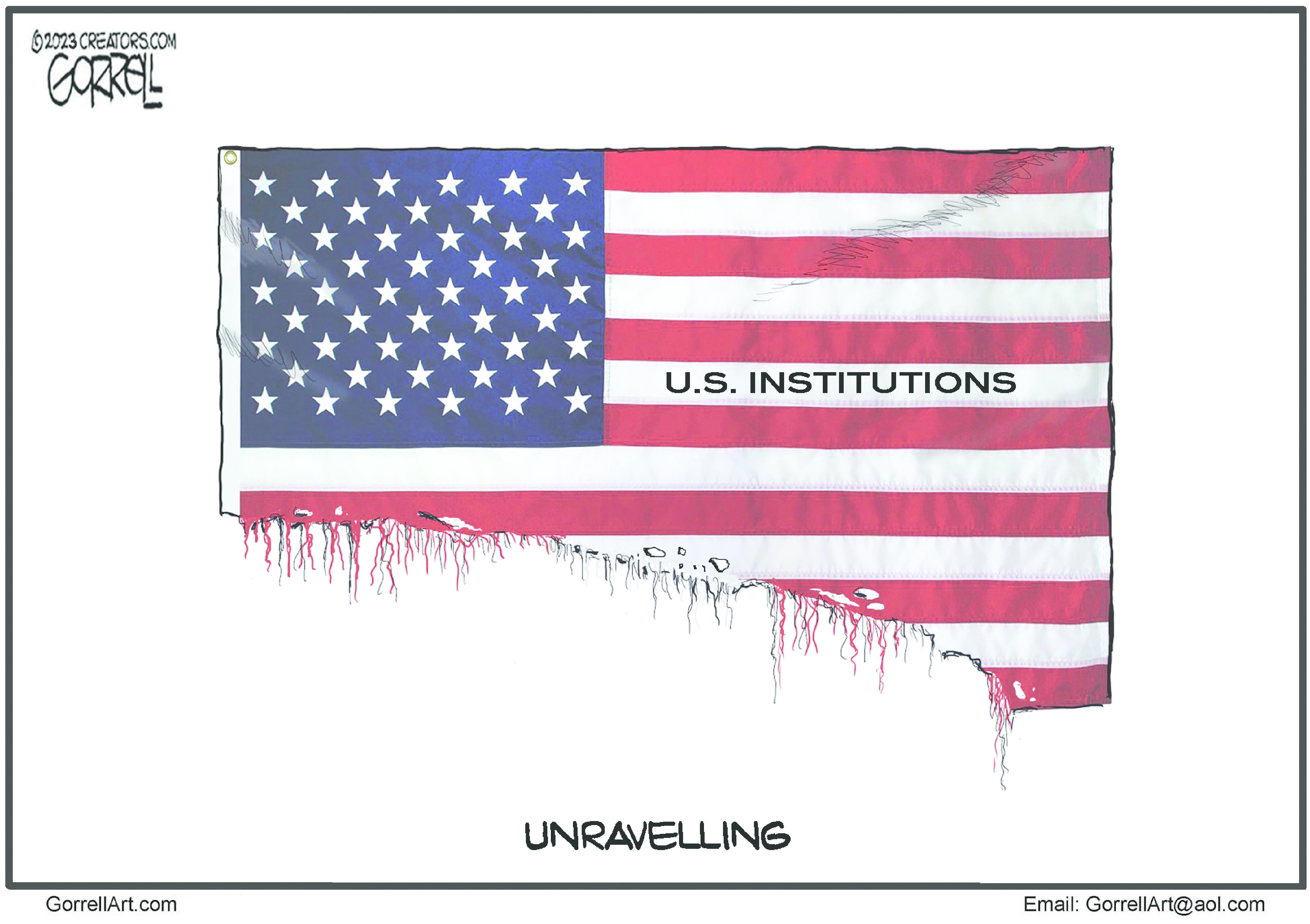
The "Turmoil" mentioned in contemporary reporting is not a temporary storm to be weathered; it is a structural leak in the hull of the British state. Without a fundamental re-evaluation of the FCDO’s purpose and a cessation of the "reorganization for reorganization’s sake" cycle, the department will continue to shed its most capable assets.
The strategic imperative now is to decouple the administrative management of the FCDO from its policy-setting function. The department requires a Chief Operating Officer to handle the merger’s lingering IT and HR failures, allowing the Permanent Under-Secretary and senior diplomats to focus exclusively on the external projection of power. Failure to implement this separation will result in a permanent state of "reactive diplomacy," where the UK is consistently outmaneuvered by smaller, more agile foreign ministries that have mastered the art of institutional stability.
The exit of Sir Olly Robbins must be viewed as the final warning: the FCDO is currently an institution designed for a world that no longer exists, governed by a structure that is actively cannibalizing its own leadership.