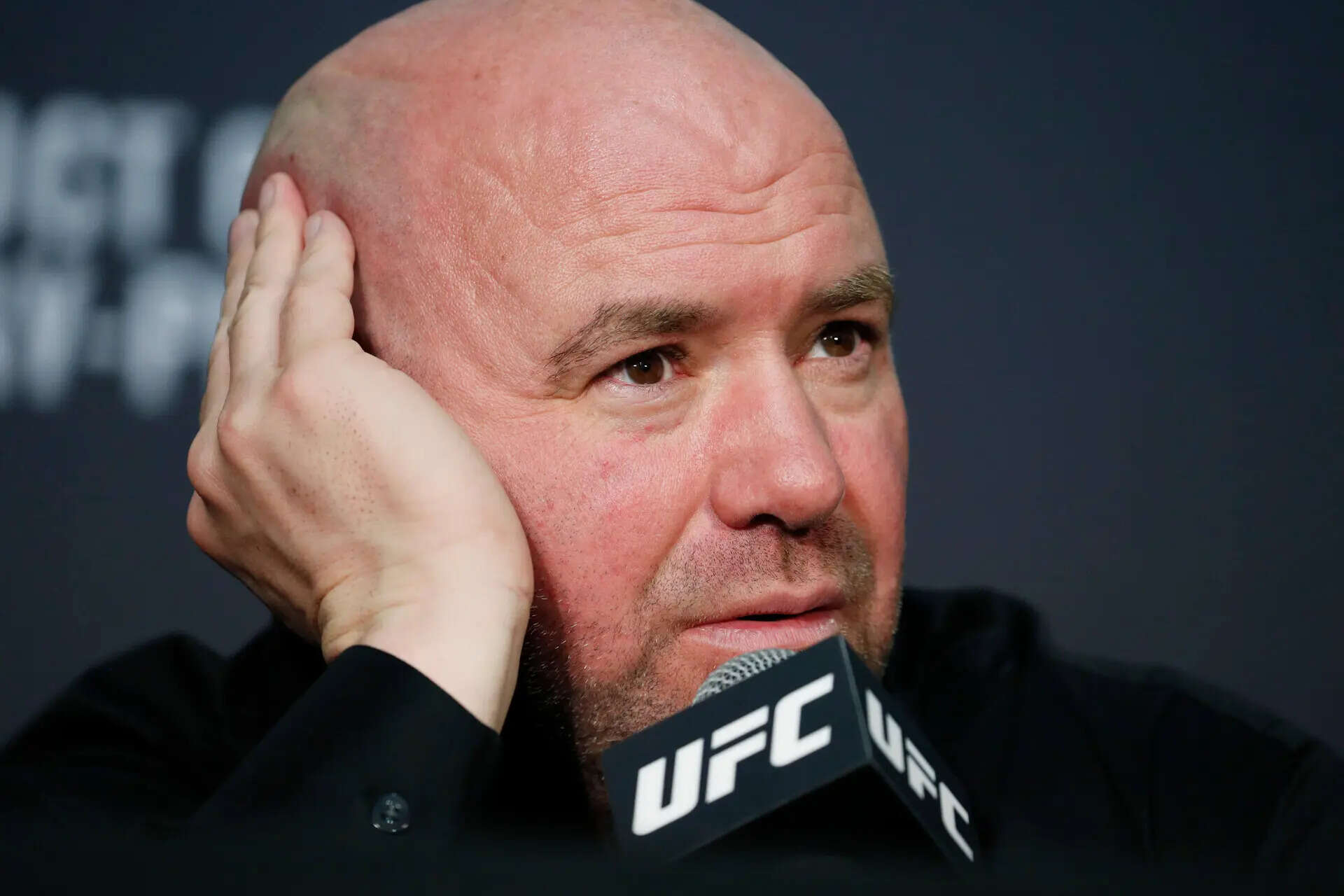
The upcoming UFC Freedom 250 event on the South Lawn of the White House was meant to be a masterclass in modern political stagecraft. Orchestrated by UFC CEO Dana White to coincide with President Donald Trump's 80th birthday and the nation’s semiquincentennial preparations, the June 14 spectacle was designed to fuse the raw, populist energy of mixed martial arts with the ultimate symbol of American institutional power. Instead, behind the scenes in Washington and Hollywood, the event is triggering a quiet panic. A-list celebrities are rejecting invitations in droves, exposing a deep fracture in how modern brands navigate an intensely hyperpartisan executive branch.
Publicly, White touted a guest list packed with transcendent star power. He confidently floated names like Dwayne "The Rock" Johnson, Adam Sandler, Tom Brady, Guy Ritchie, Jared Leto, Jason Statham, and Mario Lopez. But the reality confronting organizers is far more sobering. Representatives for Sandler, Leto, and Lopez have already confirmed they will not be attending. A source close to Johnson explicitly stated the box-office giant will be absent. The silence from other invited camps speaks volumes. When even Mario Lopez—a visible conservative voice who rarely skips a major red carpet—signals a hard pass, it reveals that the calculus of celebrity attendance has fundamentally shifted. Building on this theme, you can find more in: The Anatomy of Nostalgia Marketing Why The Heroes Cast Reunion Matters For IP Valuation.
This is not a simple story about Hollywood liberals snubbing a conservative president. The crisis runs deeper into the mechanics of corporate sponsorship, talent representation, and structural overreach by an administration attempting to blend state authority with sports entertainment.
The Broken Blueprint of Populist Glamour
For the past decade, the UFC has served as a reliable cultural safe space for Donald Trump. At regular pay-per-view events in Las Vegas, New York, and Miami, his walkouts alongside Dana White have become carefully choreographed rituals. In those packed arenas, surrounded by roaring fans and a specific subset of counter-cultural influencers, the political risks for attending celebrities were minimal. You could sit ringside, watch a fight, and maintain plausible deniability. It was a sporting event, not a political rally. Observers at Rolling Stone have shared their thoughts on this matter.
Moving the Octagon to the South Lawn completely obliterates that deniability.
When an event is staged at the seat of executive power, the venue itself becomes the message. Attendance is no longer a passive hobby; it is an explicit endorsement of the administration hosting it. For an elite talent agency managing a global brand like The Rock or Adam Sandler, advising a client to sit ringside at a White House fight card is an unacceptable risk profile.
The corporate machinery backing these stars views the situation through a purely transactional lens. A-list actors rely on international box office revenue, major corporate sponsorships, and broad four-quadrant appeal. Standing on the White House lawn to celebrate a polarizing president's birthday under the guise of an MMA fight card offers zero commercial upside. The risk of alienating half the domestic audience and an even larger share of the international market outweighs any personal affinity a star might have for White or Trump.
The Collateral Damage of Freedom 250
The celebrity exodus from the White House card is not happening in a vacuum. It follows a disastrous collapse of the broader Freedom 250 initiatives. Just weeks ago, the Great American State Fair concert series—originally billed as a nonpartisan celebration of America’s 250th anniversary—was forced to cancel entirely after a wave of musical acts abruptly pulled out.
Performers including Martina McBride, Bret Michaels, The Commodores, Morris Day, and Young MC distanced themselves from the festival. The common thread among their departures was a feeling of institutional bait-and-switch. Artists stated they initially signed up for a patriotic, historic milestone, only to discover the event was deeply entangled with the political apparatus of the current administration.
"Unfortunately, what was presented to us as a celebration of our country has evolved into something much more divisive than what I agreed to be a part of," wrote Poison frontman Bret Michaels when announcing his departure.
This prior controversy put Hollywood publicists on high alert. The moment White began broadcasting his wish list of mainstream stars for the South Lawn event, talent managers recognized the exact same trap. The institutional weight of the White House is being utilized to subsidize a highly specific political brand, and the entertainment industry’s top tier is refusing to be used as props.
The Forced Logistics of the South Lawn
With the Hollywood elite backing away, organizers have been forced to look elsewhere to fill the seats and maintain the illusion of a high-energy, prestigious crowd. This shift has created a bizarre, uncomfortable operational burden on the federal government.
Internal military memos reveal that the Pentagon has been actively recruiting active-duty troops to fill out the audience. The Department of Defense has solicited volunteers across various military branches, specifically targeting junior enlisted personnel and junior officers to attend the June 14 event in uniform.
The logistical realities outlined in these communications reveal the frantic nature of the planning.
- Member-Procured Travel: Despite the event being held at the executive mansion, the lowest-paid tiers of military personnel are expected to pay for their own travel and accommodations.
- Appearance Criteria: Air Force internal messages explicitly state that personnel must meet strict physical fitness and waist-to-height ratio standards to be eligible for selection.
- Dress Mandate: Attending troops are required to wear their short-sleeve dress uniforms, transforming active-duty service members into a uniform visual backdrop for a televised sports broadcast.
The juxtaposition is jarring. While multi-millionaire actors and athletes decline the invitation to protect their commercial interests, junior service members are being tasked via "quick-turn taskings" to populate the rows vacated by Hollywood.
The Limit of Executive Stagecraft
The empty seats on the South Lawn underscore a broader structural reality that this administration continues to miscalculate. Executive authority can command military attendance, it can clear airspace, and it can repurpose historic lawns. But it cannot compel culture.
Dana White’s promotional genius has always relied on his ability to read the room. For years, he successfully argued that the UFC was a non-political meritocracy where anyone could fight and anyone could watch. By bringing the Octagon directly into the crosshairs of a hyper-partisan presidency, he has compromised that neutrality. The brand is no longer an escape from the political divisions of the day; it has become an active instrument of them.
The failure to secure mainstream A-listers for the June 14 card demonstrates that even the most powerful figures in sports and politics have hit a hard ceiling. You can build the most impressive arena in the world on the grass of the White House, but you cannot force the culture to validate it if they know they are being handled. The fight will go on, the cameras will roll, and the uniform rows of junior troops will applaud on cue. But the glaring absence of the world's biggest stars will remain the loudest sound on the South Lawn.


.jpg?width=1200&auto=webp&trim=0%2C100%2C0%2C100)