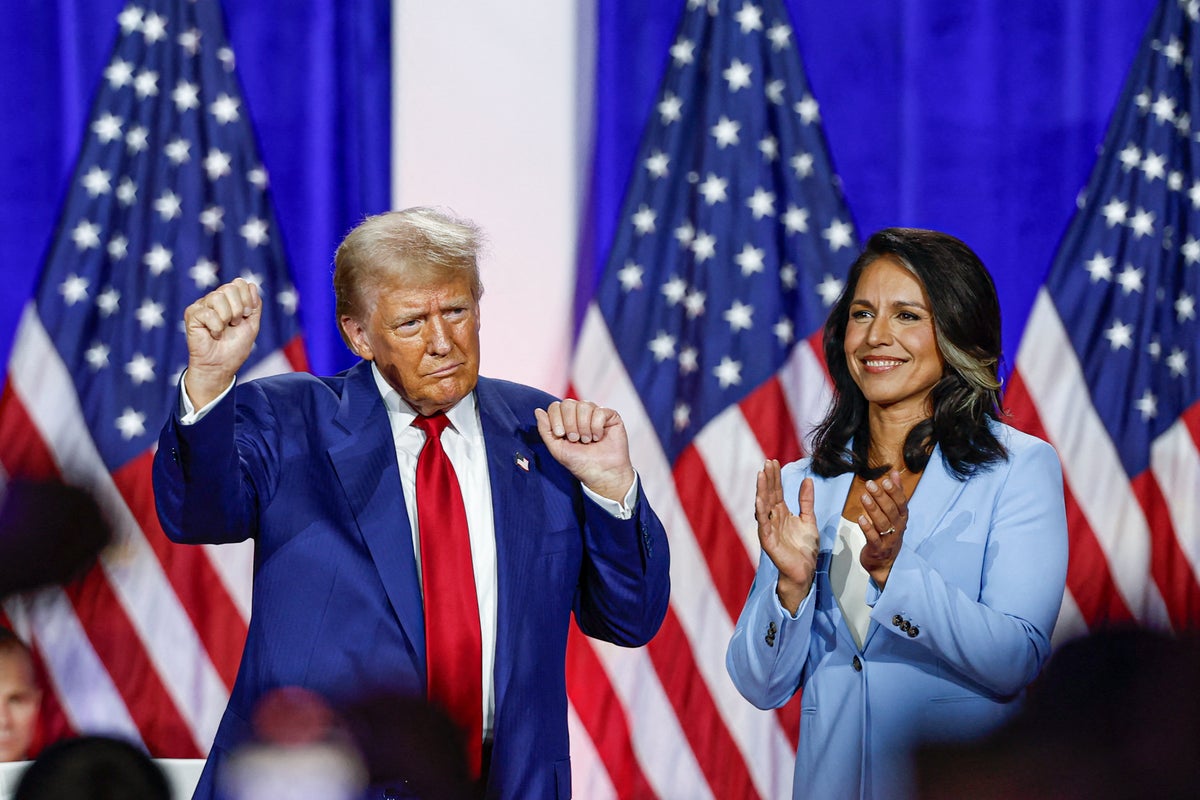
When the machinery of American statecraft grinds forward, it relies on a hierarchy of caution. Intelligence directors brief, military strategists calculate attrition rates, and executives are supposed to weigh the catastrophic costs against fleeting strategic gains. Yet, when former Director of National Intelligence Tulsi Gabbard walked into the Oval Office to brief President Donald Trump on the precipice of the February offensive against Iran, her warnings were treated as background noise rather than binding constraints.
Months after those pre-war briefings leaked into the public sphere, the anatomy of that monumental miscalculation has come into sharp relief. This was not a failure of intelligence gathering. It was a failure of intelligence consumption. While the national security apparatus laid out explicit, unvarnished scenarios detailing how an attack would backfire, the administration chose the comfort of optimistic assumptions over the gravity of empirical reality. For a deeper dive into similar topics, we suggest: this related article.
The Anatomy of a Dismissed Briefing
Long before the first strike shook Tehran, the intelligence community held a consensus that was profoundly inconvenient for hawks inside the administration. According to detailed accounts of the pre-war deliberations, Gabbard delivered a sobering assessment to the president. She explicitly warned that assassinating Supreme Leader Ayatollah Ali Khamenei would not trigger the spontaneous collapse of the regime. Instead, it would likely usher in a harder-line successor, catalyze a desperate defense, and remove the internal theological guardrails that had previously complicated Iran's path toward weaponization.
Furthermore, the intelligence brief mapped out the immediate economic choke points. Gabbard and other senior national security officials underscored that Tehran's retaliatory playbook would involve closing the Strait of Hormuz, cutting off the artery through which roughly a fifth of global petroleum travels. They warned of regional proxy strikes against American forces and key allies, ballooning casualty lists, and a protracted quagmire that would strain military supply chains. For additional context on this development, detailed reporting can also be found on Al Jazeera.
These were not hidden variables. They were textbook outcomes of decapitation strikes against entrenched authoritarian states. Yet, the warnings crashed against an administration wall populated by Pentagon traditionalists who promised a clean, decisive campaign driven by raw military dominance.
The Mechanics of Groupthink and Military Optimism
To understand why these warnings failed to alter the trajectory, one must examine the dynamic inside the high-level security meetings leading up to February 28. Defense Secretary Pete Hegseth and Chairman of the Joint Chiefs of Staff General Dan Caine presented a menu of strike options designed to look absolute on paper. Naturally, military planners always build plans around operational success; they present paths to victory because that is their institutional mandate.
However, secondary and tertiary risks often get marginalized when an executive enters a room already leaning toward decisive action. Dissenting voices, including Vice President JD Vance and intelligence chiefs who urged caution, found themselves outmatched by advisors who assured the president that the armed forces could handle any logistical or strategic friction points on the fly.
Consider a hypothetical corporate analogy. If a board of directors is told by their chief risk officer that a proposed expansion will trigger catastrophic supply chain blockages and alienate their core customer base, a disciplined executive pauses. If that same board chooses instead to listen exclusively to the head of sales—who promises that sheer willpower and aggressive marketing will conquer any obstacle—the ensuing collapse is a choice, not an accident.
The White House chose the sales pitch. Trump initially reveled in the early days of the campaign, visibly buoyed by reports of the supreme leader's death. The strategic hubris was palpable. But military force does not operate in a vacuum of clean lines and permanent advantages.
The Reality Check of a Stalled Campaign
As the conflict ground forward, the predicted friction manifested with clinical precision. Fuel prices surged globally as the Strait of Hormuz effectively locked down. The new leadership in Tehran proved more aggressive than anticipated, closing off diplomatic off-ramps and rendering pre-war assumptions about quick capitulation obsolete.
By mid-year, the political and economic fallout hit home. Regional partners in the Gulf, rattling under the weight of economic disruption, pressed Washington for an immediate exit strategy. Domestic polling numbers reflected severe public exhaustion with another uncontainable Middle Eastern entanglement. The administration found itself scrambling for an interim truce, forced to pivot away from military bravado back toward heavy-handed naval blockades and financial sanctions under the banner of Operation Economic Outcast.
Tulsi Gabbard's subsequent exit from her post, officially framed around personal circumstances but widely tracked by insiders as a forced parting over deep-seated policy fractures, underscored the internal rot. When an intelligence chief's primary function becomes navigating around a leadership determined to ignore her findings, the advisory system breaks down entirely.
The historical record of modern statecraft is littered with leaders who believed they could rewrite the laws of geopolitical cause and effect through sheer force of will. Ignoring the intelligence community's most severe warnings does not neutralize the threat; it merely ensures that when the blowback arrives, the administration is entirely unready to absorb it.
This video provides additional context regarding the pre-war friction and nuclear policy disagreements between Donald Trump and his intelligence leadership.
http://googleusercontent.com/youtube_content/1