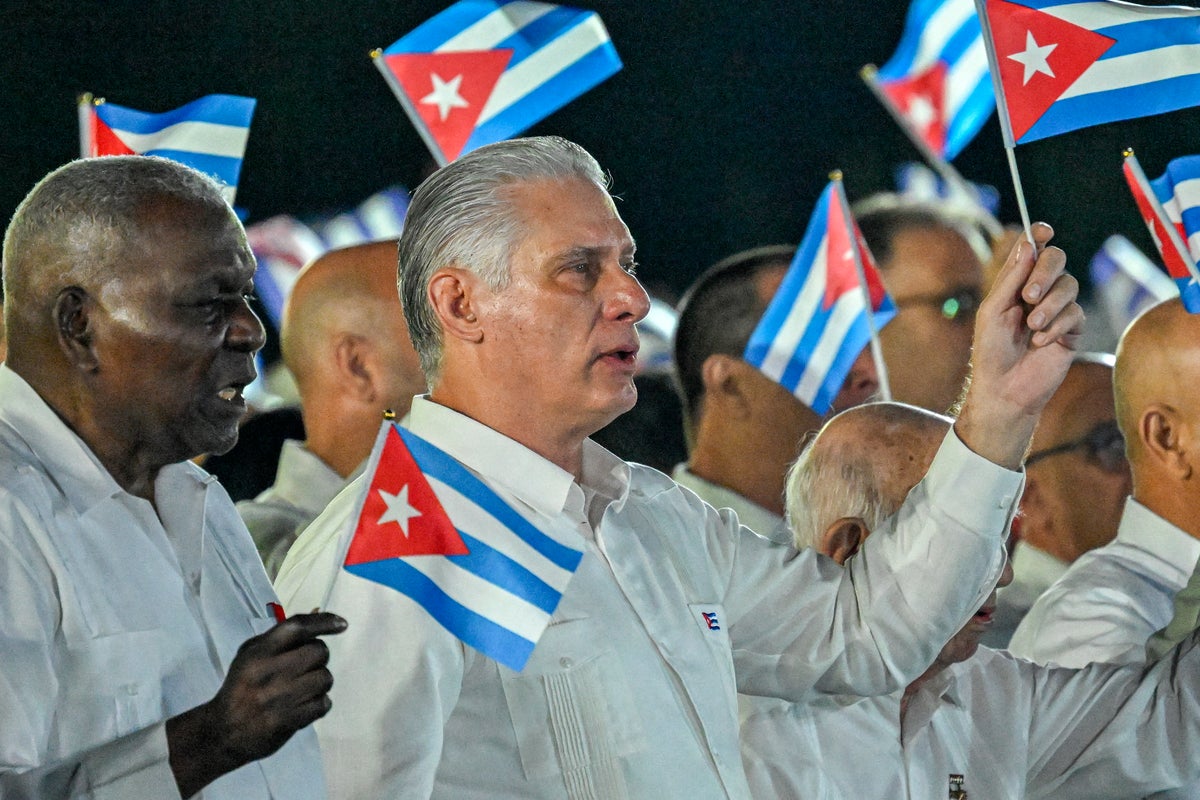
The Caribbean basin is quietly morphing into a geopolitical powder keg as the White House ramps up economic blockades, accuses Havana of deep-state infiltration, and military planners quietly evaluate contingency options involving thousands of ground troops. Beneath the surface rhetoric of a new State Department dossier detailing decades of Cuban espionage, a much more complex chess match is playing out. Surveillance flights near Havana have surged, economic pressure has choked off the island's oil supplies, and Washington is once again treating ninety miles off the Florida coast as an urgent national security crisis.
To understand why tensions are boiling over right now, we have to look past the official press releases and examine the structural mechanics of modern Caribbean strategy.
The Anatomy of the Escalation
Foreign policy shifts rarely happen in a vacuum. The recent public exposure of historical and contemporary Cuban intelligence operations—highlighted by blockbuster admissions from high-level diplomats and defense analysts over the past two decades—serves a dual purpose for the administration. On one hand, it taps into long-standing domestic anxieties about foreign interference. On the other hand, it builds the legal and political scaffolding required to justify aggressive containment measures.
An effective blockade requires more than just warships. It requires a narrative framework.
When the State Department publishes a hundred-page brief accusing Cuban intelligence of cultivating domestic networks and acting as a conduit for broader adversarial coalitions involving nations like Iran, Russia, and China, it signals a shift from passive containment to active rollback. Yet, actual military intervention remains a logistical nightmare.
The Logistics of a Caribbean Conflict
Pentagon briefings evaluating early-stage concept operations against Cuba face a glaring reality check. Major American military resources, aerial assets, and intelligence apparatuses remain heavily entangled in extended Middle Eastern operations.
A hypothetical amphibious or airborne assault involving elite units like the 101st Airborne Division sounds decisive on paper, but the secondary effects would strain global deployment readiness to its absolute breaking point.
Military analysts know that planning does not equal execution. Contingency documents are drawn up for every conceivable theater under the sun. However, when those plans leak alongside spikes in regional reconnaissance flights, they function as signaling mechanisms. They are designed to compel a cash-strapped, resource-starved regime in Havana to blink first.
The Economic Squeeze and Its Limits
Sanctions targeting military-run conglomerates and energy corridors have brought the Cuban economy to its knees, but economic strangulation rarely yields a tidy political transition. Instead, it hardens state control, empowers internal security apparatuses, and accelerates the very migration crises that southern border strategists are desperate to avoid.
Secretary of State Marco Rubio has consistently favored a technocratic diplomatic transition, pushing for economic reforms that would dismantle state monopolies. Yet, the hardline faction within the security apparatus views any compromise as existential weakness.
The strategy relies on the assumption that total economic collapse will trigger a popular uprising. History suggests otherwise. Authoritarian structures under severe external pressure frequently double down on internal repression, utilizing external threats to suppress domestic dissent.
Beyond the Rhetoric
We are witnessing the collision of domestic political imperatives and cold-war operational habits. The narrative of an imminent invasion plays well in certain electoral corridors, but the operational friction on the ground tells a story of calculated pressure rather than imminent D-Day execution. Intelligence gathering has intensified because the intelligence community is genuinely rattled by asymmetrical technological partnerships developing across the region.
The shadow war between Washington and Havana is entering a volatile new chapter, driven less by what Cuba is doing today and more by what major global competitors might choose to build in America's backyard tomorrow.
The coastline ninety miles south of Florida remains a barometer for broader imperial anxieties, and the current pressure campaign is only beginning to test how much strain the island can absorb before something breaks irrevocably.
Inside the US Spy Planes Spotted Near Havana
This video provides an up-close look at the recent surge in U.S. military surveillance flights and reconnaissance drones operating near Cuban airspace.
http://googleusercontent.com/youtube_content/1