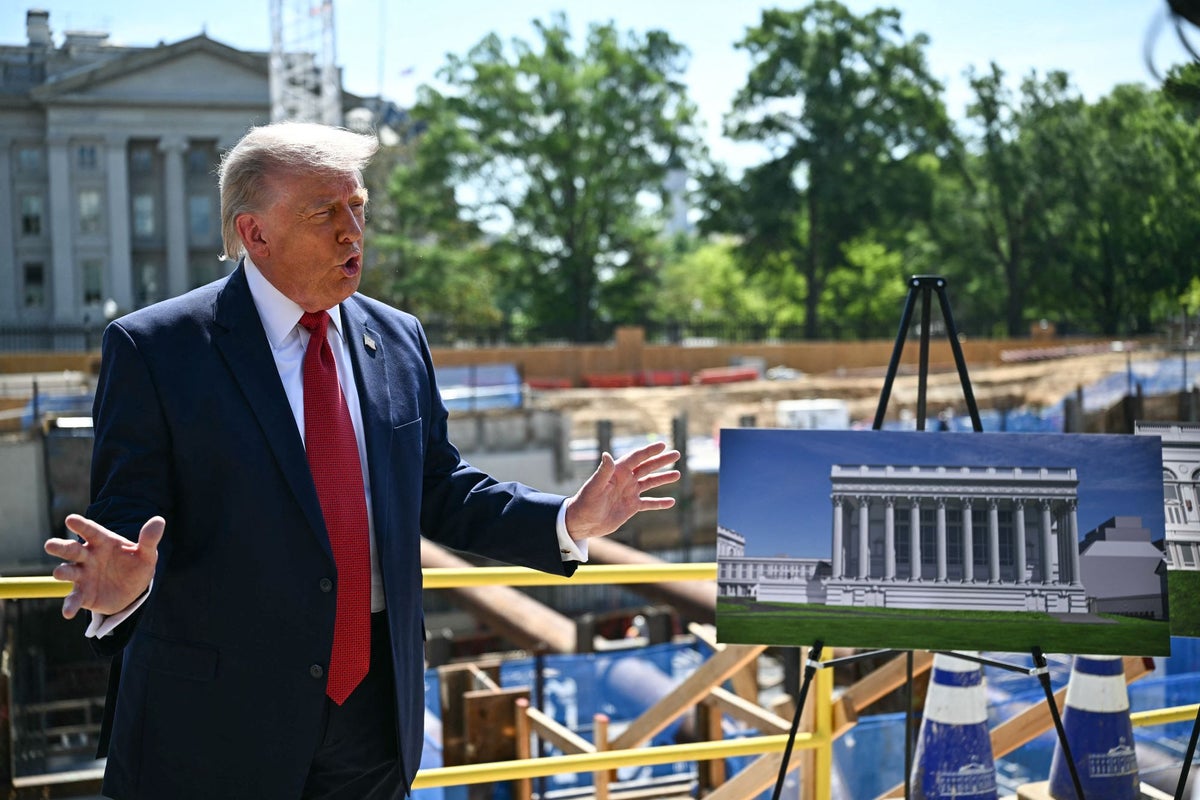
Donald Trump is reshaping the physical landscape of Washington, D.C., using executive orders to treat the nation's capital like a private real estate portfolio. This developer-in-chief approach sidesteps traditional civic planning to impose a specific aesthetic on federal architecture, including a proposed triumphal arch near Arlington National Cemetery and a neoclassical ballroom at the White House. While supporters cheer the return to classical forms, this aggressive, centralized control over public space is creating a quiet crisis in federal procurement and municipal planning, threatening to upend how public infrastructure is built, budgeted, and managed.
The transformation goes far beyond simple redecoration. By leveraging unilateral executive authority, the administration is overriding decades of established preservation laws, local zoning consultation, and competitive bidding processes. The result is a fundamental shift in the relationship between the federal government and the built environment. For a different view, read: this related article.
The Triumphal Arch and the Erasure of Civic Process
The most striking manifestation of this architectural shift is the plan for a massive stone triumphal arch intended to mark the nation’s 250th anniversary. Slated for the grassy traffic circle on the Virginia side of the Arlington Memorial Bridge, the monument would sit directly between the Lincoln Memorial and Arlington National Cemetery.
In a normal administration, a project of this scale requires years of reviews by the Commission of Fine Arts, the National Capital Planning Commission, and environmental impact assessments. Instead, the design—featuring classical columns, eagles, and gilded figures—emerged directly from deliberations inside the Oval Office. Further analysis on the subject has been provided by NBC News.
This top-down approach eliminates the checks and balances designed to protect public space. When a president acts as the head architect, local municipalities and urban planners are left with no recourse. The traditional consensus-driven model of civic design is replaced by personal taste, establishing a precedent where public land becomes a canvas for the executive branch's preferred style.
The Financial Fallout of Mandated Classical Architecture
The administrative mechanism driving this transformation is an executive order mandating that new federal buildings embrace classical and traditional architecture. The order explicitly targets modern styles, particularly Brutalism, requiring any departure from classical forms to be approved directly by the president.
| Architecture Style | Traditional Procurement Cost Factor | Mandated Classical Cost Factor | Primary Driver of Increase |
|---|---|---|---|
| Federal Office Buildings | Baseline ($) | 1.3x to 1.5x ($$$) | Specialty stonemasonry, custom fabrication, extended timelines |
| Civic Monuments | Baseline ($) | 1.4x to 1.6x ($$$) | Non-standardized materials, artisanal craftsmanship, single-source bidding |
While classical architecture possesses undeniable historical resonance, enforcing it by decree creates significant fiscal and logistical challenges.
- Artisanal Shortages: The modern construction industry is optimized for steel, glass, and reinforced concrete. Requiring hand-carved granite, limestone facades, and intricate classical moldings forces agencies to rely on a severely limited pool of specialty contractors.
- Cost Inflation: Diminished competition invariably drives up project bids. This creates a reliance on single-source or limited-source contracts, significantly inflating the burden on taxpayers.
- Project Delays: Sourcing rare materials and securing specialized labor extends construction timelines, leaving essential federal projects stuck in bureaucratic and logistical bottlenecks.
Federal agencies operating under fixed budgets must absorb these aesthetic premiums. To pay for ornamental stone facades, agencies are frequently forced to cut corners on interior infrastructure, modern technological integrations, and energy efficiency systems. The public receives a visually traditional exterior at the expense of a functionally obsolete interior.
Institutional Backlash and the Case of the Kennedy Center
The friction between real estate intuition and institutional governance recently culminated in a legal battle over the Kennedy Center for the Performing Arts. Following a White House-backed plan to fully close the iconic facility to accelerate a massive renovation program, a federal district court intervened.
Judge Christopher Cooper blocked the closure, calling the board's hasty approval "ill-informed and seemingly preordained." The ruling also ordered the removal of Trump's name from the arts center's renovation initiatives. The administration’s subsequent withdrawal from the project highlights a broader systemic issue. When public institutions resist the rapid, high-pressure tactics typical of private real estate development, the executive branch tends to abandon the partnership entirely rather than compromise.
"Unless I am free to do what I do better than anyone else, bring this Institution back, physically, financially, and artistically, I have no interest in continuing what could only be a hopeless journey," Trump stated via social media following the ruling.
This statement underscores the core conflict of the developer-in-chief model. Private real estate development relies on absolute executive control to manage risk and speed up timelines. Public infrastructure, conversely, requires shared governance, legal transparency, and institutional patience. Forcing the latter to operate like the former inevitably leads to litigation, abandoned projects, and half-finished civic spaces.
Redesigning the Digital Infrastructure
The developer-in-chief philosophy is also expanding into digital infrastructure. Through the "America by Design" initiative, the administration established the National Design Studio, appointing Airbnb co-founder Joe Gebbia as the government’s chief design officer.
The mandate is sweeping: oversee the visual and structural overhaul of roughly 26,000 federal web portals, from the Internal Revenue Service to the Social Security Administration. The stated goal is to make government websites as satisfying to use as commercial app stores.
This initiative treats digital portals as real estate assets requiring a unified corporate rebranding. However, government websites are not commercial products designed to drive engagement or sales; they are critical utilities that must prioritize accessibility, strict data privacy, and compatibility with legacy systems. Prioritizing aesthetics and uniform user interfaces can inadvertently break accessibility features for disabled citizens or create security vulnerabilities within deeply entrenched federal databases.
The intersection of private-sector design principles and public-sector utility remains unproven. If the National Design Studio focuses on visual polish over deep backend modernization, the project risks becoming an expensive cosmetic exercise that leaves underlying software vulnerabilities unaddressed.
The Long Term Costs of Aesthetic Centralization
The consolidation of design authority within the executive branch permanently alters the machinery of federal procurement. When architectural style becomes a political litmus test, career procurement officers lose their autonomy. Decisions once based on cost-effectiveness, environmental sustainability, and regional utility are now filtered through aesthetic compliance.
This leaves the engineering and architecture sectors in a precarious position. Firms must choose between adapting their operations to cater to a highly specific, state-sanctioned classical style or losing access to lucrative federal contracts. When the political winds shift, an industry rearranged around classical forms will face another painful structural realignment.
Civic architecture reflects the governance system that creates it. Dictating design language by executive fiat replaces democratic compromise with an administrative monoculture. The true cost of the developer-in-chief era will not be measured solely in the dollars spent on premium stone or custom web interfaces, but in the systematic dismantling of the open, competitive, and legally grounded processes that historically governed public works. The administration is successfully building its monuments, but the foundational framework of civic procurement is fracturing beneath the weight of every new stone block.