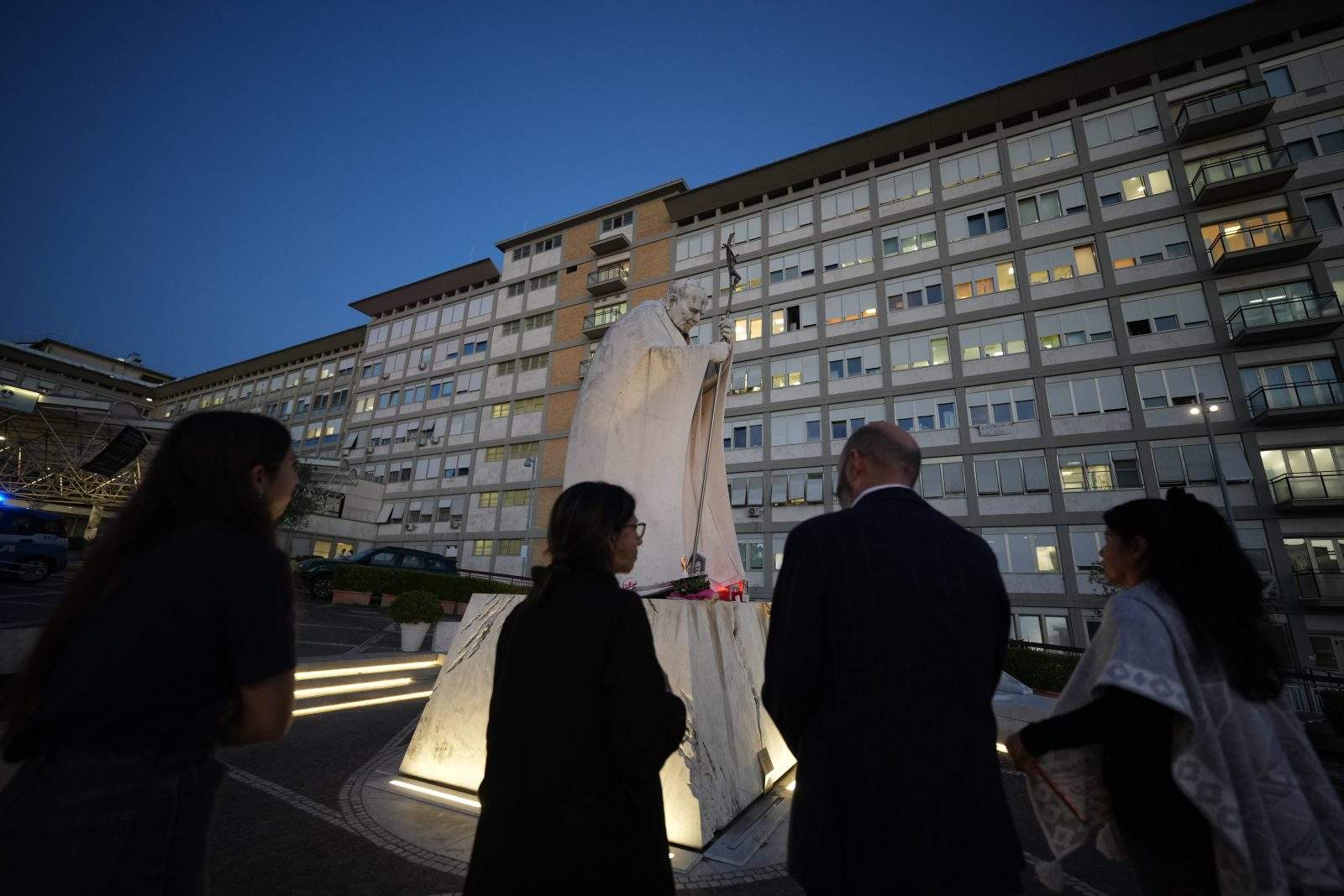
Pope Leo XIV leaves Rome's Gemelli Hospital on Saturday, October 17, 2026, just four days after undergoing surgery to remove the lower lobe of his right lung for early-stage lung adenocarcinoma.
A fast discharge makes for tidy headlines. It rarely makes for complete reporting. When the Vatican announces that a 71-year-old pontiff is walking out of the hospital ahead of a projected weeklong stay, seasoned observers know to look past the polite smiles at the car window and ask what the official bulletins leave unsaid. Meanwhile, you can explore other stories here: The Illusion of Municipal Choice in British Columbia.
Pope Leo XIV's lung cancer surgery marked the first major health test of his 17-month papacy. His surgical team, led by chief thoracic surgeon Professor Stefano Margaritora, removed the lower lobe of his right lung using a video-assisted procedure on October 13. Intraoperative tissue analysis confirmed lung adenocarcinoma, the most common form of lung cancer, detected after a nodule showed up during routine check-ups.
Why an Early Hospital Exit Raises Harder Questions
Four days after a thoracic lobectomy sounds like a triumph of modern medicine. Sometimes it is. Sometimes it reflects institutional pressure to project strength before an overseas trip. To see the complete picture, check out the excellent article by TIME.
The Holy See Press Office had originally indicated that Pope Leo would remain hospitalized at Gemelli for roughly a week following his October 13 admission. Canceling audiences through October 20 suggested a measured recovery window. Yet by Saturday morning, officials signaled his imminent discharge, and Margaritora stated there were "no clinical reasons" to block his planned November tour of Latin America.
Having covered Vatican health sagas across multiple pontificates, I have learned to treat speed with caution. Institutional optics move faster than human tissue. Removing an entire lobe of a lung—even via minimally invasive, video-assisted techniques—is major surgery. The chest cavity has to adapt, lung volume drops permanently, and post-operative pain or fatigue can arrive days after discharge once initial hospital protocols wind down.
A rapid release reassures the faithful and calms diplomatic nerves, yet it also compresses scrutiny into a narrow window of carefully vetted statements.
What Official Bulletins Left Unfinished
Doctors told reporters that the cancer was caught early, that the pope had no respiratory symptoms beforehand, and that he required no further cancer treatment. Still, the full picture of an oncology case rarely settles on day four.
- Pending pathology details: Additional laboratory testing on the excised tissue was slated to continue after the initial intraoperative confirmation, with results not immediately made public.
- Staging nuance: Even when a nodule appears well-contained, long-term prognosis depends on final pathology margins, lymph node evaluation, and molecular markers that take time to verify.
- Travel stamina: Flying across time zones and keeping high-intensity public schedules in countries like Argentina and Peru tests stamina in ways a quiet hospital room does not.
The Candid Shift in Vatican Medical Messaging
What stood out most in October was not the medical chart alone. It was the shift in how the papacy spoke about illness in real time.
Pope Leo told crowds in St. Peter's Square on October 11 that a nodule had been discovered and would be removed. That candor stood in sharp contrast to decades of Vatican tradition, where papal ailments were often minimized, obscured behind vague phrasing, or revealed only after crises escalated.
By speaking plainly ahead of the operation and later telling journalists aboard his return flight from Peru that his priorities and agenda remained unchanged, Leo tried to own the narrative. Speaking candidly is a smart move in an era where rumors spread in seconds. Still, candor about the diagnosis does not guarantee full transparency on every clinical detail afterward.
Consider a hypothetical example of how public communications can diverge from clinical reality without lying outright. Suppose a public figure has a small, early-stage tumor removed cleanly and feels energetic four days later. Saying they feel "much better" and need no further therapy right now can be strictly accurate—while final tissue profiling still carries small statistical odds of recurrence that physicians monitor quietly over years. That gray area is normal in oncology. It is rarely captured in a 400-word press release.
What Lung Adenocarcinoma Means for a Working Pontiff
Lung adenocarcinoma begins in the mucus-producing glandular cells of the lungs and often shows up on scans before a patient feels a single symptom. That was true here. Margaritora noted that had the spot been located higher up, it might not have been seen the same way, and the pope felt well prior to intervention.
Removing the lower right lobe—a lobectomy—is a standard surgical approach intended to clear the affected tissue thoroughly. Video-assisted surgery uses small incisions and a camera rather than spreading the ribs wide open, which generally reduces hospital stays and speeds early mobility compared with traditional open thoracotomy.
Even so, the math of human physiology does not bend to titles. A 71-year-old leader carrying global administrative, spiritual, and diplomatic duties relies on steady breath support for long speeches, travel, and high-stress meetings. Catching the tumor early gives him a far stronger hand than discovering it late. It does not make him immune to age, fatigue, or future medical surprises.
The Real Stakes Behind the headlines
Papal health is never just a personal medical story. It is a governance question.
| Factor | Public Narrative | Practical Reality |
|---|---|---|
| Hospital stay | Discharged Saturday, ahead of schedule | Early exit speeds public reassurance but leaves recovery under close watch |
| Cancer status | Early-stage adenocarcinoma, no further treatment stated | Early detection helps, though full pathology and long-term follow-up matter |
| Agenda impact | No change to priorities or travel plans | High-tempo travel tests physical endurance regardless of surgical skill |
Observers watching Leo's return from Gemelli saw a pontiff eager to project continuity—greeting staff, waving from his vehicle, and keeping his focus on unity and healing within the church. That resolve is real. Yet true accountability in covering any world leader's health requires separating a strong recovery on day four from the quieter, months-long reality of healing after major surgery.