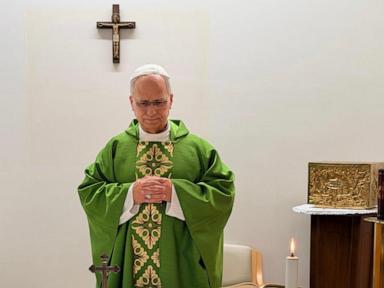
When Pope Leo XIV entered Rome's Agostino Gemelli Polyclinic on October 13, 2026, for surgery on a pulmonary nodule that turned out to be lung adenocarcinoma, the Vatican did something historically radical. It told the truth in real time. Rather than hiding behind clinical euphemisms, whispered rumors, or theatrical appearances meant to project invulnerability, the papacy of the first American pope handled a serious oncology scare with procedural clarity, institutional deference to specialists, and unusually direct public updates.
That shift matters far beyond a single hospital stay. For generations, papal illness functioned as a state secret wrapped in liturgical mystery, leaving cardinals, diplomats, and over a billion Catholics guessing what was actually happening behind Leonine walls. Leo XIV, born Robert Francis Prevost in Chicago before spending decades in Peru and rising to lead the dicastery that vets bishops, brought an organizational playbook shaped by modern institutional accountability. Yet calling his approach simply "American-style governance" misses half the tension—and most of the friction waiting ahead. You might also find this similar coverage interesting: Houthi Strikes on Saudi Arabia Do Not Prove Growing Strength.
Why Papal Secrecy Became an Institutional Hazard
To understand what changed in October 2026, look at what used to happen when a pope got sick. Historically, admitting physical decline meant admitting vulnerability in a monarchy where moral authority, administrative command, and physical stamina are constantly conflated. Popes often resisted medical advice, delayed hospitalizations, or pushed through grueling schedules until a crisis forced their hand.
That culture carried real operational costs. When the health of the sovereign pontiff is treated as a taboo subject, rumors fill the vacuum. Curial factions jockey quietly. Foreign embassies parse every tremor in a voice or every canceled audience for hidden political signals. Worse, the people closest to the pope are put in an impossible bind, caught between loyalty to the man and duty to the institution. As reported in detailed coverage by NBC News, the implications are significant.
Leo XIV's response to his lung nodule broke that script. His medical team flagged a suspicious spot, ran diagnostic tests, and scheduled a video-assisted right lower lobectomy at Gemelli. Once surgery confirmed adenocarcinoma, officials stated plainly what had been removed, noted that pathology and lymph node evaluations were underway, and later confirmed that final histological and molecular testing meant no further treatment was required after his October 17 discharge.
No spin. No theatrics. Just clinical facts delivered on a schedule.
The Chicago and Chiclayo Playbook
Observers love to reduce American-style governance to boardroom buzzwords, org charts, or corporate efficiency. That framing is too shallow for a man who spent years as an Augustinian leader and bishop in Chiclayo, Peru, before taking the helm in Rome.
What Prevost brings from his American formation is a comfort with clear roles, institutional guardrails, and expert consultation. In U.S. diocesan life—especially after decades of financial and abuse scandals forced painful structural reforms—bishops learned that treating every administrative or medical problem as a private secret is a recipe for institutional collapse. You listen to specialists. You document decisions. You communicate before speculation runs wild.
At the same time, Leo XIV is not a Silicon Valley CEO trying to turn the Roman Curia into a lean startup. His background blends American organizational literacy with lived pastoral experience in Latin America and deep grounding in canon law. When he relies on thoracic surgeons, pathologists, and oncologists rather than treating medicine as an intrusion on papal sovereignty, he is practicing subsidiarity and professional trust. Doctors practice medicine; the pope governs and prays.
Consider a hypothetical example to see how stark the contrast is. Imagine a traditional courtly model where a pope experiences unexplained fatigue and a spot on a scan weeks before a major international trip. Under the old reflex, the scan might be kept tightly held, travel plans quietly shuffled at the last minute, and official bulletins phrased so vaguely that reporters spend days decoding nouns and adjectives. Under Leo XIV's model, the medical team identifies the risk early, schedules decisive intervention, shares the pathology milestone honestly, and lets recovery dictate the calendar before resuming a demanding schedule like his November 2026 South America tour.
What Transparency Actually Changes Inside the Curia
Transparency around a health crisis does more than reassure the public. It rewires internal power dynamics in the Vatican.
In a hyper-centralized system, information is currency. Those who control access to the pope—or control what outsiders know about the pope's stamina—wield disproportionate leverage. When medical updates are timely, specific, and grounded in clinical reality, court intrigue loses oxygen. Cardinals and department heads can plan around facts rather than whispers.
| Dimension | Traditional Curial Reflex | Leo XIV Institutional Approach | Practical Consequence |
|---|---|---|---|
| Medical Candor | Guarded, euphemistic, or delayed until emergencies peak | Direct disclosure of diagnosis, procedure, and pathology follow-up | Lowers rumor cycles and builds public credibility |
| Role of Specialists | Frequently subordinated to personal will or court protocol | Clear reliance on clinical teams and diagnostic testing | Improves care decisions and clarifies boundaries |
| Internal Information | Concentrated in tight inner circles | More standardized, factual institutional reporting | Reduces back-channel speculation among officials |
| Public Expectations | Relies on heroic endurance and mystery | Balances frankness about limits with steady follow-through | Resets how the faithful view papal vulnerability |
Still, let's not pretend candor solves every structural flaw in the Holy See. A transparent health bulletin does not automatically fix slow bureaucracies, overlapping dicasteries, or entrenched turf wars in Rome. Bureaucracies have immune systems of their own. Officials who have spent thirty years navigating quiet compromises and unwritten rules do not turn into transparent managers overnight simply because the man at the top speaks plainly.
The Counter-Argument Nobody Likes to Hear
There is a legitimate counter-argument worth taking seriously, even if it cuts against modern journalistic instincts. Some critics—both traditionalists and seasoned Vatican-watchers—worry that too much candor and administrative normalization can strip the papacy of its symbolic weight.
In Catholic theology and history, the pope is not merely a chief executive managing a global nonprofit. He is a visible sign of unity and continuity, a figure whose office carries a weight that transcends quarterly metrics or press-briefing norms. If every medical scan, recovery curve, and administrative adjustment is handled like a standard corporate or civic update, does the institution risk looking overly managerial, losing a sense of sacred mystery that helps hold a sprawling, fractured church together?
It is a fair tension. Too much secrecy breeds cynicism and cover-ups. Too much bureaucratic routine can flatten the symbolic gravity of the office. Leo XIV's real test is not choosing one pole over the other permanently, but knowing where plainspoken accountability ends and liturgical or pastoral presence begins.
Where Real Friction Will Emerge Next
The real test of Leo XIV's governance model will not come during a single hospital stay where doctors remove a localized tumor and clear him for travel. It will come when policy, finance, and doctrine collide with American-style expectations of clarity.
In the United States, people often expect leadership to be loud, partisan, or transactional—either fighting culture-war battles on cable news or running a tight metrics-driven shop. Leo XIV has already shown he refuses to be a caricature of American politics, pushing back on nationalism, speaking sharply on migration and social duty, and addressing global challenges from artificial intelligence to universal health care on his own terms.
That creates a fascinating paradox. An American pope who governs with calm administrative discipline and medical honesty may actually frustrate Americans looking for a domestic political champion, while unsettling Roman insiders who prefer ambiguity over clear rules.
Watch how his administration handles routine institutional friction over the next year: budget discipline, staffing reviews, legal accountability, and crisis communications when the news is messy rather than reassuring. Honest reporting during a hospital recovery sets a strong baseline. Turning that baseline into durable institutional habits across a two-thousand-year-old bureaucracy is the harder work—and the measure that will actually define his pontificate.