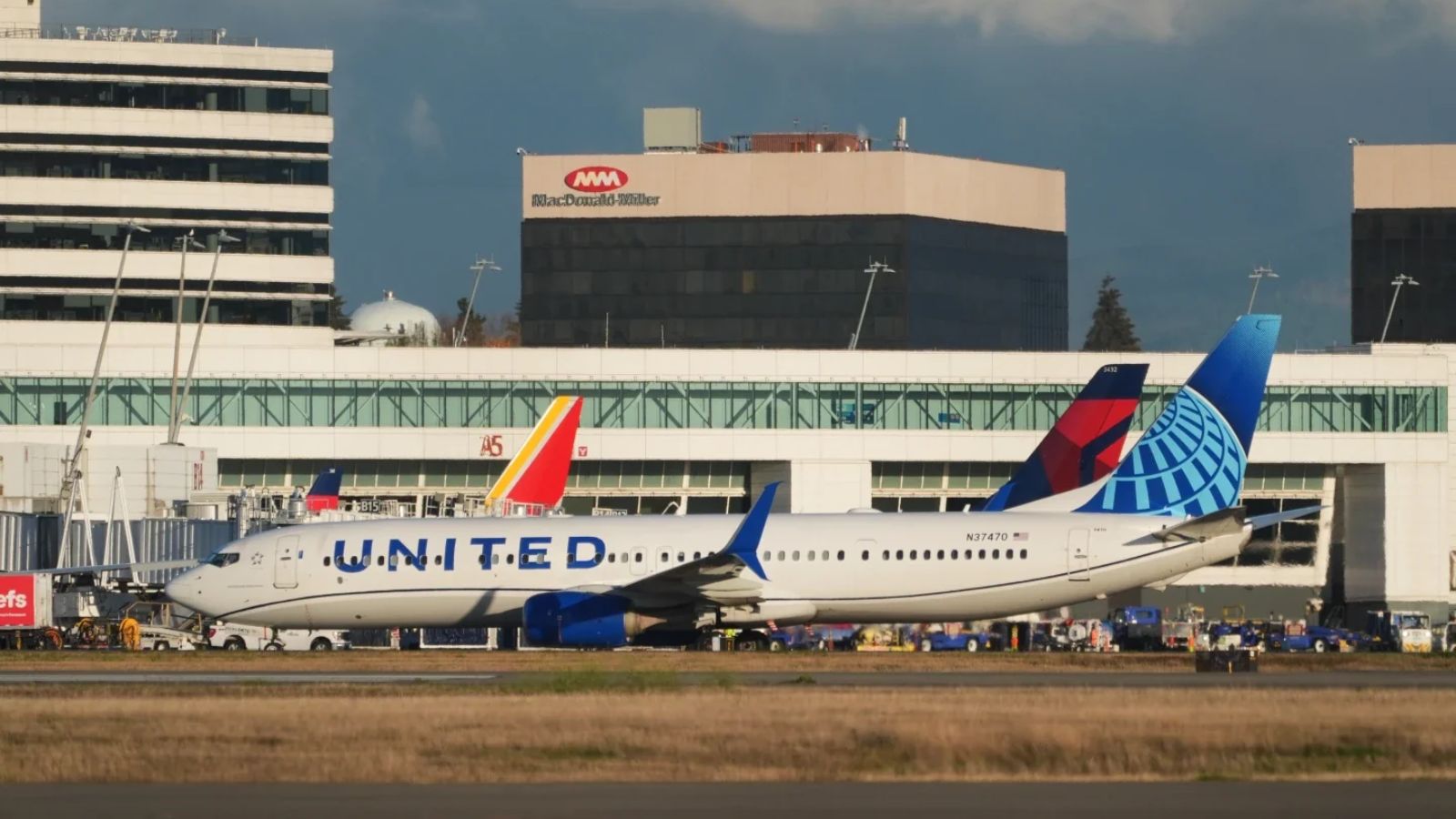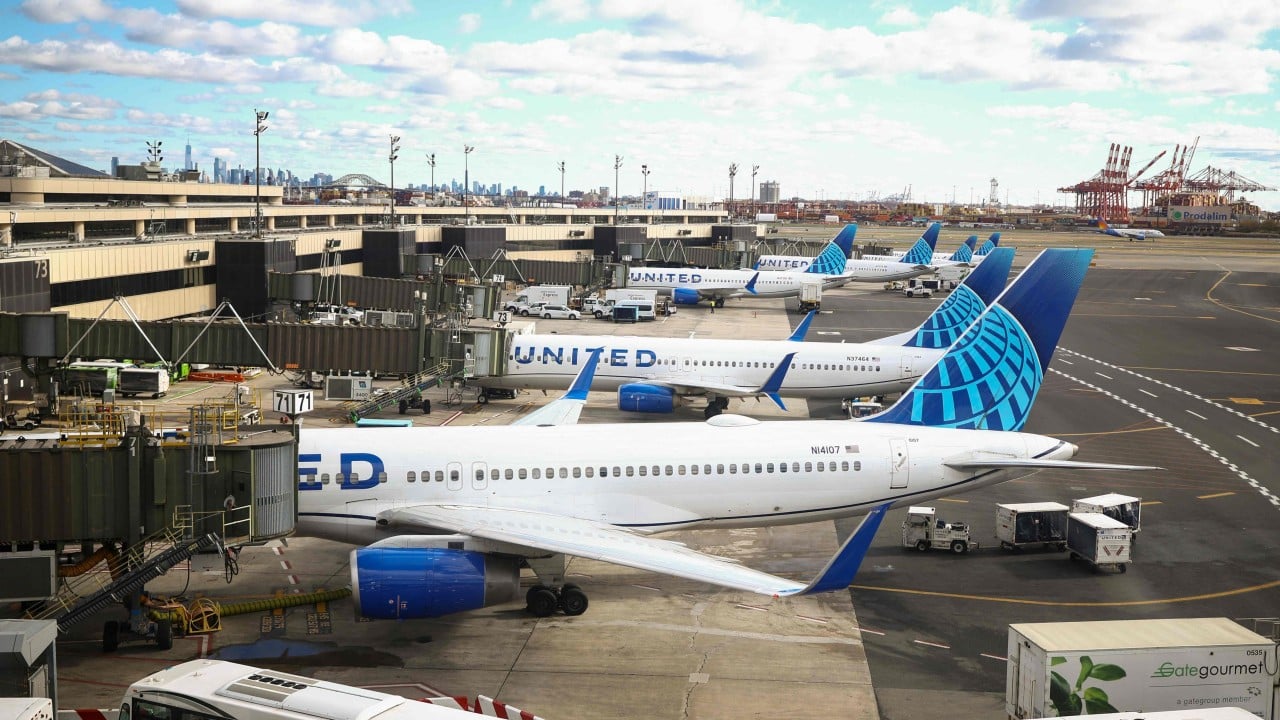
United Airlines suffered a widespread system failure that disrupted flight check-ins, baggage processing, and mobile app access just days after a separate nationwide ground stop halted departures across the country. While surface-level reporting treats these back-to-back meltdowns as isolated technical glitches, the reality inside airline operations is far more systemic. Legacy carriers are operating high-volume, twenty-first-century flight schedules on top of fragmented, decades-old software architectures that buckle under cascading stress. When one core server trips, the entire network bleeds.
The immediate fallout for travelers was predictable. Airport lobbies turned into holding pens. Self-service kiosks froze, forcing ground staff to revert to manual check-in procedures that have barely changed since the late nineties. Behind the ticket counters, however, the real crisis was playing out in the airline's dispatch and weight-and-balance systems—the invisible digital plumbing required before a single wheel can legally leave the tarmac.
The Anatomy of a Cascading IT Meltdown
Airlines do not run on a single, unified piece of software. They run on a sprawling patchwork of interconnected databases, mainframes, and cloud applications stitched together over decades of mergers, acquisitions, and emergency patches.
When United Airlines merged with Continental Airlines in 2010, executives faced a brutal choice regarding their Passenger Service Systems (PSS)—the core software that handles reservations, inventory, and departure control. They chose Continental's SHARES system, a text-based mainframe architecture rooted in the 1960s, over United's Apollo system. While the graphical user interfaces layered on top of these mainframes have been modernized over the years, the foundational logic underneath remains fiercely rigid.
Consider how a single flight gets off the ground. Before a Boeing 737 or 777 can push back from the gate, multiple independent systems must handshake in strict sequence:
- Reservations and Inventory must confirm the passenger manifest and seat assignments.
- Baggage Reconciliation must match every checked bag to a boarded passenger, a strict federal security mandate.
- Weight and Balance must calculate the exact center of gravity based on fuel load, cargo weight, and passenger distribution.
- Flight Planning and Dispatch must file the route with the Federal Aviation Administration (FAA) and transmit weather and fuel burn data directly to the cockpit's Aircraft Communications Addressing and Reporting System (ACARS).
If the API bridge connecting the mobile app to the core reservation mainframe stalls, passengers cannot pull up boarding passes. If the weight-and-balance server goes dark, pilots cannot legally calculate takeoff speeds, and the flight stops dead at the gate. Because these systems are tightly coupled, a minor latency spike in one database quickly triggers timeouts across the entire chain. Automated retry loops flood the network with millions of duplicate requests, effectively causing the airline to accidentally launch a denial-of-service attack against itself.
Why Back-to-Back Outages Happen
A widespread system failure occurring days after a nationwide ground stop is rarely a coincidence. In complex aviation networks, the recovery phase from a major disruption is often more dangerous to IT stability than the initial event itself.
During a nationwide ground stop, thousands of aircraft, crew members, and passengers end up in the wrong cities. Once the ground stop lifts, the airline's optimization engines go into overdrive. Crew scheduling algorithms run millions of permutations to legally pair pilots and flight attendants with delayed aircraft while respecting strict FAA duty-time limits. Simultaneously, rebooking engines automatically process hundreds of thousands of itinerary changes, pushing push-notifications, reissuing electronic tickets, and updating partner airline manifests.
This post-disruption surge places immense strain on legacy databases that were engineered for steady-state predictability, not violent spikes in transaction volume. Furthermore, IT teams under intense pressure to restore normal operations frequently push emergency configuration changes or server reboots during narrow maintenance windows. If a patch introduces a subtle memory leak or misconfigured routing table, the system may limp along for forty-eight hours before collapsing entirely during the next morning bank of departures.
As a hypothetical example to illustrate how this technical debt compounds, imagine a regional hub where a database cache fills up during a storm-induced ground stop. Engineers clear the cache manually to get flights moving again, bypassing a standard validation script to save time. Two days later, during a routine overnight schedule sync, the unvalidated data corrupts a master table, knocking out airport kiosks nationwide at 6:00 AM Eastern Time—the exact moment business travelers arrive at the terminal.
The Economics of Technical Debt in Aviation
Outsiders often ask why multi-billion-dollar airlines do not simply rip out their aging mainframes and build modern, cloud-native systems from scratch. The answer comes down to brutal economics and catastrophic risk aversion.
The airline industry operates on notoriously thin profit margins. Capital expenditure is overwhelmingly directed toward hard assets that generate direct revenue or reduce fuel burn: new aircraft deliveries, engine overhauls, airport lounge expansions, and sustainable aviation fuel investments. Spending half a billion dollars on back-end infrastructure yields zero immediate marketing value and carries career-ending risk for executives if the cutover fails.
And cutovers fail frequently. Aviation history is littered with catastrophic PSS migrations. When an airline attempts to swap out its core nervous system, even a minor data-mapping error can ground an entire fleet for days, costing hundreds of millions of dollars in lost revenue, passenger compensation, and brand damage. Consequently, airline boards favor incremental modernization—wrapping old mainframe code in modern cloud APIs rather than replacing the core engine.
This approach creates a dangerous illusion of progress. Customers get a sleek, award-winning mobile app capable of tracking bags in real time and rebooking missed connections with two taps. Yet that polished app is still talking to a sixty-year-old database architecture that speaks in cryptic command-line strings. When the translation layer breaks, the sleek app becomes useless, and the airline is left exposed.
The Regulatory and Competitive Squeeze
The tolerance for airline IT meltdowns has evaporated in Washington and among corporate travel buyers. Following high-profile operational collapses across the U.S. aviation sector over the past several years, the Department of Transportation (DOT) has aggressively tightened passenger protection rules.
Under current federal mandates, airlines face strict requirements for automatic cash refunds when flights are significantly delayed or canceled, alongside enforceable commitments for meal vouchers, hotel accommodations, and rebooking on competing carriers during controllable disruptions. Critically, the DOT classifies airline-owned IT failures as controllable disruptions. Unlike severe thunderstorms or FAA air traffic control staffing shortages, an airline cannot blame a frozen server on the weather. Every hour a system remains down translates directly into millions of dollars in mandatory statutory payouts and operational overtime.
Meanwhile, the competitive moat built around digital reliability is shrinking. Business travelers—the high-yield lifeblood of legacy network carriers like United—choose airlines based on schedule reliability and recovery speed when things go wrong. When a carrier suffers a ground stop on Tuesday and a check-in system failure on Friday, corporate travel managers take notice. Loyalty programs and lie-flat seats cannot compensate for missed client meetings caused by a blank departure board.
What Actually Needs to Change
Fixing the fragility of airline IT requires shifting away from reactive firefighting and addressing the architectural bottlenecks that turn localized glitches into nationwide paralysis.
First, airlines must decouple passenger-facing services from core operational systems. If the mobile app or website experiences a database lockup, that failure must be strictly isolated from airport gate readers, baggage scanners, and cockpit dispatch systems. Building true bulkhead architectures ensures that a front-end traffic spike never starves a pilot of weight-and-balance data.
Second, carriers need genuine active-active redundancy across geographically separated cloud regions, rather than relying on legacy failover procedures that require manual intervention. In modern financial networks, if a primary data center goes dark, traffic reroutes in milliseconds without dropping a single transaction. In aviation, failovers too often require human engineers to execute multi-step recovery scripts while thousands of flights sit idle on ramps.
Third, transparency during outages must replace corporate vagueness. When a ground stop or system failure hits, generic social media apologies only inflame passenger frustration at the gate. Ground staff need clear, real-time visibility into whether an outage is expected to last twenty minutes or four hours, along with pre-authorized authority to book passengers onto rival airlines before those seats sell out.
Until legacy carriers treat their core software infrastructure with the same rigorous redundancy and capital discipline they apply to jet engines and airframes, these back-to-back meltdowns will remain an inevitable feature of modern air travel.