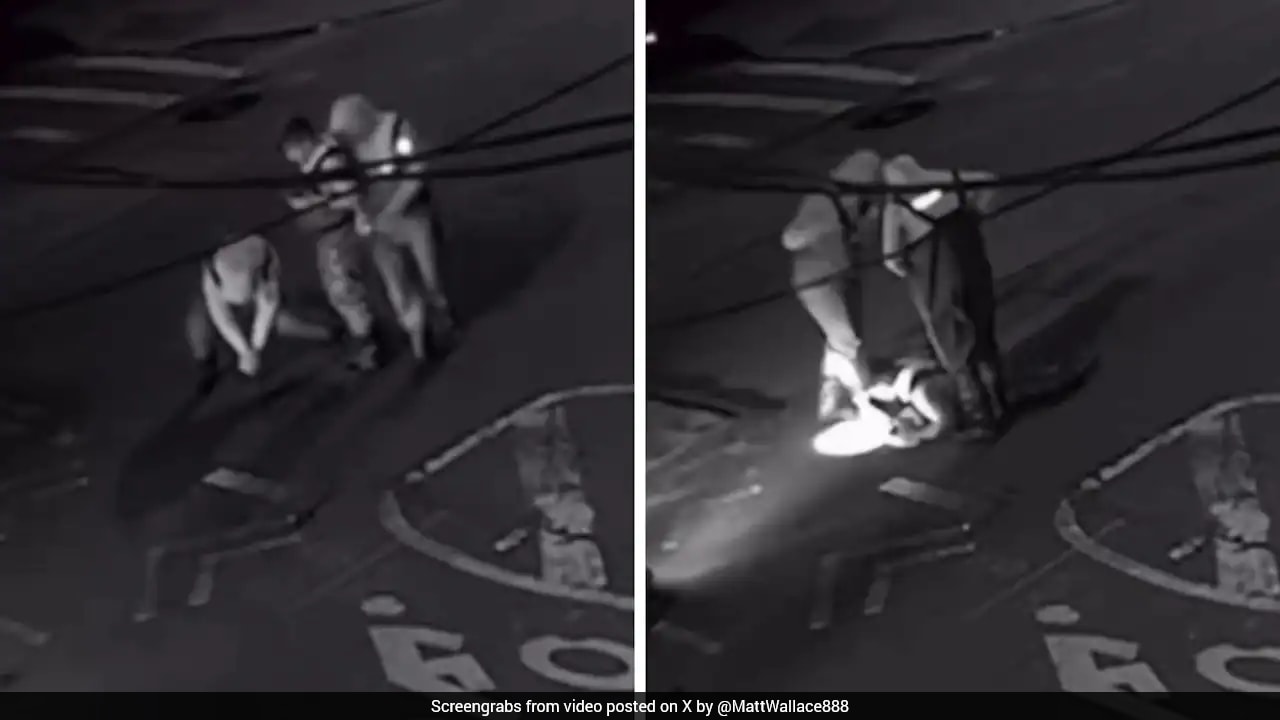
The New York City Police Department and the Department of Environmental Protection are quietly scrambling to suppress a bizarre, subterranean security breach. Multiple organized crews equipped with heavy-duty tools, hip waders, and headlamps have been captured on security footage lifting heavy manhole covers to spend hours inside the city's labyrinthine sewer system.
While city officials insist these illegal descents pose no threat to public infrastructure, law enforcement sources confirm the real motive driving these crews into the toxic darkness. They are hunting for concentrated deposits of lost jewelry, historical coins, and precious metals washed down Manhattan storm drains for over a century.
A string of late-night operations across Brooklyn and Queens has exposed a glaring vulnerability in municipal security. In the Gravesend neighborhood of Brooklyn, surveillance cameras captured eight men prying open a manhole cover at 11 p.m., descending into the subterranean tunnels, and emerging three hours later. They methodically stripped off their filth-caked protective suits, packed them into waiting vehicles, and vanished into the night.
Just hours later, a separate crew of seven individuals executed an identical maneuver at the intersection of Bedford Avenue and Lynch Street in Williamsburg. They emerged at 2:30 a.m., narrowly dodging oncoming traffic as they sealed the street behind them. Earlier in May, a three-man team clad in professional waterproof gear slipped into a maintenance hole in Astoria, Queens, utilizing a spotter to slide the massive iron disc back into place from below.
This is not a disorganized stunt by internet daredevils. The precision, the specialized gear, and the coordinated vehicle pickups point toward a highly deliberate, lucrative underground economy.
The Chemistry of Subterranean Wealth
To understand why anyone would risk their life inside a New York sewer, you have to understand how a combined sewer system actually functions. Every time a diamond ring slips down a bathroom sink or a gold chain drops into a street gutter during a rainstorm, it enters a 7,500-mile network of brick and concrete tunnels.
These items do not simply float out to sea. Heavy precious metals like gold and platinum quickly sink to the bottom of the flow. Over decades, they become trapped in thick, dense layers of sediment and calcified grease known as fatbergs.
Urban mining crews use historical municipal maps to pinpoint specific choke points in the older infrastructure. They target areas where old brick sewers from the late 19th century transition into modern concrete pipes. In these transitions, structural lips and drops act as natural riffle boxes, mimicking the gold-panning sluices used in the American West.
The crews descend during dry spells, wading through toxic sludge to shovel sediment into buckets, which are then hoisted up or processed clandestinely on-site with handheld filtration tools. It is a filthy, hazardous operation that can net thousands of dollars in a single night if a crew hits an untouched historic pocket.
A Bureaucratic Security Nightmare
The official response from the city has been a carefully calibrated mix of downplaying the security risk while highlighting the physical dangers. The NYPD Emergency Service Unit conducted sweeps of the tunnels immediately following the Brooklyn incidents, deploying hazardous material teams to ensure no explosive devices or structural sabotage had occurred.
The Department of Environmental Protection released a stern warning emphasizing that the sewers contain lethal concentrations of methane and hydrogen sulfide gas, alongside flash flood risks that can drown an adult in seconds.
Yet, the city's biggest worry is not the safety of the trespassers. It is the terrifying ease with which critical infrastructure can be accessed. A standard New York City manhole cover weighs between 200 and 300 pounds. They require a basic iron hook to lift.
For decades, security experts have warned that the open nature of these utility access points represents a massive blind spot for counter-terrorism and municipal safety. If a group of amateur treasure hunters can move freely through the subterranean arteries of the outer boroughs for three hours without detection, the security perimeter is effectively nonexistent.
Locking down the system is an engineering impossibility. Welding manhole covers shut prevents utility workers from executing emergency repairs or accessing gas and water valves during water main breaks.
The city has experimented with electronic locking mechanisms and internal security grates in high-profile areas like Times Square and near City Hall, but retrofitting thousands of miles of outer-borough streets would cost hundreds of millions of dollars. For now, the city is forced to rely on the vigilance of business owners checking their private security feeds after the fact.
The Legal Gray Zone of the Tunnels
Catching these underground miners is one thing; prosecuting them is an entirely different legal hurdle. If the NYPD manages to track down the individuals seen in the Williamsburg or Gravesend footage, the charges they face are surprisingly flimsy.
The city cannot easily charge the trespassers with burglary because a sewer pipe is not considered a commercial or residential structure under New York State law. Instead, prosecutors are forced to rely on misdemeanor criminal trespass and reckless endangerment charges.
Furthermore, proving the theft of municipal property is a logistical dead end. The items these crews are extracting have been abandoned for decades. Legally, the city owns the infrastructure, but the ownership of a wedding band lost in 1974 that has been rotting in a sludge pipe is a profound legal gray area.
Unless a crew is caught in the act of damaging fiber-optic cables or water mains, the judicial system treats them more like nuisance trespassers than high-stakes criminals. This lack of severe legal deterrent ensures that as long as the price of gold remains high, the crews will keep dropping into the dark.



:max_bytes(150000):strip_icc()/how-many-types-of-dwarfism-are-there-2860725-v1-8dae2c531b4b47d9ae36ae404d3308a0.png)