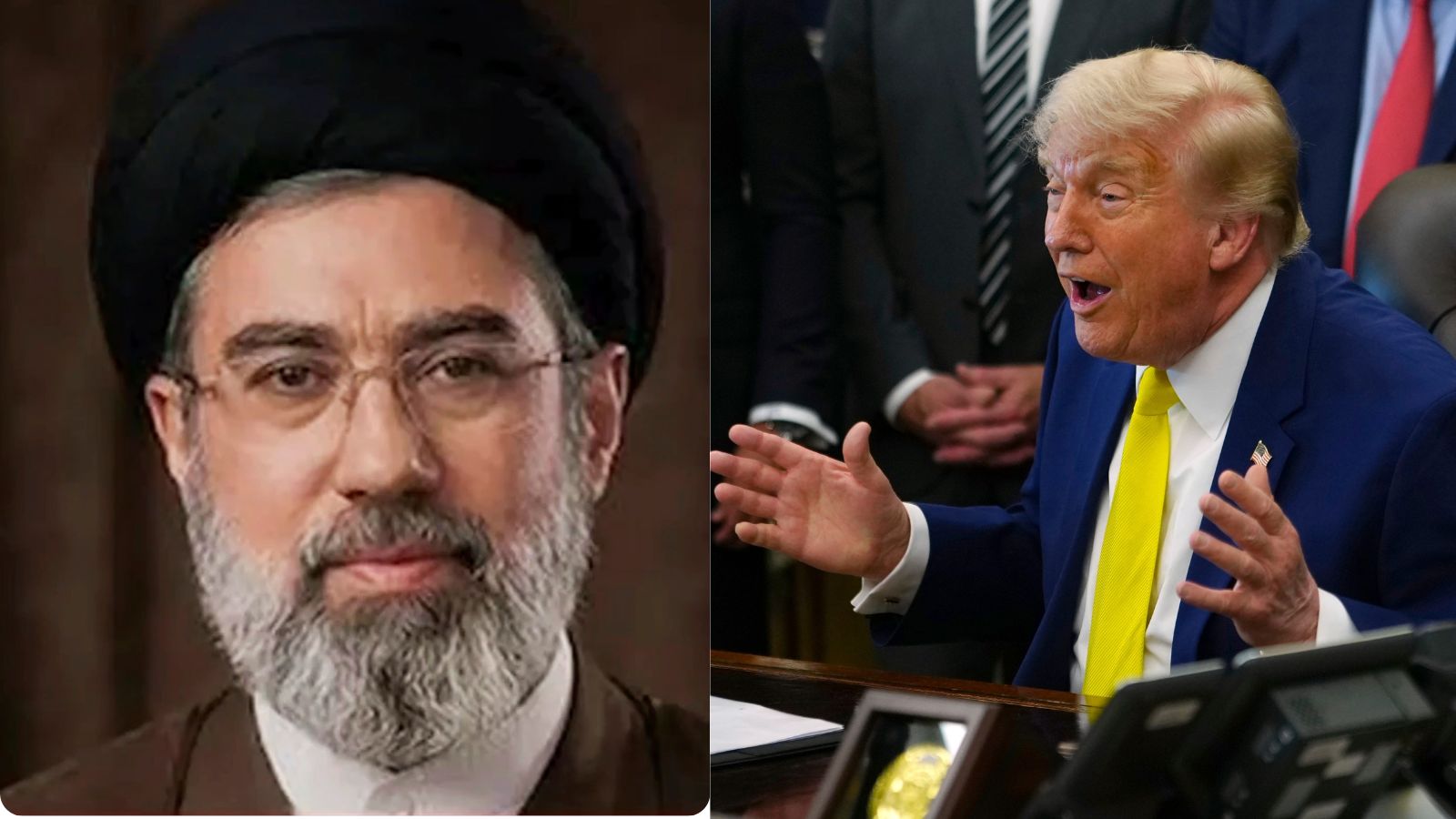
Donald Trump says he would be honored to meet Iran’s new Supreme Leader, Ayatollah Mojtaba Khamenei, if Washington and Tehran can hammer out a peace deal.
This is classic Trumpian transactional theater, but the reality behind the curtain is far darker and infinitely more complex. The public hears talk of historic summits, but the intelligence community is staring at a landscape fractured by a recent, devastating war that completely upended the Middle East.
Just over three months ago, on February 28, a joint US-Israeli military operation targeted and killed Mojtaba’s father, the long-reigning Supreme Leader Ali Khamenei, along with several high-ranking family members. The strike was designed to decapitate the regime. Instead, it accelerated a transition to the younger, more volatile Mojtaba Khamenei, who assumed power on March 8 amid reports that he himself was severely wounded in the opening salvos of the war. Now, the man who ordered the strike is offering a handshake to the grieving son.
To understand why this meeting is being floated, you have to look past the bluster. This is not a standard diplomatic olive branch. It is a high-stakes poker game played over the ashes of an active conflict, with the global economy holding its breath.
The Mirage of the Nuclear Breakthrough
Trump recently claimed on a podcast that Tehran has already conceded the ultimate point. "They’ve already agreed they’re not going to have a nuclear weapon," he announced.
Veterans of the State Department’s Iran desk are privately rolling their eyes. Iranian officials have said no such thing publicly. Foreign Minister Abbas Araqchi quickly warned against "speculation," noting that Tehran cannot judge the process until there is a tangible, signed result.
The administration is attempting to speak a reality into existence. By declaring the nuclear issue "settled" before the ink is dry, Trump is trying to box the Iranian regime into a corner. If Mojtaba Khamenei walks away from the table now, Washington will brand him as the sole architect of an avoidable economic collapse.
The actual mechanics of the draft deal tell a different story. The current framework on the table includes:
- A 60-day extension of the fragile ceasefire.
- The immediate reopening of the Strait of Hormuz, which has been choked off by recent hostilities.
- A structured pipeline to release billions of dollars in frozen assets via targeted sanctions relief.
But the devil is in the edits. Trump has already demanded last-minute changes to the draft, specifically regarding the disposal of Iran's highly enriched uranium stockpile and the permanent status of maritime security in the Gulf. Secretary of State Marco Rubio threw gasoline on these delicate adjustments by stating bluntly that no sanctions will be lifted merely in exchange for opening the Strait of Hormuz. The Americans want everything up front; the Iranians want survival guaranteed before they disarm.
Negotiating with a Ghost
There is a distinct logistical problem with Trump’s proposed summit. Nobody is entirely sure what physical condition Mojtaba Khamenei is in.
Since taking the mantle of Supreme Leader after his father's death, Mojtaba has not been seen in public. He operates through intermediaries and written decrees. While Rubio confirmed to lawmakers that intelligence shows Mojtaba is "increasingly engaging" in the peace talks, the lack of visual proof has fueled intense rumors throughout the region.
"I don't know about his condition," Trump admitted when pressed about whether the new leader was incapacitated from the February strikes. "I think there are indications out there that he is increasingly engaging at some level, although all of his communications have been in writing."
This creates a surreal diplomatic vacuum. Washington is trying to negotiate a comprehensive regional reset with a leader who might be recovering from severe shrapnel wounds in a secure bunker beneath Tehran. If Trump flies out for a photo op, who actually sits across from him?
The Looming Threat of the Hormuz Chokehold
While the nuclear program commands headlines, the immediate crisis is economic. The war spilled over into Gulf nations, triggering a series of drone and missile attacks that crippled commercial shipping.
If the Strait of Hormuz remains closed, global energy markets will break. Trump is acutely aware that a prolonged spike in oil prices could tank the domestic economy and erase his political capital. His sudden willingness to call Mojtaba Khamenei a "professional" with a "very good reputation" in certain circles is an exercise in pure pragmatism. He needs the oil flowing, and he needs it now.
Yet, the threat of escalation is never more than a miscalculation away. When asked what happens if Iran-backed proxies kill US troops during these delicate negotiations, Trump didn’t hesitate. "It would be a good reason," he said. "I’d be honest with you, if they killed US troops, I think I would do that very quickly."
This is the dual-track strategy that defines the current White House. One hand offers an historic face-to-face meeting; the other rests firmly on the trigger of a B-2 bomber.
Why a Deal remains Unlikely
A permanent resolution requires both sides to accept realities they currently reject. The Iranian regime cannot look weak after losing its patriarchy to American bombs. Mojtaba Khamenei must prove his legitimacy to the hardliners within the Islamic Revolutionary Guard Corps (IRGC). Signing a sweeping concession deal with the leader who ordered his father's termination could trigger an internal coup.
On the American side, Trump faces intense pressure from regional allies. Israeli Prime Minister Benjamin Netanyahu remains locked in a multi-front conflict, a reality that Trump recently noted with some frustration, expressing concern over the constant fighting in Lebanon. Washington wants to pivot away from the Middle East to counter Russian and Chinese maneuvering, but its own past actions keep pulling it back into the sand.
The administration is betting that economic strangulation will force Tehran to swallow its pride. Iran is betting that holding the world’s primary energy transit point hostage will force Washington to blink. A theatrical summit cannot bridge that fundamental divide. If a meeting happens, it will be the capstone of a deal already secured by backroom fixers, not the catalyst for one. Until those hidden actors agree on the fate of Iran's uranium, the rhetoric remains nothing more than noise.

:max_bytes(150000):strip_icc()/how-many-types-of-dwarfism-are-there-2860725-v1-8dae2c531b4b47d9ae36ae404d3308a0.png)